.webp)
.webp)
Europe Travel Guide Best Countries Itinerary Cost and Tips for 2026
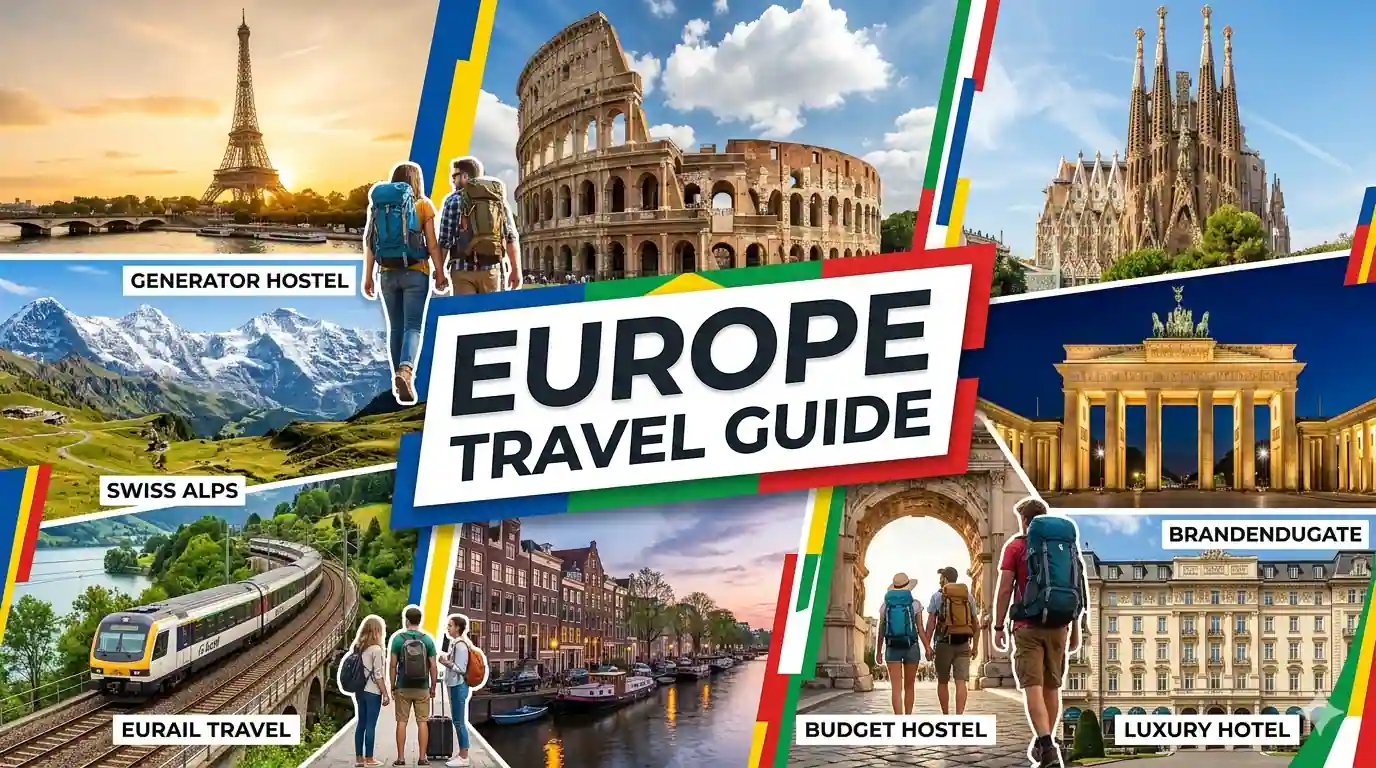
Complete Europe Travel Guide for 2026
Europe remains one of the world's most diverse and captivating travel destinations.
From the romantic streets of Paris to the ancient ruins of Rome, the Alps of Switzerland to the vibrant culture of Barcelona, Europe offers unforgettable experiences for every traveler.
This comprehensive guide covers essential information for visiting Europe in 2026 including visa requirements, costs, transportation, itineraries, and expert tips.
Whether you are a first-time visitor or a seasoned traveler, this resource helps you plan a seamless and memorable European adventure.
Why Visit Europe in 2026
Europe offers unparalleled cultural diversity within a relatively compact geographic area.
You can experience multiple languages, cuisines, histories, and landscapes within a single trip.
Excellent transportation infrastructure makes traveling between countries efficient and affordable.
Europe combines ancient heritage with modern amenities ensuring comfort and convenience.
The region caters to all travel styles from budget backpacking to luxury experiences.
Safety standards remain high across most European destinations with reliable healthcare systems.
English is widely spoken in tourist areas making navigation easier for international visitors.
Understanding the Schengen Visa System
The Schengen Area is a zone of 29 European countries that have abolished border controls between each other.
This allows travelers to move freely across member countries with a single visa.
The short-stay Schengen visa also known as Type C permits stays up to 90 days within any 180-day period.
This visa is ideal for tourism, business visits, or family visits across multiple Schengen countries.
Non-EU citizens from countries like the United States, Canada, Australia, and the United Kingdom can enter Schengen countries visa-free for short stays.
However, travelers from many other nations must apply for a Schengen visa before departure.
Applications must be submitted to the embassy or consulate of your main destination country.
Your main destination is defined as the country where you will spend the most days.
If spending equal time in multiple countries apply at the embassy of your first point of entry.
Required documents typically include a valid passport, travel insurance, proof of accommodation, flight itinerary, and financial means.
Travel insurance must cover at least 30,000 EUR for medical emergencies and repatriation.
Processing times vary but generally take 15 calendar days from application submission.
Apply at least four to six weeks before your intended travel date to allow for processing.
Always use official government embassy websites to avoid third-party scam agents.
The European Union website and individual country immigration portals provide verified application information.
Covered Countries in This Guide
This guide focuses on six major Western European destinations that form a classic first-time Europe route.
France offers iconic landmarks, world-class cuisine, and diverse landscapes from Paris to the French Riviera.
Italy captivates with ancient history, Renaissance art, incredible food, and stunning coastlines.
Switzerland delivers breathtaking alpine scenery, efficient transport, and pristine cities.
Germany combines rich history, vibrant cities, castle landscapes, and excellent beer culture.
Spain provides passionate culture, beautiful beaches, architectural wonders, and lively nightlife.
The Netherlands features charming canals, world-renowned museums, cycling culture, and tulip fields.
Western Europe versus Eastern Europe Comparison
Western Europe generally offers more developed tourism infrastructure and English accessibility.
However, costs in Western Europe tend to be significantly higher than in Eastern Europe.
Countries like Poland, Czech Republic, Hungary, and Romania offer excellent value for budget travelers.
Eastern Europe provides authentic cultural experiences with fewer crowds at major attractions.
Western Europe excels in luxury accommodations, fine dining, and high-end shopping.
Eastern Europe offers incredible history, folk traditions, and emerging food scenes at lower prices.
Consider combining both regions for a balanced experience of Europe's diversity.
Transportation Systems in Europe
Europe boasts one of the world's most efficient and integrated transportation networks.
Understanding your options helps you save time and money while maximizing your experience.
What is the Eurail Pass and is it worth it
The Eurail Pass allows unlimited train travel across 33 European countries for a set number of days.
Passes are available for consecutive days or flexible travel days within a period.
You can choose global passes covering multiple countries or single-country passes.
Eurail passes offer excellent value if you plan to take multiple long-distance train journeys.
However, for short trips or fixed itineraries, point-to-point tickets may be cheaper.
Always compare total costs including seat reservations which are often required for high-speed trains.
Book Eurail passes in advance through the official Eurail website for best prices.
Intercity Trains versus Budget Airlines
Trains offer scenic journeys, city-center to city-center convenience, and no baggage fees.
High-speed trains like France's TGV, Germany's ICE, and Italy's Frecciarossa connect major cities efficiently.
Train travel reduces airport security time and environmental impact compared to flying.
Budget airlines like Ryanair and EasyJet offer extremely low fares for longer distances.
However, budget airlines often fly to secondary airports requiring additional transport to city centers.
Baggage fees, seat selection, and printing boarding passes can add significant costs to budget flights.
For distances under 500 kilometers trains are usually faster when considering total travel time.
For distances over 800 kilometers flights may save time but compare total door-to-door duration.
Europe Travel Cost Breakdown in EUR
Understanding realistic costs helps you budget effectively and avoid surprises during your trip.
Prices vary significantly by country, season, and travel style.
All costs below are presented in Euros for easy comparison.
Budget Traveler Costs per Day
Budget travelers can explore Europe on 60 to 90 EUR per day with careful planning.
Accommodation in hostel dorm beds ranges from 20 to 40 EUR per night depending on city.
Street food, supermarket meals, and budget restaurants cost 10 to 20 EUR daily for food.
Public transportation passes and intercity buses keep transport costs around 10 to 25 EUR daily.
Free walking tours, public parks, and church visits minimize attraction expenses.
Cities like Lisbon, Berlin, and Prague offer better value than Paris or Zurich.
Mid-Range Traveler Costs per Day
Mid-range travelers spending 120 to 200 EUR daily enjoy greater comfort and flexibility.
Private rooms in budget hotels or Airbnbs cost 60 to 120 EUR per night.
Restaurant meals including one sit-down dinner range from 25 to 45 EUR daily for food.
Intercity trains, occasional taxis, and city transport cards cost 20 to 40 EUR daily.
Museum entries, guided tours, and paid attractions budget 15 to 30 EUR daily.
This level allows mixing free activities with select premium experiences.
Luxury Traveler Costs per Day
Luxury travelers spending 300 EUR and above daily experience Europe in style.
Four and five-star hotels range from 150 to 400 plus EUR per night.
Fine dining, wine tastings, and gourmet experiences cost 60 to 150 EUR daily for food.
First-class train seats, private transfers, and domestic flights cost 50 to 150 EUR daily.
Private guided tours, exclusive attractions, and VIP experiences budget 50 to 200 EUR daily.
Luxury travel in Europe offers exceptional value compared to other global destinations.
Country-Specific Cost Comparison
Switzerland ranks as one of Europe's most expensive countries with high accommodation and dining costs.
Paris and major French cities command premium prices especially during peak season.
Italy offers moderate costs with excellent value in smaller towns and southern regions.
Germany provides good value with efficient transport and reasonable dining prices.
Spain delivers exceptional value particularly outside Barcelona and Madrid.
The Netherlands sits in the moderate to high range with Amsterdam being notably expensive.
Recommended Europe Itineraries
Well-planned itineraries maximize your time and minimize travel fatigue.
These routes balance iconic highlights with authentic local experiences.
Seven Day Classic Europe Itinerary
Start in Paris spending three days exploring the Eiffel Tower, Louvre, and Montmartre.
Take a high-speed train to Amsterdam for two days of canals, museums, and cycling.
Fly or train to Berlin for two days experiencing history, culture, and vibrant nightlife.
This route covers three countries with efficient connections and diverse experiences.
Focus on one or two major sights per day to avoid exhaustion.
Ten Day Western Europe Highlights Itinerary
Begin in Paris with three days for iconic landmarks and French cuisine.
Travel by train to Switzerland spending two days in Interlaken or Lucerne for alpine scenery.
Continue to Italy with three days split between Milan and Venice or Florence.
End with two days in Rome exploring ancient history and Vatican City.
This itinerary combines culture, nature, art, and history across four countries.
Book train tickets in advance for best prices and seat availability.
Multi-Country Route Examples
The Grand European Tour covers Paris, Brussels, Amsterdam, Berlin, Prague, Vienna, and Budapest.
This route leverages excellent train connections through Central and Western Europe.
The Mediterranean Route includes Barcelona, Nice, Florence, Rome, and Athens focusing on coastal culture.
The Alpine Adventure combines Switzerland, Austria, and Southern Germany for mountain scenery.
Consider travel time between destinations when planning multi-country trips.
Allow at least two full days per major city to appreciate highlights without rushing.
Common Travel Mistakes and How to Avoid Them
Learning from others' experiences helps you avoid costly or frustrating errors.
Planning Mistakes
Trying to see too many cities in too few days leads to burnout and shallow experiences.
Focus on quality over quantity by spending more time in fewer locations.
Not validating train tickets before boarding can result in fines in countries like Italy and France.
Always check ticket validation rules for regional trains before departure.
Booking all accommodations in advance eliminates flexibility for spontaneous discoveries.
Reserve first and last nights but leave middle segments open for adjustments.
Budget Mistakes
Underestimating daily costs especially in Western Europe causes financial stress.
Build a buffer of 20 percent above your estimated budget for unexpected expenses.
Not accounting for city tourist taxes which are often paid in cash at hotels.
Research local tax policies and carry small EUR bills for these payments.
Exchanging money at airports or tourist areas results in poor exchange rates.
Use ATMs affiliated with major banks for better rates and lower fees.
Cultural Mistakes
Assuming English is universally spoken can create communication challenges.
Learn basic greetings like hello, please, and thank you in local languages.
Not respecting local dining customs such as later dinner times in Spain.
Research cultural norms for each country to show respect and enhance interactions.
Tipping expectations vary significantly across European countries.
In many places service is included so small additional tips are appreciated but not mandatory.
Money-Saving Strategies for Europe Travel
Smart planning helps you stretch your budget without sacrificing experiences.
Travel during shoulder seasons like April to May or September to October for lower prices and fewer crowds.
Book train tickets and flights 60 to 90 days in advance for best fares.
Stay in accommodations slightly outside city centers with good public transport links.
Eat lunch at restaurants offering fixed-price menus which are often cheaper than dinner.
Use supermarket picnics for some meals to save on dining costs.
Take advantage of free walking tours available in most major European cities.
Many museums offer free entry on specific days or evenings research ahead.
City tourism cards can provide savings if you plan to visit multiple paid attractions.
Calculate total potential savings before purchasing to ensure value.
Tourist Traps to Avoid
Popular destinations attract scams and overpriced services targeting tourists.
Avoid restaurants with multilingual picture menus located directly on major squares.
Walk two or three blocks away from main attractions for better prices and authentic cuisine.
Be cautious of individuals offering "free" bracelets, rosemary, or other items then demanding payment.
Politely decline and keep walking without engaging.
Never exchange money with street vendors always use banks or official exchange offices.
Verify taxi meters are running or agree on fares before starting your journey.
Use official taxi stands or ride-hailing apps like Uber or Bolt where available.
Best Time to Visit Europe
Timing your trip significantly impacts weather, crowds, and costs.
Europe experiences distinct seasonal variations that affect travel experiences.
Summer Season June to August
Summer offers the warmest weather and longest days ideal for outdoor activities.
This is peak tourist season with higher prices, larger crowds, and booked accommodations.
Popular destinations like Paris, Rome, and Barcelona can feel overcrowded.
Book flights, hotels, and major attractions months in advance for summer travel.
Consider lesser-known regions like Slovenia, Portugal, or the Baltics for fewer crowds.
Winter Season December to February
Winter brings cold temperatures and shorter days but magical Christmas markets.
Prices for flights and accommodations drop significantly outside holiday periods.
Ski resorts in the Alps offer world-class winter sports experiences.
Some attractions and rural accommodations may have reduced hours or close seasonally.
Pack warm layers and waterproof footwear for variable winter conditions.
Shoulder Seasons April to May and September to October
Shoulder seasons offer the best balance of pleasant weather, manageable crowds, and reasonable prices.
Spring brings blooming flowers, mild temperatures, and renewed energy to cities.
Autumn features harvest festivals, colorful foliage, and comfortable sightseeing weather.
These periods are ideal for photography, walking tours, and outdoor dining.
Book accommodations two to four weeks in advance for optimal selection.
Safety and Health Considerations
Europe is generally very safe for travelers but standard precautions apply.
Pickpocketing occurs in crowded tourist areas, public transport, and major train stations.
Keep valuables secure, use anti-theft bags, and maintain awareness in busy locations.
Emergency number 112 works across all European Union countries for police, fire, or medical assistance.
Carry a copy of your passport and travel insurance details separate from originals.
European healthcare is high quality but travel insurance with medical coverage remains essential.
EHIC or GHIC cards provide reciprocal healthcare access for eligible travelers but do not replace insurance.
Prescription medications should be carried in original packaging with a doctor's note.
Check if your medications are legal in all countries you plan to visit.
Essential Packing Tips for Europe
Packing efficiently enhances comfort and mobility during your European journey.
Use a carry-on sized suitcase or backpack to avoid checked baggage fees on budget airlines.
Pack layers rather than bulky items to adapt to variable weather and indoor heating.
Include comfortable walking shoes as European cities often feature cobblestone streets.
A universal power adapter with USB ports charges multiple devices across different plug types.
Most European countries use 230V electricity with Type C, E, or F outlets.
Bring a reusable water bottle as tap water is safe to drink in most European destinations.
A compact daypack is useful for daily excursions and carrying essentials while sightseeing.
Final Recommendations for Europe Travel
Europe rewards thoughtful planning with unforgettable experiences and lifelong memories.
Start with a focused itinerary covering two to four countries for a first visit.
Prioritize experiences over checklist tourism allowing time for spontaneous discoveries.
Embrace local customs, try regional cuisines, and engage respectfully with residents.
Use the Schengen visa system strategically to maximize your 90-day allowance.
Balance iconic landmarks with hidden gems for a well-rounded perspective.
Europe's diversity, history, and beauty make it a destination that invites return visits.
Begin planning your European adventure today and discover why this region captivates travelers worldwide.
0 Comments