.webp)
.webp)
Beyond the Mountain Peaks Exploring the Badlands of Drumheller Alberta
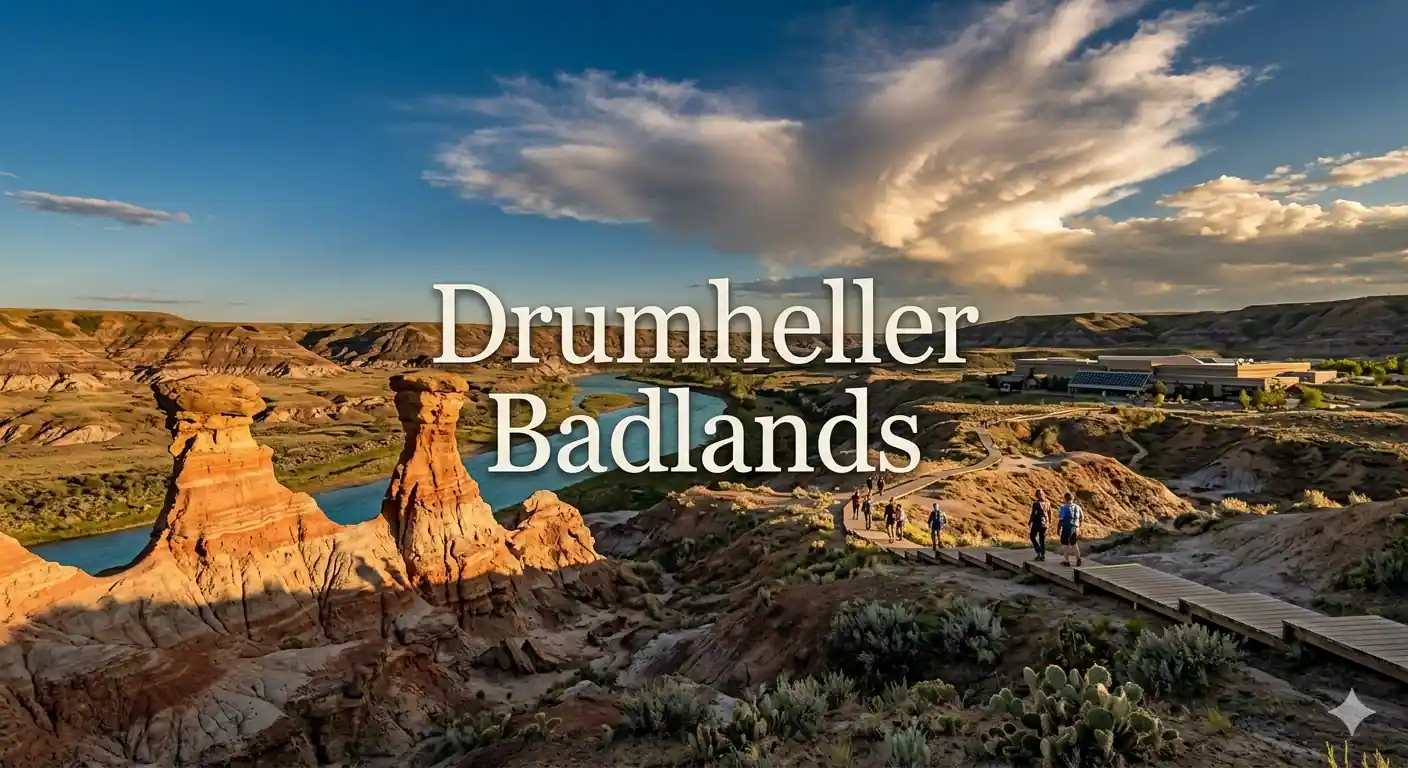
Discovering Albertas Otherworldly Dinosaur Valley Beyond the Rockies
While most travelers to Alberta fixate on the snow-capped peaks of Banff and Jasper, the province's southeastern badlands around Drumheller offer an equally spectacular but dramatically different landscape that deserves equal attention. Located approximately 135 kilometers (84 miles) northeast of Calgary, Drumheller sits in the heart of the Canadian badlands, a starkly beautiful region carved by the Red Deer River over millions of years. This arid landscape features dramatic hoodoo rock formations, layered sedimentary cliffs in striations of red, orange, and gray, and one of the world's richest dinosaur fossil beds, making it an essential stop for any Alberta itinerary beyond the mountain parks.
Drumheller's badlands formed over 75 million years ago during the Cretaceous Period when the region was a subtropical coastal plain teeming with dinosaurs. Today's dramatic topography results from the Red Deer River cutting through soft sedimentary rock, creating steep valleys, towering hoodoos, and exposed geological layers that tell the story of Earth's ancient past. The area receives only 15-20 inches (380-510 mm) of precipitation annually, creating a semi-arid climate that supports unique vegetation including sagebrush, prickly pear cactus, and rough fescue grassland. Visiting Drumheller costs approximately $80-$250 USD for a 2-3 day visit, including accommodation ($60-$150 USD/night), Royal Tyrrell Museum admission ($18 USD adults), fuel, and dining, making it an affordable yet unforgettable addition to any Alberta road trip.
The Geological Story of Drumhellers Badlands Formation
Understanding the badlands requires appreciating the immense geological forces and time scales that shaped this landscape. The story begins 75 million years ago during the Late Cretaceous Period when the area that is now Drumheller was a low-lying coastal plain bordering the Western Interior Seaway, a vast inland sea that divided North America from the Arctic Ocean to the Gulf of Mexico. This subtropical environment supported lush vegetation including ferns, conifers, and early flowering plants, creating the perfect habitat for diverse dinosaur species whose fossils now make Drumheller world-famous.
The badlands' distinctive topography began forming approximately 3 million years ago during the Pleistocene Epoch when glaciers advanced and retreated across the region. As glaciers melted, massive volumes of water carved deep valleys into the soft sedimentary rock layers deposited during the Cretaceous Period. The Red Deer River continues this erosional process today, cutting approximately 1-2 centimeters deeper into the valley each year. The result is a landscape of steep slopes, narrow coulees (dry valleys), and dramatic hoodoos—tall, thin rock spires capped by harder sandstone that protects the softer underlying layers from erosion.
The badlands display remarkable geological diversity with exposed rock layers representing different periods and environments. The Horseshoe Canyon Formation (72-67 million years old) contains coal seams and dinosaur fossils from coastal plain environments. The Scollard Formation (67-65 million years old) preserves evidence of the mass extinction event that killed the dinosaurs. The Paskapoo Formation (65-55 million years old) records the early Paleocene period when mammals began to diversify after the dinosaur extinction. These layers create the badlands' characteristic striped appearance, with alternating bands of sandstone, siltstone, mudstone, and coal creating a geological timeline visible in the valley walls.
For travelers interested in geological tourism, Drumheller provides an accessible introduction to paleontology and earth science. The Canada nature lover's paradise guide highlights how the country's diverse landscapes—from coastal rainforests to arctic tundra to badlands—offer world-class opportunities for geological observation and outdoor education.
The Royal Tyrrell Museum Canadas Premier Paleontology Destination
The Royal Tyrrell Museum of Palaeontology stands as Canada's only museum dedicated exclusively to the science of paleontology and represents one of the world's leading dinosaur research institutions. Located in Midland Provincial Park just 6 kilometers west of Drumheller, the museum opened in 1985 and attracts approximately 400,000 visitors annually from around the globe. The museum sits on the site of the original 1889 Tyrrell Mine, named after Joseph Burr Tyrrell, a Geological Survey of Canada geologist who discovered the first Albertosaurus fossil in the area in 1884.
The museum's galleries showcase over 130,000 square feet (12,000 square meters) of exhibition space featuring one of the world's largest displays of dinosaur fossils. The Cretaceous Garden recreates the ancient plant life that dinosaurs would have encountered, while the Fossil Preparation Laboratory allows visitors to watch paleontologists and technicians carefully preparing fossils for study and display. The museum's collection includes over 160,000 fossils, with approximately 1,000 specimens on display at any given time. Highlights include a complete Tyrannosaurus rex skeleton, a rare armored Borealopelta markmitchelli specimen preserved in three dimensions, and an extensive collection of marine reptiles including mosasaurs and plesiosaurs.
Beyond static displays, the Royal Tyrrell Museum offers immersive educational experiences. The Dinosaur Dig program allows participants to excavate real fossils under professional supervision, while the Cretaceous Garden guided walks explore the ancient plant communities. The museum also operates a Camping under the Stars program where visitors can camp in Midland Provincial Park and participate in evening fossil walks and astronomy programs. For serious fossil enthusiasts, the museum offers multi-day Palaeontology Field School programs that provide hands-on training in fossil collection, preparation, and identification techniques.
Admission pricing for 2026 is $18 USD for adults, $10 USD for youth (3-17), and free for children under 3. Family passes (2 adults + up to 4 youth) cost $42 USD. The museum is open year-round with extended hours during peak season (May-September: 9 AM-9 PM daily; October-April: 10 AM-5 PM Tuesday-Sunday). Guided tours are included with admission and run multiple times daily. For travelers planning broader Canadian itineraries, the Banff National Park wilderness guide demonstrates how to combine mountain park experiences with badlands exploration for a comprehensive Alberta adventure.
Hiking the Badlands Top Trails and Viewpoints
Drumheller's badlands offer exceptional hiking opportunities ranging from easy interpretive walks to challenging backcountry routes. The region's unique geology, combined with relatively mild hiking difficulty and well-maintained trails, makes it accessible to hikers of all skill levels while still offering rewards for experienced trekkers.
Horseshoe Canyon Trail represents the area's most iconic hike, a 3.2-kilometer (2-mile) loop that descends 70 meters (230 feet) into the canyon via switchback trails. The trail passes through multiple ecosystems from upland grassland to riparian forest along the Red Deer River. Hikers encounter dramatic hoodoo formations, fossil-bearing rock layers, and panoramic valley views. The trail takes approximately 1.5-2 hours and is rated moderate due to elevation change and uneven footing. Best visited early morning or late afternoon for optimal lighting and cooler temperatures.
Horsethief Canyon Trail offers a more challenging 7-kilometer (4.3-mile) loop with 150 meters (490 feet) of elevation change. This trail descends into a deeper, narrower canyon with more dramatic hoodoo formations and exposed coal seams. The trail name references the canyon's historical use by horse thieves hiding stolen livestock. The route takes 2.5-3.5 hours and requires good fitness due to steep sections and loose gravel. The canyon's narrow sections create interesting photographic opportunities with light filtering through hoodoo formations.
Little Sandhill Creek Trail provides an easier 2.5-kilometer (1.5-mile) loop suitable for families and those seeking a shorter badlands experience. The trail follows a creek bed through cottonwood forest before emerging into badlands topography with scattered hoodoos. The gentle grade and interpretive signage make this ideal for geology education and wildlife observation. Allow 1-1.5 hours for this relaxed hike.
Red Deer River Valley Trail System comprises multiple interconnected trails totaling over 20 kilometers (12 miles) along the river valley. These trails range from easy riverside walks to moderate upland routes, allowing hikers to customize distance and difficulty. The river valley supports diverse wildlife including mule deer, pronghorn antelope, golden eagles, and occasionally coyotes. Multiple access points allow for point-to-point hikes or loop combinations.
For photography enthusiasts, the badlands offer exceptional opportunities throughout the day. Sunrise (6-8 AM in summer) casts long shadows that emphasize hoodoo textures and creates warm light on east-facing slopes. Sunset (8-10 PM in summer) provides dramatic side-lighting on west-facing formations with rich orange and red tones. Blue hour (just before sunrise and after sunset) creates moody atmospheric conditions ideal for landscape photography. The Lake Louise photography guide offers techniques applicable to badlands photography, including composition strategies for dramatic landscapes and working with challenging light conditions.
Dinosaur Fossil Hunting and Paleontology Tourism
Drumheller's status as one of the world's richest dinosaur fossil beds makes it a pilgrimage site for paleontology enthusiasts. The badlands have yielded over 50 dinosaur species and thousands of individual specimens since the first discovery in 1884. While collecting fossils from public land is illegal without a permit, numerous legal and educational opportunities exist for visitors to engage with paleontology.
The Atlas Coal Mine National Historic Site offers guided fossil walks where participants learn to identify fossil-bearing rock layers and search for plant fossils, ammonites, and occasional bone fragments. These 2-hour tours cost $25 USD and run daily during peak season. While participants cannot keep fossils found on guided walks, the experience provides valuable education in fossil identification and geological context.
Several commercial operators offer guided fossil prospecting tours on private land where fossil collection is permitted with landowner permission. These tours typically cost $75-$150 USD for half-day excursions and include equipment, instruction, and permission to keep certain common fossils like ammonites, belemnites, and plant fossils. Rare specimens like dinosaur bone must be reported and may be subject to provincial heritage laws.
The Canadian Badlands Passion Play amphitheater, while primarily known for its outdoor theatrical production, sits on fossil-rich land and offers educational programs about the intersection of faith, science, and paleontology. The site's geological significance adds another dimension to understanding the badlands' importance.
For serious fossil enthusiasts, the UNESCO heritage guide demonstrates how paleontological sites worldwide contribute to our understanding of Earth's history and the importance of responsible fossil collection and preservation.
Scenic Drives and Valley Viewpoints
For those preferring to experience the badlands from vehicle accessibility, Drumheller offers several exceptional scenic drives and viewpoints that showcase the landscape's dramatic topography without requiring extensive hiking.
The Drumheller Valley Viewpoint sits 2 kilometers east of town and provides the most accessible panoramic view of the badlands. A paved parking area and short walk lead to an observation deck overlooking the Red Deer River valley with hoodoo formations, layered cliffs, and river meanders visible for miles. The viewpoint is particularly spectacular at sunset when warm light illuminates the sedimentary layers. Facilities include interpretive panels, picnic tables, and accessible viewing platforms.
The Badlands Scenic Byway (Highway 9) runs 160 kilometers (100 miles) from Drumheller to the Alberta-Saskatchewan border, passing through some of the province's most dramatic badlands topography. The route features multiple pullouts and viewpoints, including the East Coulee Lookout with views of the Red Deer River valley and Rosebud Theatre area with its distinctive badlands backdrop. Allow 3-4 hours for the full drive with stops.
The Bleriot Ferry crossing provides a unique badlands experience. This cable ferry, one of the last remaining in Alberta, crosses the Red Deer River at a narrow point surrounded by hoodoo formations. The 5-minute crossing costs $10 USD per vehicle and operates seasonally (May-October). The ferry landing areas offer excellent photography opportunities and short walks to view hoodoos up close.
Horsethief Canyon Viewpoint provides dramatic overlooks of one of the badlands' most photogenic canyons without requiring the full hike. A parking area and short trail lead to multiple viewpoints showing the canyon's depth, hoodoo formations, and the Red Deer River below. This is particularly popular with photographers at golden hour.
For travelers planning broader Canadian road trips, the Vancouver travel guide demonstrates how to integrate badlands exploration into comprehensive western Canada itineraries that might include coastal rainforests, mountain parks, and prairie landscapes.
Accommodation and Dining in Drumheller
Drumheller offers diverse accommodation options ranging from budget motels to unique badlands glamping experiences, along with dining that reflects the region's character and agricultural heritage.
Accommodation Options:
| Property | Type | Price (USD/night) | Features |
| Best Western Plus Drumheller | Hotel | $90-$130 | Pool, hot tub, breakfast, badlands views |
| Drumheller Motel | Motel | $65-$95 | Basic rooms, central location, parking |
| Badlands Campground | Camping | $25-$40 | RV sites, tent camping, shower facilities |
| Midland Provincial Park Camping | Camping | $20-$35 | Near museum, unserviced sites, hiking access |
| Glamping Pods | Unique | $100-$150 | Badlands views, comfortable beds, shared facilities |
Dining Highlights:
Drumheller's dining scene reflects its agricultural heritage and small-town character. The Rosebud Diner serves classic Canadian comfort food including poutine, burgers, and homestyle breakfasts in a restored 1950s setting. Badlands Brewery offers craft beer brewed locally along with pub fare and badlands views from the patio. Atlas Steak + Fish provides upscale dining featuring Alberta beef and local ingredients in an elegant setting.
For quick meals, Subway and Tim Hortons provide familiar options, while China Garden offers Chinese-Canadian cuisine popular in small Alberta towns. During summer, the Drumheller Farmers Market (Saturday mornings) features local produce, baked goods, and artisan products.
Travelers seeking luxury accommodations might compare Drumheller's offerings with the luxury hospitality guide to understand how remote destinations worldwide balance comfort with authentic local character.
Seasonal Considerations and Best Times to Visit
Drumheller's semi-arid climate creates distinct seasonal experiences, each with advantages and considerations for visitors.
Summer (June-August): Peak tourist season offers warm temperatures (70-85°F / 21-29°C), long daylight hours (16+ hours in June), and all attractions operating at full capacity. This is ideal for hiking, photography, and outdoor activities. However, summer brings the largest crowds, particularly in July and August, and afternoon thunderstorms are common. Book accommodations and museum timed-entry tickets well in advance.
Fall (September-October): Many visitors consider fall the ideal time to visit. Temperatures remain pleasant (50-70°F / 10-21°C), crowds diminish after Labor Day, and fall colors in cottonwood groves along the river add visual interest. The badlands' warm tones are particularly striking against autumn foliage. Most facilities remain open through October, though hours may be reduced.
Winter (November-March): Winter transforms the badlands into a starkly beautiful landscape with snow-dusted hoodoos and frozen river valleys. Temperatures average 10-30°F (-12 to -1°C) but can drop below -20°F (-29°C). The Royal Tyrrell Museum remains open with reduced hours, and winter hiking offers solitude and unique photographic opportunities. However, some trails may be icy or closed, and daylight is limited (8-9 hours). Winter is ideal for photographers seeking dramatic conditions and visitors comfortable with cold weather.
Spring (April-May): Spring brings unpredictable weather with temperatures ranging from 30-65°F (-1 to 18°C) and occasional snow or rain. The landscape greens up, wildflowers bloom in May, and crowds remain light. However, some trails may be muddy, and facilities may not be fully operational until late May. Spring is suitable for visitors seeking lower prices and fewer crowds who don't mind variable conditions.
For travelers planning seasonal itineraries, the seasonal travel guide demonstrates how to evaluate weather patterns and seasonal attractions across different global destinations.
Wildlife and Natural History of the Badlands
Despite its arid appearance, the badlands support diverse wildlife adapted to semi-arid conditions. Understanding the region's natural history enhances appreciation for this unique ecosystem.
Mammals: The badlands support populations of mule deer, white-tailed deer, and pronghorn antelope, particularly visible at dawn and dusk in grassland areas. Coyotes are common and occasionally heard yipping at night. Smaller mammals include Richardson's ground squirrels (gophers), badgers, weasels, and porcupines. Bats inhabit coulees and abandoned structures, emerging at dusk to feed on insects.
Birds: The badlands support over 150 bird species throughout the year. Raptors include golden eagles, red-tailed hawks, prairie falcons, and great horned owls. Songbirds include horned larks, vesper sparrows, and western meadowlarks. The Red Deer River supports bald eagles, osprey, and various waterfowl. Spring and fall migration bring additional species through the region.
Reptiles and Amphibians: The badlands are home to western rattlesnakes (venomous but generally non-aggressive), bullsnakes (harmless constrictors), and short-horned lizards. Tiger salamanders inhabit wetland areas along the river.
Plants: Vegetation reflects the semi-arid climate with rough fescue grassland on uplands, sagebrush and prickly pear cactus on south-facing slopes, and cottonwood groves along the river. Spring brings wildflowers including prairie crocus, golden bean, and prairie smoke.
For wildlife enthusiasts, the meaningful travel guide demonstrates how wildlife observation and natural history education contribute to conservation awareness and sustainable tourism.
Practical Travel Information and Trip Planning
Successful Drumheller visits require practical planning to maximize enjoyment of this remote destination.
Getting There: Drumheller is accessed via Highway 9 from Calgary (135 km, 1.5 hours) or Highway 10 from Red Deer (110 km, 1.25 hours). Both routes are paved and well-maintained year-round, though winter driving requires caution. Calgary International Airport (YYC) is the nearest major airport with car rental facilities essential for reaching Drumheller. No public transportation connects Calgary to Drumheller, making a vehicle necessary.
Navigation: Cell phone coverage is spotty in the badlands, particularly in valleys and coulees. Download offline maps before visiting. Gas stations are available in Drumheller but sparse in surrounding areas—fill up before exploring remote viewpoints. Carry paper maps as backup.
What to Pack: Essential items include:
- Sturdy hiking boots with good traction for uneven, sometimes slippery badlands terrain
- Layered clothing—temperatures can vary 20-30°F (11-17°C) between day and night
- Sun protection—hat, sunglasses, SPF 30+ sunscreen (the badlands offer little shade)
- Water bottles—carry at least 2 liters per person for hiking; dehydration risk is high in dry climate
- Camera equipment—wide-angle lens for landscapes, telephoto for wildlife, tripod for sunrise/sunset
- First aid kit including blister treatment and snake bite awareness (though encounters are rare)
Safety Considerations:
- Stay on marked trails—badlands soil is unstable and prone to collapse; numerous fatalities have occurred from falls
- Watch for wildlife—maintain safe distances from all wildlife, particularly rattlesnakes (give 3+ meters/10 feet)
- Weather awareness—afternoon thunderstorms can cause flash flooding in coulees; check forecasts
- Hydration—the dry climate accelerates dehydration; drink water even if not thirsty
- Tell someone your plans—cell coverage is unreliable; inform others of hiking routes and expected return times
Budget Planning: A typical 2-3 day Drumheller visit costs:
- Accommodation: $60-$150 USD/night
- Royal Tyrrell Museum: $18 USD/adult
- Meals: $30-$60 USD/day
- Fuel: $40-$80 USD (depending on distance traveled)
- Activities/tours: $0-$150 USD (optional)
- Total: $250-$600 USD for 2-3 days
For comprehensive trip planning resources, the essential packing guide provides checklists adaptable to various travel destinations and conditions.
Conclusion: Why Drumheller Deserves a Place on Your Alberta Itinerary
While Alberta's mountain parks rightfully claim international fame, the badlands of Drumheller offer an equally compelling but dramatically different experience that reveals another facet of Alberta's natural heritage. The region's unique geology, world-class paleontological significance, accessible outdoor recreation, and stark beauty create a destination that rewards visitors willing to look beyond the mountains.
Drumheller's badlands tell a story spanning 75 million years—from dinosaur-dominated coastal plains to glacial carving to modern semi-arid ecosystem. This deep time perspective, made visible in exposed rock layers and fossil-rich formations, provides humbling context for our place in Earth's history. The Royal Tyrrell Museum transforms this geological story into engaging education, while hiking trails and scenic viewpoints allow personal exploration of this remarkable landscape.
For photographers, the badlands offer endless compositional opportunities with dramatic light, unique formations, and diverse ecosystems. For families, the combination of dinosaurs, outdoor adventure, and hands-on learning creates memorable educational experiences. For solo travelers and couples, the badlands provide solitude, natural beauty, and opportunities for reflection in a landscape that feels both ancient and timeless.
As you plan your Alberta adventure, consider dedicating 2-3 days to Drumheller and the badlands. The region's accessibility from Calgary, affordable accommodations, and wealth of attractions make it a practical addition to any itinerary. Whether you're a paleontology enthusiast, outdoor adventurer, photographer, or simply someone who appreciates dramatic landscapes, Drumheller's badlands offer an experience that complements and contrasts with Alberta's mountain parks, creating a more complete understanding of this diverse province.
The badlands remind us that Alberta's beauty extends far beyond snow-capped peaks—that the province's geological heritage, visible in layered cliffs and hoodoo formations, tells stories as compelling as any mountain vista. By exploring Drumheller, you discover that sometimes the most remarkable landscapes are those carved not by ice and snow, but by wind, water, and the patient passage of deep time.
Ready to explore Alberta's badlands? Plan your Drumheller visit today and discover the dinosaur valley that reveals a different side of Canadian wilderness.
0 Comments