.webp)
.webp)
Quick Summary and Essential 2026 Information
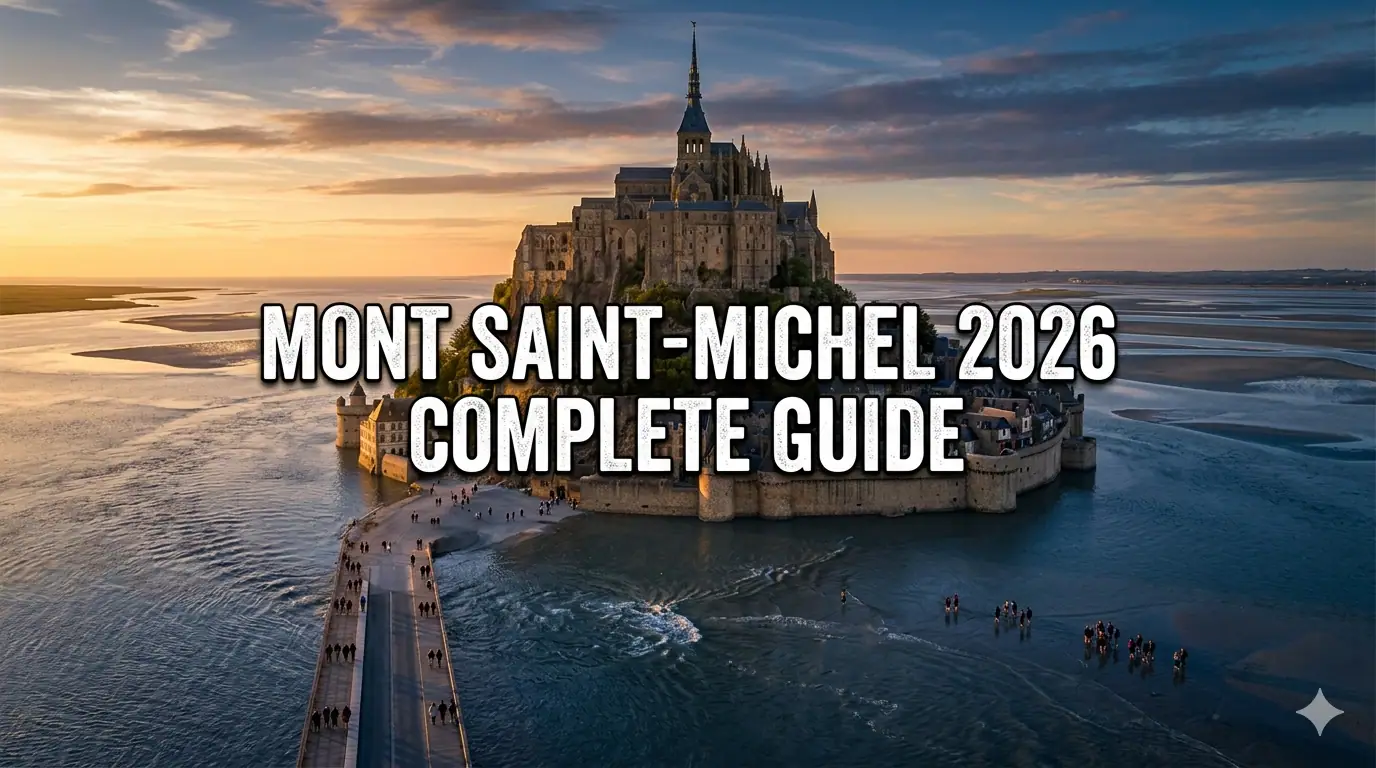
Mont Saint-Michel, one of France's most iconic landmarks and a UNESCO World Heritage Site, continues to captivate millions of visitors with its dramatic tidal island setting, medieval abbey perched atop granite rock, and centuries of history spanning from the 8th century to present day. Planning a visit in 2026 requires understanding significant operational changes including updated tide schedules, modified parking and shuttle systems, advance booking requirements for the abbey, and seasonal crowd management strategies. This comprehensive guide provides everything needed to plan your visit, from exact tide times and safety protocols to parking logistics, abbey tour reservations, accommodation options, and realistic budget expectations for every travel style.
The primary user intent centers on navigating practical logistics for a safe and enjoyable visit while avoiding common pitfalls like getting caught by rising tides, paying excessive parking fees, or missing abbey access due to lack of reservations. You need verified 2026 pricing in USD, current tide tables, exact parking locations and costs, booking procedures for abbey tours, transportation options from Paris and other cities, and strategic timing recommendations to maximize your experience while minimizing crowds and expenses. This guide delivers detailed, actionable information based on official 2026 tourism data and verified visitor experiences.
Average visitors report that Mont Saint-Michel exceeds expectations for architectural grandeur, historical significance, and natural drama, though many underestimate the importance of tide timing and advance planning. You can explore the abbey for USD 12 to 15, park for USD 15 to 30 daily, and enjoy the village atmosphere free of charge. Most travelers allocate USD 150 to 350 daily for parking, meals, tours, and local transport, excluding accommodation and long-distance travel. The combination of spiritual heritage, medieval architecture, and one of the world's most extreme tidal ranges creates an unforgettable experience that rewards careful planning.
Essential Mont Saint-Michel 2026 Travel Data
| Distance from Paris to Mont Saint-Michel | 360 kilometers, 3.5 to 4 hours by car or train plus bus |
| Abbey Admission Cost | USD 12 adults, USD 10 ages 18-25, free under 18 |
| Parking Fee (2026) | USD 15 to 30 per day depending on season |
| Shuttle Bus Cost | Free, operates 24/7 from parking area |
| Tidal Range | Up to 15 meters, one of world's highest |
| Best Visiting Season | April to June and September to October |
| Recommended Visit Duration | Half day to full day, overnight stay recommended |
Understanding Mont Saint-Michel's Dramatic Tides in 2026

Mont Saint-Michel experiences some of the most extreme tidal variations in the world, with water levels rising and falling up to 15 meters twice daily. This natural phenomenon transforms the landscape from isolated island surrounded by sea to accessible peninsula connected by exposed sand flats, creating both spectacular visual drama and serious safety considerations for visitors. Understanding tide schedules proves absolutely essential for planning your 2026 visit, as timing affects parking access, walking safety, photography opportunities, and overall experience quality.
Tide cycles follow lunar patterns, with high tides occurring approximately every 12 hours and 25 minutes. Spring tides, occurring during full and new moons, produce the most extreme variations with rapid water level changes. Neap tides, during quarter moons, create more moderate fluctuations. The coefficient system rates tide intensity from 20 to 120, with coefficients above 90 indicating particularly dramatic tides worth witnessing but requiring extra caution. In 2026, exceptional tides with coefficients exceeding 100 occur during March-April and September-October periods.
Safety concerns demand serious attention. The bay's quicksand-like sediment and rapidly rising water have trapped and drowned unwary visitors throughout history. Walking across the bay without certified guides remains strongly discouraged except during lowest tides and with proper equipment. The official causeway provides safe pedestrian access at all tide levels, though shuttle buses offer more convenient transport. You should always check tide schedules before visiting and allow ample time to return before water levels rise.
Photography opportunities vary dramatically with tides. Low tide exposes vast sand flats, salt marshes, and the dramatic scale of the granite rock, enabling wide-angle landscape photography and walks around the mount's base. High tide creates the iconic island image with water surrounding the mount, perfect for dramatic reflections and sunset photography. Many photographers visit during both tide states to capture the full range of Mont Saint-Michel's beauty. Tide prediction apps and websites provide precise timing for 2026 visits.
2026 tide calendar highlights include exceptional spring tides on March 21, April 19, September 14, and October 13, with coefficients reaching 110 to 115. These dates attract photographers and spectators but also larger crowds. Summer tides prove more moderate but offer longer daylight hours for extended exploration. Winter tides can be dramatic but shorter daylight limits photography time. You should balance tidal drama with crowd levels and daylight availability when planning your visit date.
Parking and Shuttle System Updates for 2026

Mont Saint-Michel's parking and access system underwent major restructuring in recent years to protect the bay's ecosystem and improve visitor experience. The 2026 system maintains these improvements with updated pricing, enhanced shuttle services, and refined traffic management. Understanding current parking logistics prevents frustration, excessive costs, and wasted time during your visit.
All visitor vehicles must park at the designated mainland parking area located approximately 2.5 kilometers from the mount. This large, paved facility accommodates cars, motorcycles, campers, and buses with clear signage and organized zones. Parking fees for 2026 range from USD 15 per day during low season (November to February) to USD 30 per day during peak season (June to August and holidays). Payment accepts credit cards and cash at automated machines or staffed booths. Overnight parking costs USD 45 to 60 depending on season.
The free shuttle bus system, called "Passeur," operates 24 hours daily, 7 days a week, transporting visitors between the parking area and Mont Saint-Michel. Buses depart every 10 to 15 minutes during peak hours and every 20 to 30 minutes during off-peak times. The journey takes approximately 12 minutes, with accessibility for wheelchairs, strollers, and passengers with reduced mobility. During summer peak season, additional buses run to manage increased visitor volume. You can also walk the 2.5-kilometer distance along a dedicated pedestrian path if you prefer exercise and flexibility, though this adds 30 to 40 minutes each way.
Alternative parking options exist but require careful evaluation. Some private operators offer parking with shuttle service at USD 20 to 40 daily, occasionally providing slightly lower rates or closer proximity, though the official parking remains most reliable and convenient. Hotels in nearby towns like Pontorson or Beauvoir often provide complimentary parking for guests, making overnight stays attractive for visitors wanting to explore at different tide times. You should verify parking arrangements when booking accommodation.
Arrival timing significantly impacts parking availability and stress levels. During peak season (June to August) and holiday weekends, the parking lot fills by 10 AM, requiring waits of 30 to 90 minutes for spaces. Arriving before 9 AM or after 4 PM typically ensures immediate parking availability. Winter months rarely experience parking shortages. You should check real-time parking availability on the official Mont Saint-Michel website or app before departure, particularly during summer visits.
Camper vans and RVs face specific regulations in 2026. Overnight parking in the main lot requires payment of overnight fees and adherence to designated RV zones with service facilities. Wild camping or overnight parking outside designated areas results in fines. Several campgrounds operate within 5 to 10 kilometers of Mont Saint-Michel, offering full hookups and shuttle access for USD 25 to 45 per night. These prove more comfortable and economical than parking lot overnight stays for extended visits.
Abbey Tours and Ticket Booking for 2026

The Mont Saint-Michel Abbey, crowning the island's granite peak, represents one of France's most significant medieval monuments and the primary attraction drawing visitors to the site. This architectural masterpiece, constructed between the 11th and 16th centuries, showcases Romanesque and Gothic styles, featuring the spectacular "Merveille" cloister, refectory, scriptorium, and panoramic terraces offering breathtaking bay views. Visiting the abbey requires understanding ticket options, booking procedures, tour formats, and realistic time allocations for 2026 visits.
Standard admission tickets for 2026 cost USD 12 for adults, USD 10 for visitors ages 18 to 25, and free for children under 18 and EU residents under 26. Tickets include access to the abbey church, cloister, refectory, guest halls, and terrace walks with audio guides available in 10 languages at no additional charge. The self-guided tour typically requires 1.5 to 2.5 hours depending on interest level and crowd density. You can purchase tickets online in advance or on-site, though advance booking proves essential during peak season to guarantee entry and avoid queues.
Online booking for 2026 opens 90 days in advance through the official Centre des Monuments Nationaux website. You select specific date and time slots, with entries spaced every 15 to 20 minutes to manage crowd flow. Peak season (June to August, Easter week, and Christmas holidays) requires booking 2 to 4 weeks ahead to secure preferred times. Shoulder season allows booking 1 to 2 weeks ahead, while winter visits often accommodate same-day or next-day reservations. You receive e-tickets via email for smartphone scanning at entry, eliminating paper ticket needs.
Guided tour options enhance the abbey experience for visitors seeking deeper historical context and expert insights. Official guided tours in English cost USD 18 to 25 per person and run 90 minutes, covering architectural highlights, monastic history, and restoration efforts. These tours operate daily during peak season at 10:30 AM and 2:30 PM, with reduced schedules in winter. Private guided tours for small groups cost USD 150 to 300 for 2 hours, providing customized experiences and flexible scheduling. You should book guided tours 2 to 3 weeks in advance during peak periods.
Combined tickets and passes offer value for extended exploration. The "Pass Mont Saint-Michel" includes abbey admission, guided village tour, and museum access for USD 22 to 28, representing 15 to 20 percent savings versus individual purchases. Multi-day passes allow re-entry to the abbey within 48 hours for USD 18, ideal for visitors staying overnight who wish to experience different lighting conditions or attend religious services. You can purchase these passes online or at the ticket office.
Accessibility considerations affect tour planning for visitors with mobility challenges. The abbey features 350 steps from entrance to summit with no elevator access, though rest areas with seating exist throughout the route. Wheelchair users can access the lower levels including the church and some exhibition spaces, but the cloister and upper terraces remain inaccessible. Reduced mobility visitors should allow extra time and consider visiting during off-peak hours when crowds prove less overwhelming. Audio guides include special content for visually impaired visitors.
Photography inside the abbey remains permitted for personal use without flash or tripods. Professional photography and commercial shoots require advance authorization and fees. The exterior terraces provide the best photography opportunities with panoramic bay views, particularly during golden hour before closing. You should allocate 30 minutes post-tour for terrace photography and contemplation.
Exploring the Village and Ramparts

Beyond the abbey, Mont Saint-Michel's medieval village offers charming streets, historic ramparts, museums, shops, and restaurants worthy of exploration. The Grande Rue, the main thoroughfare ascending the mount, features half-timbered houses, artisan boutiques, crêperies, and museums housed in buildings dating from the 14th to 18th centuries. Walking the ramparts provides spectacular views of the bay, fortification architecture, and understanding of the mount's defensive history.
Village exploration costs nothing beyond food and shopping, making it accessible to all visitors. The main street requires 30 to 60 minutes to traverse, though lingering in shops, cafés, and viewpoints easily extends this to 2 to 3 hours. Notable stops include the Maritime Museum detailing the bay's history and tidal phenomena (USD 8 admission), the Historical Museum showcasing artifacts and period rooms (USD 7), and the Tiphaine's House, home of Bertrand du Guesclin's wife (USD 6). Combined museum tickets cost USD 15 for all three attractions.
The rampart walk, accessible via USD 5 fee or included in some tour packages, follows the medieval fortifications encircling the mount. This elevated pathway offers unique perspectives of the abbey architecture, bay panoramas, and defensive structures including towers, gates, and bastions. The walk requires 45 to 60 minutes and involves uneven surfaces and steps unsuitable for strollers or wheelchairs. You should wear sturdy shoes and allow extra time for photography.
Dining options in the village range from quick crêpes and galettes at USD 8 to 15 to sit-down meals featuring local specialties like omelette de la Mère Poulard (the famous fluffy omelet) at USD 25 to 35, and full Norman menus with cider at USD 40 to 65 per person. While prices exceed mainland rates due to the island location, quality generally matches the cost. You can pack picnics and eat in designated areas near the ramparts or on the beach during low tide, significantly reducing meal expenses.
Shopping in Mont Saint-Michel focuses on local products including salted butter caramels, cider, Calvados apple brandy, maritime salt, and artisanal crafts. Prices prove higher than mainland shops, but purchasing directly supports the local economy and provides authentic souvenirs. You should budget USD 20 to 50 for food items and USD 30 to 100 for crafts depending on your interests. Many shops offer shipping services for bulky items.
Transportation Options from Paris and Major Cities

Reaching Mont Saint-Michel from Paris and other French cities requires planning, as no direct train service exists to the mount itself. Multiple transportation options balance cost, convenience, and flexibility, each with distinct advantages depending on your travel style, group size, and itinerary preferences. Understanding these options enables strategic decisions for your 2026 visit.
Car rental provides maximum flexibility for exploring Mont Saint-Michel and surrounding Normandy and Brittany regions. The drive from Paris takes 3.5 to 4 hours via A13 and A84 autoroutes, with tolls costing approximately USD 35 each way. Fuel expenses add USD 60 to 80 round-trip depending on vehicle efficiency. Total cost for a 3-day rental including insurance, fuel, and tolls ranges from USD 250 to 450, making this economical for families or groups of 3 to 4 people. You benefit from flexible timing, ability to visit nearby attractions like Bayeux, Avranches, or Saint-Malo, and luggage convenience. However, parking fees and potential summer traffic congestion prove challenging.
Train and bus combinations offer car-free alternatives with moderate cost and reasonable convenience. Direct TGV trains run from Paris Montparnasse to Rennes (1 hour 30 minutes, USD 40 to 90) or Dol-de-Bretagne (2 hours, USD 35 to 80), where you transfer to regional buses for the final 45 to 60 minute journey to Mont Saint-Michel. Bus tickets cost USD 15 to 20 each way. Total journey time reaches 3.5 to 4.5 hours with costs of USD 70 to 140 round-trip per person. This option suits solo travelers or couples preferring not to drive, though luggage handling and schedule coordination require attention.
Organized day tours from Paris provide hassle-free experiences including transportation, guide, and sometimes meals. Full-day tours depart Paris at 7 AM, include 3 to 4 hours at Mont Saint-Michel, and return by 8 PM, costing USD 120 to 200 per person. These tours typically combine Mont Saint-Michel with other Normandy highlights like D-Day beaches or Rouen. Advantages include no driving stress, expert commentary, and guaranteed timing. Disadvantages include rigid schedules, limited independent exploration time, and higher per-person costs for families. You should book 2 to 4 weeks ahead during peak season.
Private transfers and chauffeur services offer premium convenience at USD 600 to 1,200 daily depending on vehicle size and service level. This option suits luxury travelers, families with young children, or groups prioritizing comfort and flexibility. You control the schedule, enjoy door-to-door service, and can combine Mont Saint-Michel with multiple stops. While expensive, the cost becomes reasonable when divided among 4 to 6 passengers.
Regional access from other French cities proves straightforward. Rennes sits 60 kilometers away (45 minutes by car), Caen 110 kilometers (1 hour 15 minutes), and Nantes 180 kilometers (2 hours). Direct bus services operate from Rennes, Avranches, and Pontorson during peak season. You should verify current schedules on regional transport websites, as services reduce frequency in winter months.
Accommodation Options and Where to Stay

Choosing where to stay near Mont Saint-Michel significantly impacts your experience, budget, and ability to witness the mount at different tide times and lighting conditions. Accommodation options range from luxury hotels on the mount itself to budget-friendly options in nearby towns, each with distinct advantages and trade-offs. Understanding these options enables strategic decisions matching your priorities and budget.
Staying on Mont Saint-Michel island offers unparalleled atmosphere and the magical experience of exploring after day-trippers depart. Only three hotels operate on the mount: La Mère Poulard (luxury, USD 350 to 600 per night), Auberge Saint-Pierre (mid-range, USD 200 to 350), and Hôtel du Guesclin (budget-mid, USD 150 to 250). These properties feature historic architecture, unique ambiance, and proximity to the abbey, but rooms prove small, prices high, and luggage transport requires coordination with hotel shuttles. You should book 3 to 6 months in advance for 2026 dates, particularly for summer and holiday periods.
Hotels in Pontorson, located 9 kilometers from the mount, provide the best balance of proximity, amenities, and value. This town offers 15 to 20 hotels ranging from budget chains like Ibis (USD 70 to 100 per night) to charming three-star properties (USD 100 to 180). Advantages include free parking, restaurants, supermarkets, and easy shuttle or taxi access to Mont Saint-Michel. Many hotels provide complimentary shuttle service or discounted parking vouchers. You can visit the mount multiple times at different tides without changing accommodation.
Beauvoir and Genêts, villages closer to the mount than Pontorson, offer boutique hotels and bed-and-breakfasts with bay views at USD 120 to 250 per night. These locations provide quieter atmospheres, personalized service, and proximity for sunrise or sunset visits. However, dining and shopping options prove limited compared to Pontorson. You should verify parking arrangements and shuttle access when booking.
Campgrounds within 5 to 15 kilometers of Mont Saint-Michel cater to RVs, campers, and tent campers at USD 25 to 50 per night. Facilities typically include electrical hookups, restrooms, showers, and sometimes pools or restaurants. This option suits budget travelers and families seeking extended stays. You should book campgrounds 2 to 3 months ahead for summer 2026 visits.
Day-trip accommodation in Rennes, Saint-Malo, or Avranches enables combining Mont Saint-Michel with broader regional exploration. These cities offer extensive hotel options at USD 80 to 200 per night, superior dining and cultural attractions, though requiring 45 to 90 minute drives to the mount. This approach suits travelers with rental cars wanting to experience multiple destinations.
Best Time to Visit in 2026 and Crowd Management

Timing your Mont Saint-Michel visit in 2026 significantly impacts crowd levels, weather conditions, parking availability, accommodation costs, and overall experience quality. Understanding seasonal patterns, peak periods, and strategic timing enables you to maximize enjoyment while minimizing frustrations associated with overtourism.
Peak season spans June through August and Easter week, when weather proves most reliable with temperatures averaging 18 to 25 degrees Celsius and daylight extending until 9:30 PM. However, these months attract maximum crowds, with daily visitor numbers reaching 20,000 to 30,000 people. Parking lots fill by 10 AM, abbey entry queues extend 30 to 60 minutes, village streets become congested, and accommodation prices peak at 50 to 80 percent above low-season rates. You should arrive before 9 AM or after 4 PM to avoid worst crowds, book all reservations 2 to 3 months ahead, and expect higher prices throughout.
Shoulder seasons of April to May and September to October deliver optimal balance for most visitors. Temperatures remain comfortable at 12 to 20 degrees, crowds diminish 40 to 60 percent compared to summer, and accommodation prices drop 25 to 40 percent. Spring features blooming coastal vegetation and dramatic spring tides, while autumn offers harvest colors, migratory bird watching, and exceptional light for photography. You can often secure same-week abbey reservations and find parking without arriving at dawn. These months prove ideal for visitors prioritizing experience quality over guaranteed sunny weather.
Low season from November through March presents fewest crowds with daily visitors dropping to 3,000 to 8,000 people. Accommodation prices reach annual lows, and you can often walk directly into the abbey without reservations. However, weather proves unpredictable with temperatures averaging 5 to 12 degrees, frequent rain, and shorter daylight hours ending by 5:30 PM in December and January. Some restaurants and shops close for winter vacations, particularly in January. This season suits budget travelers, photographers seeking dramatic stormy skies, and visitors prioritizing solitude over perfect weather.
Time-of-day strategies prove crucial regardless of season. Arriving before 9:30 AM or after 4 PM avoids peak day-trip crowds and tour bus arrivals. Midday (11 AM to 3 PM) experiences maximum congestion. Overnight visitors enjoy magical early morning and evening hours when the mount feels tranquil and atmospheric. You should plan abbey visits for opening time (9:30 AM) or after 4 PM to minimize crowd interference with your experience.
Weekday versus weekend timing affects crowd levels significantly. Tuesday through Thursday prove least crowded, while weekends, particularly Sundays, attract regional visitors and French families. Monday can be busy as many French museums close, redirecting visitors to Mont Saint-Michel. You should schedule visits for mid-week when possible for optimal experience.
Safety Considerations and Practical Tips
Mont Saint-Michel presents specific safety considerations related to tides, crowds, and terrain that require awareness and preparation. Understanding these factors and following recommended precautions ensures your 2026 visit remains enjoyable and incident-free.
Tidal safety demands utmost respect. The bay's rapid water rise, reaching speeds of walking pace, combined with quicksand-like sediment, has trapped and drowned visitors throughout history. Walking across the bay without certified guides remains strongly discouraged except on marked paths during lowest tides. The official pedestrian causeway and shuttle buses provide safe access at all tide levels. You should always check tide schedules before visiting, available on the official Mont Saint-Michel website or tide prediction apps. Never attempt to cross the bay independently, even if it appears safe. Guided bay walks cost USD 15 to 25 and provide safe, educational experiences of this unique environment.
Crowd management requires vigilance, particularly during peak season. The narrow Grande Rue becomes congested with visitors moving in both directions, creating bottlenecks and potential crush risks. You should keep children close, establish meeting points in case of separation, and avoid visiting during extreme overcrowding. If streets become uncomfortably packed, consider waiting at cafés or ramparts until crowds thin. Emergency services can reach the mount, but response times increase during peak congestion.
Physical fitness considerations affect accessibility. Reaching the abbey summit requires climbing approximately 350 steps with uneven surfaces, narrow passages, and no elevator access. The village ascent involves cobblestone streets with significant incline. Visitors with mobility challenges, heart conditions, or knee problems should assess their capabilities realistically. Rest areas exist throughout the route, and you can explore lower levels without reaching the summit. Wheelchair users can access the village ramparts and some abbey areas but not upper levels.
Weather preparation proves essential for comfort and safety. The coastal location creates rapidly changing conditions with wind, rain, and temperature variations possible within hours. You should dress in layers, carry waterproof jackets even on sunny days, and wear sturdy, non-slip footwear suitable for wet stone surfaces. Sun protection remains important even on cloudy days due to reflective water and sand. In summer, heat exhaustion poses risks during midday exploration, requiring water, hats, and regular rest breaks.
Personal security in crowded tourist areas requires standard precautions. Keep valuables secure in zipped bags, maintain awareness of belongings in congested areas, and use hotel safes for passports and excess cash. Pickpocketing occurs occasionally during peak season. The mount remains safe for evening walking, but stick to well-lit main streets. Emergency services respond to 112 for medical or police assistance.
0 Comments