.webp)
.webp)
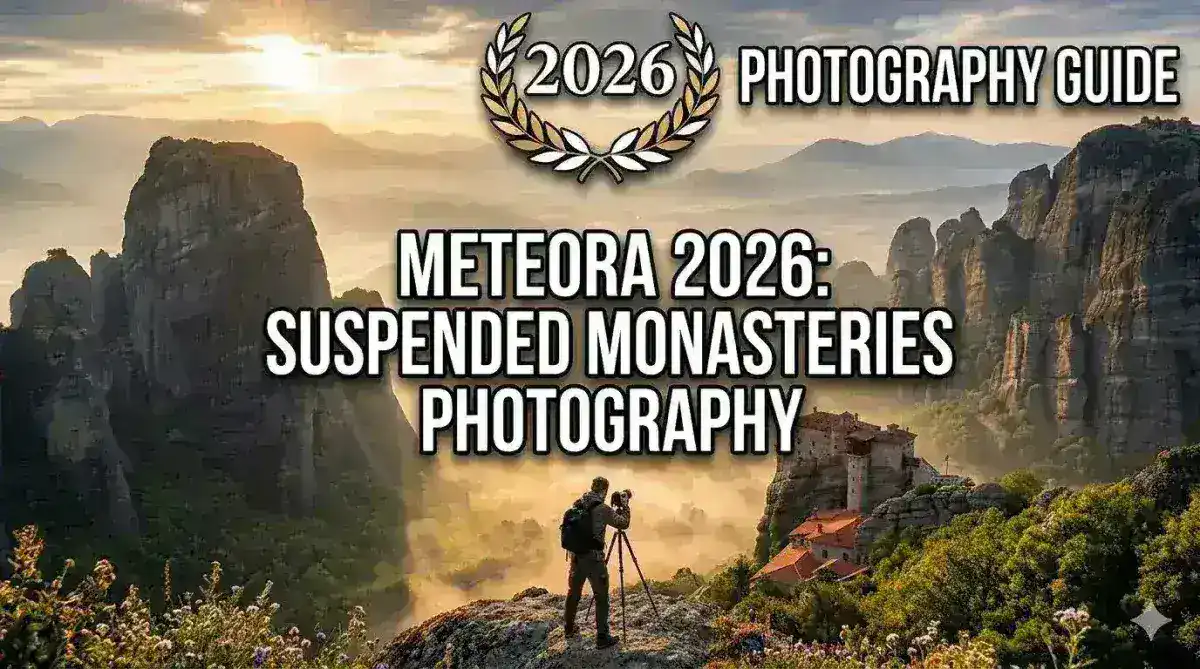
Meteora 2026: The Ultimate Photography Guide to Greece's Suspended Monasteries
Meteora photography guide 2026 opens the door to one of the world's most extraordinary and photogenic destinations. The ancient monasteries of Meteora, perched precariously atop towering sandstone pillars in central Greece, present photographers with an unparalleled combination of dramatic geology, Byzantine architecture, spiritual atmosphere, and breathtaking natural beauty. For landscape, architecture, and travel photographers, Meteora offers endless opportunities to create stunning, iconic images that capture both the physical grandeur and mystical essence of this UNESCO World Heritage Site.
Rising nearly 400 meters above the Thessalian plain, the rock pillars of Meteora have been home to Eastern Orthodox monks since the 11th century. The monasteries built upon these natural pedestals seem to defy gravity, suspended between earth and sky in a landscape that feels both ancient and otherworldly. For photographers, Meteora presents unique challenges and rewards: dramatic vertical compositions, ever-changing light and atmospheric conditions, rich cultural heritage, and the constant interplay between human creation and natural wonder.
This comprehensive 2026 photography guide covers everything you need to know to capture stunning images of Meteora: the best viewpoints and locations, optimal timing for different conditions, technical camera settings, equipment recommendations, monastery visiting information, seasonal considerations, composition techniques, hidden gems, drone regulations, and practical logistics. Whether you're a professional photographer seeking iconic shots or an enthusiast wanting to document your journey, this guide will help you create extraordinary images of one of Greece's most spectacular destinations.
Understanding Meteora: Geology, History, and Photography Potential

Before diving into technical photography details, understanding what makes Meteora unique enhances your ability to capture its essence.
Geological Formation:
- Rock Type: Conglomerate sandstone and pebble deposits formed 60 million years ago
- Height: Pillars rise 100-400 meters above the valley floor
- Formation Process: Ancient river deposits followed by tectonic uplift and erosion
- Color Palette: Warm ochre, rust, cream, and grey tones that change with light
- Texture: Vertical striations, weathering patterns, and erosion features
- 👉 Whycations in Latvia 2026: Riga's Rise as a Destination for Purpose and Reflection
- 👉 ETIAS Norway 2026: Mandatory Travel Authorization for Visa-Exempt Travelers
- 👉 Copenhagen Sprint 2026: World Tour Cycling Race Survivor's Guide
The Monasteries:
Of the original 24 monasteries, six remain active and accessible:
- Great Meteoron (Megalo Meteoro): Largest and oldest (14th century); highest elevation
- Varlaam Monastery: Second largest; 14th century; impressive architecture
- Rousanou Monastery: Most accessible; 16th century; connected by bridge
- St. Nicholas Anapafsas: Smallest; 15th century; multi-level design
- St. Stephen Monastery: Most accessible; 14th century; easiest to visit
- Holy Trinity Monastery: Featured in James Bond film; dramatic cliff position
- 👉 Whycations in Latvia 2026: Riga's Rise as a Destination for Purpose and Reflection
- 👉 ETIAS Norway 2026: Mandatory Travel Authorization for Visa-Exempt Travelers
- 👉 Copenhagen Sprint 2026: World Tour Cycling Race Survivor's Guide
Photography Opportunities:
- Landscape: Dramatic rock formations, valley panoramas, atmospheric conditions
- Architecture: Byzantine monastery buildings, frescoes, details
- Cultural: Monks in traditional dress, religious ceremonies (with permission)
- Nature: Wildlife, wildflowers, seasonal changes
- Abstract: Textures, patterns, light and shadow play
- 👉 Whycations in Latvia 2026: Riga's Rise as a Destination for Purpose and Reflection
- 👉 ETIAS Norway 2026: Mandatory Travel Authorization for Visa-Exempt Travelers
- 👉 Copenhagen Sprint 2026: World Tour Cycling Race Survivor's Guide
Essential Photography Equipment for Meteora

Choosing the right equipment is crucial for capturing Meteora's diverse photographic opportunities.
Camera Bodies:
- DSLR or Mirrorless: Full-frame preferred for dynamic range and low-light performance
- Resolution: 24MP+ recommended for large prints and cropping flexibility
- Weather Sealing: Important for dust and occasional rain
- Dual Card Slots: Recommended for backup security
- Battery Life: Bring 3-4 batteries; charging opportunities limited
- 👉 Whycations in Latvia 2026: Riga's Rise as a Destination for Purpose and Reflection
- 👉 ETIAS Norway 2026: Mandatory Travel Authorization for Visa-Exempt Travelers
- 👉 Copenhagen Sprint 2026: World Tour Cycling Race Survivor's Guide
Lenses:
Wide-Angle (Essential):
- 14-24mm f/2.8 or similar for dramatic monastery and landscape shots
- Captures full rock pillars and monastery context li>Essential for interior monastery photography (where permitted) li>Creates sense of scale and grandeur
- 👉 Whycations in Latvia 2026: Riga's Rise as a Destination for Purpose and Reflection
- 👉 ETIAS Norway 2026: Mandatory Travel Authorization for Visa-Exempt Travelers
- 👉 Copenhagen Sprint 2026: World Tour Cycling Race Survivor's Guide
Standard Zoom (Versatile):
- 24-70mm f/2.8 for general photography li>Walkaround lens for monastery visits li>Good for environmental portraits and details
- 👉 Whycations in Latvia 2026: Riga's Rise as a Destination for Purpose and Reflection
- 👉 ETIAS Norway 2026: Mandatory Travel Authorization for Visa-Exempt Travelers
- 👉 Copenhagen Sprint 2026: World Tour Cycling Race Survivor's Guide
Telephoto (Highly Recommended):
- 70-200mm f/2.8 or 100-400mm for compression and details li>Isolates individual monasteries from distance li>Captures monks and architectural details li>Essential for sunrise/sunset from viewpoints li>Compresses rock pillar layers for dramatic effect
- 👉 Whycations in Latvia 2026: Riga's Rise as a Destination for Purpose and Reflection
- 👉 ETIAS Norway 2026: Mandatory Travel Authorization for Visa-Exempt Travelers
- 👉 Copenhagen Sprint 2026: World Tour Cycling Race Survivor's Guide
Specialty Lenses (Optional):
- li>Tilt-shift for architectural correction li>Macro for texture and detail work li>Super-telephoto (400mm+) for wildlife or extreme compression
- 👉 Whycations in Latvia 2026: Riga's Rise as a Destination for Purpose and Reflection
- 👉 ETIAS Norway 2026: Mandatory Travel Authorization for Visa-Exempt Travelers
- 👉 Copenhagen Sprint 2026: World Tour Cycling Race Survivor's Guide
Essential Accessories:
- Tripod: Sturdy carbon fiber or aluminum; essential for sunrise/sunset/long exposure
- Filters:
- li>Polarizing filter (reduces haze, enhances sky, manages reflections)
- 👉 Whycations in Latvia 2026: Riga's Rise as a Destination for Purpose and Reflection
- 👉 ETIAS Norway 2026: Mandatory Travel Authorization for Visa-Exempt Travelers
- 👉 Copenhagen Sprint 2026: World Tour Cycling Race Survivor's Guide
Best Photography Locations and Viewpoints

Meteora offers numerous exceptional photography locations, each with unique perspectives and characteristics.
1. First Meteora Viewpoint (Panoramic View)
- Location: Main road between Kalabaka and Kastraki
- Best For: Iconic panoramic view of multiple monasteries and rock pillars
- Best Time: Sunrise and golden hour
- Lens: Wide-angle (14-24mm) for panorama; telephoto (70-200mm) for compression
- Composition: Layer rock pillars from foreground to background
- Access: Easy; parking available; 2-minute walk from car
- Photography Tips:
- li>Arrive 45 minutes before sunrise for blue hour
- 👉 Whycations in Latvia 2026: Riga's Rise as a Destination for Purpose and Reflection
- 👉 ETIAS Norway 2026: Mandatory Travel Authorization for Visa-Exempt Travelers
- 👉 Copenhagen Sprint 2026: World Tour Cycling Race Survivor's Guide
2. Psili Ammos Viewpoint
- Location: Near Kastraki village
- Best For: Close-up views of Rousanou and St. Nicholas monasteries
- Best Time: Morning light (8-11 AM)
- Lens: Standard to telephoto (50-200mm)
- Access: Moderate; 15-minute hike from Kastraki
- Photography Tips:
- li>Side lighting enhances rock texture
- 👉 Whycations in Latvia 2026: Riga's Rise as a Destination for Purpose and Reflection
- 👉 ETIAS Norway 2026: Mandatory Travel Authorization for Visa-Exempt Travelers
- 👉 Copenhagen Sprint 2026: World Tour Cycling Race Survivor's Guide
3. Ypapanti Monastery Viewpoint
- Location: Hiking trail between monasteries
- Best For: Unique angle of Great Meteoron and Varlaam
- Best Time: Late afternoon/golden hour
- Lens: Wide to standard (14-50mm)
- Access: Moderate hike; part of monastery trail network
- Photography Tips:
- li>Golden hour light illuminates monastery facades
- 👉 Whycations in Latvia 2026: Riga's Rise as a Destination for Purpose and Reflection
- 👉 ETIAS Norway 2026: Mandatory Travel Authorization for Visa-Exempt Travelers
- 👉 Copenhagen Sprint 2026: World Tour Cycling Race Survivor's Guide
4. Kastraki Village Rooftops
- Location: Traditional village below Meteora rocks
- Best For: Village context with rock pillars backdrop
- Best Time: Blue hour and sunset
- Lens: Wide-angle (14-35mm)
- Access: Easy; ask permission for private rooftops
- Photography Tips:
- li>Combine traditional architecture with natural formations
- 👉 Whycations in Latvia 2026: Riga's Rise as a Destination for Purpose and Reflection
- 👉 ETIAS Norway 2026: Mandatory Travel Authorization for Visa-Exempt Travelers
- 👉 Copenhagen Sprint 2026: World Tour Cycling Race Survivor's Guide
5. Inside the Monasteries
- Best Monasteries for Photography:
- li>Great Meteoron: Largest, most comprehensive
- 👉 Whycations in Latvia 2026: Riga's Rise as a Destination for Purpose and Reflection
- 👉 ETIAS Norway 2026: Mandatory Travel Authorization for Visa-Exempt Travelers
- 👉 Copenhagen Sprint 2026: World Tour Cycling Race Survivor's Guide
- li>No photography inside churches (strictly enforced)
- li>Focus on architectural details and textures
6. Hiking Trails
- Main Trail Network: Connects monasteries and viewpoints
- Best For: Unique perspectives, nature photography, adventure shots
- Best Time: Morning or late afternoon
- Lens: Versatile zoom (24-105mm or 24-70mm)
- Photography Tips:
- li>Capture hikers for scale
- 👉 Whycations in Latvia 2026: Riga's Rise as a Destination for Purpose and Reflection
- 👉 ETIAS Norway 2026: Mandatory Travel Authorization for Visa-Exempt Travelers
- 👉 Copenhagen Sprint 2026: World Tour Cycling Race Survivor's Guide
Optimal Timing: When to Photograph Meteora

Timing is everything in Meteora photography. Light, weather, and crowds vary dramatically throughout the day and year.
Time of Day:
Sunrise (5:30-7:30 AM夏季; 7:00-8:30 AM冬季):
- Advantages:
- li>Soft, warm light on eastern faces
- 👉 Whycations in Latvia 2026: Riga's Rise as a Destination for Purpose and Reflection
- 👉 ETIAS Norway 2026: Mandatory Travel Authorization for Visa-Exempt Travelers
- 👉 Copenhagen Sprint 2026: World Tour Cycling Race Survivor's Guide
- li>Requires early wake-up (4:00-4:30 AM)
- li>Arrive 45-60 minutes before sunrise
Golden Hour Morning (7:30-10:00 AM):
- Advantages:
- li>Warm, directional light
- 👉 Whycations in Latvia 2026: Riga's Rise as a Destination for Purpose and Reflection
- 👉 ETIAS Norway 2026: Mandatory Travel Authorization for Visa-Exempt Travelers
- 👉 Copenhagen Sprint 2026: World Tour Cycling Race Survivor's Guide
Midday (11:00 AM-3:00 PM):
- Challenges:
- li>Harsh overhead light
- 👉 Whycations in Latvia 2026: Riga's Rise as a Destination for Purpose and Reflection
- 👉 ETIAS Norway 2026: Mandatory Travel Authorization for Visa-Exempt Travelers
- 👉 Copenhagen Sprint 2026: World Tour Cycling Race Survivor's Guide
- li>Interior monastery photography (where allowed)
Golden Hour Evening (5:00-8:00 PM夏季; 3:00-5:00 PM冬季):
- Advantages:
- li>Warm light on western faces
- 👉 Whycations in Latvia 2026: Riga's Rise as a Destination for Purpose and Reflection
- 👉 ETIAS Norway 2026: Mandatory Travel Authorization for Visa-Exempt Travelers
- 👉 Copenhagen Sprint 2026: World Tour Cycling Race Survivor's Guide
- li>Arrive 2 hours before sunset
Blue Hour (After Sunset):
- Duration: 20-40 minutes after sunset
- Characteristics: Deep blue sky, monastery lights (if illuminated)
- Equipment: Tripod essential; long exposures (10-30 seconds)
- Best For: Dramatic atmospheric images
- 👉 Whycations in Latvia 2026: Riga's Rise as a Destination for Purpose and Reflection
- 👉 ETIAS Norway 2026: Mandatory Travel Authorization for Visa-Exempt Travelers
- 👉 Copenhagen Sprint 2026: World Tour Cycling Race Survivor's Guide
Seasonal Photography Considerations
Spring (April-May):
- Advantages:
- li>Wildflowers in bloom (colorful foregrounds)
- 👉 Whycations in Latvia 2026: Riga's Rise as a Destination for Purpose and Reflection
- 👉 ETIAS Norway 2026: Mandatory Travel Authorization for Visa-Exempt Travelers
- 👉 Copenhagen Sprint 2026: World Tour Cycling Race Survivor's Guide
- li>Unpredictable weather
- li>Wildflower foregrounds
Summer (June-August):
- Advantages:
- li>Long daylight hours (more shooting time)
- 👉 Whycations in Latvia 2026: Riga's Rise as a Destination for Purpose and Reflection
- 👉 ETIAS Norway 2026: Mandatory Travel Authorization for Visa-Exempt Travelers
- 👉 Copenhagen Sprint 2026: World Tour Cycling Race Survivor's Guide
- li>Peak tourist crowds
- li>Shoot early morning and evening only
Autumn (September-October):
- Advantages:
- li>Warm autumn colors
- 👉 Whycations in Latvia 2026: Riga's Rise as a Destination for Purpose and Reflection
- 👉 ETIAS Norway 2026: Mandatory Travel Authorization for Visa-Exempt Travelers
- 👉 Copenhagen Sprint 2026: World Tour Cycling Race Survivor's Guide
Winter (November-March):
- Advantages:
- li>Fewest tourists
- 👉 Whycations in Latvia 2026: Riga's Rise as a Destination for Purpose and Reflection
- 👉 ETIAS Norway 2026: Mandatory Travel Authorization for Visa-Exempt Travelers
- 👉 Copenhagen Sprint 2026: World Tour Cycling Race Survivor's Guide
- li>Cold temperatures (0-10°C)
- li>Snow-covered monasteries (rare and stunning)
- li>Weather-sealed gear
Technical Camera Settings and Techniques

Mastering technical settings ensures you capture Meteora's beauty with maximum quality.
Landscape Photography Settings:
Sunrise/Sunset:
- Mode: Aperture Priority (A/Av) or Manual (M)
- Aperture: f/8-f/11 for sharpness throughout frame
- ISO: 100-400 (keep as low as possible)
- Shutter Speed: Varies; use tripod for anything under 1/60s
- Focus: Manual focus at hyperfocal distance or 1/3 into scene
- File Format: RAW for maximum editing flexibility
- White Balance: Daylight or Shade (6500-7500K for warmth)
- 👉 Whycations in Latvia 2026: Riga's Rise as a Destination for Purpose and Reflection
- 👉 ETIAS Norway 2026: Mandatory Travel Authorization for Visa-Exempt Travelers
- 👉 Copenhagen Sprint 2026: World Tour Cycling Race Survivor's Guide
Blue Hour/Long Exposure:
- Mode: Manual (M)
- Aperture: f/11-f/16
- ISO: 100
- Shutter Speed: 10-30 seconds (or longer with ND filters)
- Use: Tripod, remote shutter, mirror lock-up
- Technique: Exposure bracketing for HDR if needed
- 👉 Whycations in Latvia 2026: Riga's Rise as a Destination for Purpose and Reflection
- 👉 ETIAS Norway 2026: Mandatory Travel Authorization for Visa-Exempt Travelers
- 👉 Copenhagen Sprint 2026: World Tour Cycling Race Survivor's Guide
Monastery Architecture:
- Mode: Aperture Priority (A/Av)
- Aperture: f/5.6-f/8
- ISO: 400-1600 (interiors often dim)
- Shutter Speed: 1/60s minimum (use tripod if slower)
- Focus: Single-point AF on architectural details
- White Balance: Auto or Tungsten for interiors
- 👉 Whycations in Latvia 2026: Riga's Rise as a Destination for Purpose and Reflection
- 👉 ETIAS Norway 2026: Mandatory Travel Authorization for Visa-Exempt Travelers
- 👉 Copenhagen Sprint 2026: World Tour Cycling Race Survivor's Guide
Telephoto Compression:
- Lens: 70-200mm or longer
- Aperture: f/5.6-f/8
- ISO: 100-400
- Shutter Speed: 1/focal length minimum (1/200s for 200mm)
- Use: Tripod or image stabilization
- Technique: Compress multiple rock pillars for layered effect
- 👉 Whycations in Latvia 2026: Riga's Rise as a Destination for Purpose and Reflection
- 👉 ETIAS Norway 2026: Mandatory Travel Authorization for Visa-Exempt Travelers
- 👉 Copenhagen Sprint 2026: World Tour Cycling Race Survivor's Guide
Advanced Techniques
Exposure Bracketing/HDR:
- Shoot 3-5 exposures at 1-2 EV intervals
- Combine in post-processing for high dynamic range
- Essential for sunrise/sunset with bright sky and dark foreground
- Use tripod for perfect alignment
- 👉 Whycations in Latvia 2026: Riga's Rise as a Destination for Purpose and Reflection
- 👉 ETIAS Norway 2026: Mandatory Travel Authorization for Visa-Exempt Travelers
- 👉 Copenhagen Sprint 2026: World Tour Cycling Race Survivor's Guide
Panoramas:
- Shoot vertical orientation for more height
- Overlap frames by 30-40%
- Use manual exposure and focus for consistency
- Stitch in Lightroom, Photoshop, or PTGui
- Create sweeping Meteora valley panoramas
- 👉 Whycations in Latvia 2026: Riga's Rise as a Destination for Purpose and Reflection
- 👉 ETIAS Norway 2026: Mandatory Travel Authorization for Visa-Exempt Travelers
- 👉 Copenhagen Sprint 2026: World Tour Cycling Race Survivor's Guide
Focus Stacking:
- Take multiple shots at different focus points
- Combine for front-to-back sharpness
- Useful for close foreground elements with distant monasteries
- Requires tripod and post-processing
- 👉 Whycations in Latvia 2026: Riga's Rise as a Destination for Purpose and Reflection
- 👉 ETIAS Norway 2026: Mandatory Travel Authorization for Visa-Exempt Travelers
- 👉 Copenhagen Sprint 2026: World Tour Cycling Race Survivor's Guide
Long Exposure with ND Filters:
- Use 6-stop or 10-stop ND filter
- Smooth clouds for dramatic effect
- Exposure times: 30 seconds to several minutes
- Calculate exposure with app or chart
- Create ethereal, mystical atmosphere
- 👉 Whycations in Latvia 2026: Riga's Rise as a Destination for Purpose and Reflection
- 👉 ETIAS Norway 2026: Mandatory Travel Authorization for Visa-Exempt Travelers
- 👉 Copenhagen Sprint 2026: World Tour Cycling Race Survivor's Guide
Composition Strategies for Meteora

Strong composition transforms good Meteora photos into exceptional ones.
1. Layering and Depth:
- Use multiple rock pillars to create layers
- Include foreground, middle ground, and background li>Telephoto compression enhances layering effect li>Add atmospheric perspective (haze/mist)
- 👉 Whycations in Latvia 2026: Riga's Rise as a Destination for Purpose and Reflection
- 👉 ETIAS Norway 2026: Mandatory Travel Authorization for Visa-Exempt Travelers
- 👉 Copenhagen Sprint 2026: World Tour Cycling Race Survivor's Guide
2. Leading Lines:
- Use hiking trails, rock striations, or monastery walls li>Guide viewer's eye through the image li>Create sense of journey and exploration
- 👉 Whycations in Latvia 2026: Riga's Rise as a Destination for Purpose and Reflection
- 👉 ETIAS Norway 2026: Mandatory Travel Authorization for Visa-Exempt Travelers
- 👉 Copenhagen Sprint 2026: World Tour Cycling Race Survivor's Guide
3. Scale and Human Element:
- li>Include hikers or monks to show massive scale li>Tiny figures emphasize rock pillar height li>Adds storytelling and relatability
- 👉 Whycations in Latvia 2026: Riga's Rise as a Destination for Purpose and Reflection
- 👉 ETIAS Norway 2026: Mandatory Travel Authorization for Visa-Exempt Travelers
- 👉 Copenhagen Sprint 2026: World Tour Cycling Race Survivor's Guide
4. Framing:
- li>Use rock arches, windows, or doorways as frames li>Frame monasteries with foreground elements li>Adds depth and context
- 👉 Whycations in Latvia 2026: Riga's Rise as a Destination for Purpose and Reflection
- 👉 ETIAS Norway 2026: Mandatory Travel Authorization for Visa-Exempt Travelers
- 👉 Copenhagen Sprint 2026: World Tour Cycling Race Survivor's Guide
5. Symmetry and Patterns:
- li>Capture vertical rock pillar symmetry li>Highlight repeating monastery architecture li>Find patterns in rock textures
- 👉 Whycations in Latvia 2026: Riga's Rise as a Destination for Purpose and Reflection
- 👉 ETIAS Norway 2026: Mandatory Travel Authorization for Visa-Exempt Travelers
- 👉 Copenhagen Sprint 2026: World Tour Cycling Race Survivor's Guide
6. Negative Space:
- li>Use sky or mist as negative space li>Emphasizes isolation and spirituality li>Creates minimalist, powerful compositions
- 👉 Whycations in Latvia 2026: Riga's Rise as a Destination for Purpose and Reflection
- 👉 ETIAS Norway 2026: Mandatory Travel Authorization for Visa-Exempt Travelers
- 👉 Copenhagen Sprint 2026: World Tour Cycling Race Survivor's Guide
7. Golden Ratio/Rule of Thirds:
- li>Place monasteries at intersection points li>Balance rock pillars with sky li>Create harmonious, pleasing compositions
- 👉 Whycations in Latvia 2026: Riga's Rise as a Destination for Purpose and Reflection
- 👉 ETIAS Norway 2026: Mandatory Travel Authorization for Visa-Exempt Travelers
- 👉 Copenhagen Sprint 2026: World Tour Cycling Race Survivor's Guide
Drone Photography: Regulations and Techniques

Drone photography at Meteora offers spectacular aerial perspectives but comes with strict regulations.
Current Regulations (2026):
- General Rule: Drone flights over Meteora require special permit
- Restricted Airspace: Meteora is in controlled airspace
- Monastery Property: Flying over active monasteries prohibited
- Permit Required: Must obtain permission from:
- li>Hellenic Civil Aviation Authority (HCAA)
- 👉 Whycations in Latvia 2026: Riga's Rise as a Destination for Purpose and Reflection
- 👉 ETIAS Norway 2026: Mandatory Travel Authorization for Visa-Exempt Travelers
- 👉 Copenhagen Sprint 2026: World Tour Cycling Race Survivor's Guide
How to Obtain Drone Permit:
- Contact Meteora Monastery Holy Community (email/phone)
- Submit flight plan with dates, times, locations
- Provide proof of drone insurance
- Show pilot certification (required in Greece)
- Pay applicable fees
- Wait for written approval
- Carry permit documentation during flights
Alternative: Legal Aerial Photography
- Book licensed drone pilot with permits
- Purchase stock aerial footage/photos
- Use viewpoint photography for elevated perspectives
- Hike to high viewpoints for "drone-like" angles
- 👉 Whycations in Latvia 2026: Riga's Rise as a Destination for Purpose and Reflection
- 👉 ETIAS Norway 2026: Mandatory Travel Authorization for Visa-Exempt Travelers
- 👉 Copenhagen Sprint 2026: World Tour Cycling Race Survivor's Guide
Drone Photography Tips (If Permitted):
- Fly early morning for best light and calm winds
- Respect monastery privacy and quiet
- Maintain safe distance from rock pillars (wind turbulence)
- Shoot in RAW if your drone supports it
- Use ND filters for proper exposure
- Capture both wide establishing shots and details
- Follow "reveal" technique: start low, ascend slowly
- Always prioritize safety over shots
- 👉 Whycations in Latvia 2026: Riga's Rise as a Destination for Purpose and Reflection
- 👉 ETIAS Norway 2026: Mandatory Travel Authorization for Visa-Exempt Travelers
- 👉 Copenhagen Sprint 2026: World Tour Cycling Race Survivor's Guide
Practical Logistics and Planning

Successful Meteora photography requires careful planning beyond camera settings.
Getting to Meteora:
- By Car:
- li>From Athens: 4-5 hours (350 km)
- 👉 Whycations in Latvia 2026: Riga's Rise as a Destination for Purpose and Reflection
- 👉 ETIAS Norway 2026: Mandatory Travel Authorization for Visa-Exempt Travelers
- 👉 Copenhagen Sprint 2026: World Tour Cycling Race Survivor's Guide
- li>Daily trains from Athens to Kalabaka
- li>KTEL buses from Athens, Thessaloniki, Volos
Where to Stay:
Kalabaka:
- Larger town at base of Meteora
- More accommodation options li>Restaurants, shops, services li>10-minute drive to monasteries
- Price range: €40-€150/night
- 👉 Whycations in Latvia 2026: Riga's Rise as a Destination for Purpose and Reflection
- 👉 ETIAS Norway 2026: Mandatory Travel Authorization for Visa-Exempt Travelers
- 👉 Copenhagen Sprint 2026: World Tour Cycling Race Survivor's Guide
Kastraki:
- Smaller traditional village li>Closer to rock formations li>More authentic atmosphere li>Better for sunrise photography li>Price range: €50-€120/night
- 👉 Whycations in Latvia 2026: Riga's Rise as a Destination for Purpose and Reflection
- 👉 ETIAS Norway 2026: Mandatory Travel Authorization for Visa-Exempt Travelers
- 👉 Copenhagen Sprint 2026: World Tour Cycling Race Survivor's Guide
Photography-Focused Accommodation:
- Book rooms with rock views
- Some hotels offer early breakfast for sunrise shoots
- Request ground floor for easy gear access
- Check for secure storage
- 👉 Whycations in Latvia 2026: Riga's Rise as a Destination for Purpose and Reflection
- 👉 ETIAS Norway 2026: Mandatory Travel Authorization for Visa-Exempt Travelers
- 👉 Copenhagen Sprint 2026: World Tour Cycling Race Survivor's Guide
Monastery Visiting Information:
Opening Hours (2026):
- Summer (April-September): 9:00 AM - 5:00 PM
- Winter (October-March): 9:00 AM - 3:00 PM
- Closed Days: Each monastery closes 1-2 days per week (rotating)
- Holidays: Closed on major Orthodox holidays
- 👉 Whycations in Latvia 2026: Riga's Rise as a Destination for Purpose and Reflection
- 👉 ETIAS Norway 2026: Mandatory Travel Authorization for Visa-Exempt Travelers
- 👉 Copenhagen Sprint 2026: World Tour Cycling Race Survivor's Guide
Entrance Fees:
- €3-€5 per monastery
- Cash only (Euros)
- No combined tickets
- 👉 Whycations in Latvia 2026: Riga's Rise as a Destination for Purpose and Reflection
- 👉 ETIAS Norway 2026: Mandatory Travel Authorization for Visa-Exempt Travelers
- 👉 Copenhagen Sprint 2026: World Tour Cycling Race Survivor's Guide
Dress Code (Strictly Enforced):
- Men: Long pants required; no shorts
- Women: Long skirts required; shoulders covered
- Both: No sleeveless tops
- Wrap Skirts/Shawls: Available at entrance if needed (€2-€3)
- 👉 Whycations in Latvia 2026: Riga's Rise as a Destination for Purpose and Reflection
- 👉 ETIAS Norway 2026: Mandatory Travel Authorization for Visa-Exempt Travelers
- 👉 Copenhagen Sprint 2026: World Tour Cycling Race Survivor's Guide
Photography Restrictions Inside Monasteries:
- No photography inside churches (strictly enforced)
- No flash photography anywhere li>Exterior photography allowed li>Be respectful; this is active religious site li>Ask permission before photographing monks
- 👉 Whycations in Latvia 2026: Riga's Rise as a Destination for Purpose and Reflection
- 👉 ETIAS Norway 2026: Mandatory Travel Authorization for Visa-Exempt Travelers
- 👉 Copenhagen Sprint 2026: World Tour Cycling Race Survivor's Guide
Suggested 3-Day Photography Itinerary:
Day 1: Arrival and Sunset
- Afternoon: Arrive, check in, scout locations
- 5:00 PM: First Viewpoint for sunset
- Evening: Review images, plan Day 2
- 👉 Whycations in Latvia 2026: Riga's Rise as a Destination for Purpose and Reflection
- 👉 ETIAS Norway 2026: Mandatory Travel Authorization for Visa-Exempt Travelers
- 👉 Copenhagen Sprint 2026: World Tour Cycling Race Survivor's Guide
Day 2: Sunrise and Monasteries
- 4:30 AM: Wake up for sunrise
- 5:30 AM: First Viewpoint for sunrise/blue hour
- 8:00 AM: Breakfast
- 9:00 AM: Great Meteoron Monastery (opens first)
- 11:00 AM: Varlaam Monastery
- 1:00 PM: Lunch
- 3:00 PM: Rousanou Monastery
- 5:00 PM: Psili Ammos viewpoint for golden hour
- Evening: Rest and image backup
- 👉 Whycations in Latvia 2026: Riga's Rise as a Destination for Purpose and Reflection
- 👉 ETIAS Norway 2026: Mandatory Travel Authorization for Visa-Exempt Travelers
- 👉 Copenhagen Sprint 2026: World Tour Cycling Race Survivor's Guide
Day 3: Hiking and Departure
- 6:00 AM: Sunrise from different viewpoint
- 8:00 AM: Hike monastery trail network
- 11:00 AM: Visit remaining monasteries
- 2:00 PM: Final photography session
- 4:00 PM: Depart or extend stay
- 👉 Whycations in Latvia 2026: Riga's Rise as a Destination for Purpose and Reflection
- 👉 ETIAS Norway 2026: Mandatory Travel Authorization for Visa-Exempt Travelers
- 👉 Copenhagen Sprint 2026: World Tour Cycling Race Survivor's Guide
Post-Processing Workflow for Meteora Images

Effective post-processing enhances your Meteora photography while maintaining authenticity.
Recommended Software:
- Adobe Lightroom Classic (organization and global adjustments)
- Adobe Photoshop (advanced editing, compositing)
- Luminar or ON1 (AI-powered enhancements)
- Silver Efex Pro (black and white conversion)
- 👉 Whycations in Latvia 2026: Riga's Rise as a Destination for Purpose and Reflection
- 👉 ETIAS Norway 2026: Mandatory Travel Authorization for Visa-Exempt Travelers
- 👉 Copenhagen Sprint 2026: World Tour Cycling Race Survivor's Guide
Basic Editing Workflow:
- Import and Organize:
- li>Import RAW files
- 👉 Whycations in Latvia 2026: Riga's Rise as a Destination for Purpose and Reflection
- 👉 ETIAS Norway 2026: Mandatory Travel Authorization for Visa-Exempt Travelers
- 👉 Copenhagen Sprint 2026: World Tour Cycling Race Survivor's Guide
- Global Adjustments:
- li>White balance correction
- 👉 Whycations in Latvia 2026: Riga's Rise as a Destination for Purpose and Reflection
- 👉 ETIAS Norway 2026: Mandatory Travel Authorization for Visa-Exempt Travelers
- 👉 Copenhagen Sprint 2026: World Tour Cycling Race Survivor's Guide
- Color Grading:
- li>Enhance warm tones in rock formations
- 👉 Whycations in Latvia 2026: Riga's Rise as a Destination for Purpose and Reflection
- 👉 ETIAS Norway 2026: Mandatory Travel Authorization for Visa-Exempt Travelers
- 👉 Copenhagen Sprint 2026: World Tour Cycling Race Survivor's Guide
- Local Adjustments:
- li>Graduated filters for sky
- 👉 Whycations in Latvia 2026: Riga's Rise as a Destination for Purpose and Reflection
- 👉 ETIAS Norway 2026: Mandatory Travel Authorization for Visa-Exempt Travelers
- 👉 Copenhagen Sprint 2026: World Tour Cycling Race Survivor's Guide
- Sharpening and Noise Reduction:
- li>Apply sharpening (40-60 amount)
- 👉 Whycations in Latvia 2026: Riga's Rise as a Destination for Purpose and Reflection
- 👉 ETIAS Norway 2026: Mandatory Travel Authorization for Visa-Exempt Travelers
- 👉 Copenhagen Sprint 2026: World Tour Cycling Race Survivor's Guide
- Export:
- li>Export high-res JPEG for prints
- 👉 Whycations in Latvia 2026: Riga's Rise as a Destination for Purpose and Reflection
- 👉 ETIAS Norway 2026: Mandatory Travel Authorization for Visa-Exempt Travelers
- 👉 Copenhagen Sprint 2026: World Tour Cycling Race Survivor's Guide
Advanced Techniques:
- HDR Merging: Combine bracketed exposures for high dynamic range scenes
- Panorama Stitching: Create sweeping valley views
- Focus Stacking: Merge multiple focus points for maximum sharpness
- Luminosity Masks: Precise control over tonal ranges
- Dodge and Burn: Enhance three-dimensional quality
- 👉 Whycations in Latvia 2026: Riga's Rise as a Destination for Purpose and Reflection
- 👉 ETIAS Norway 2026: Mandatory Travel Authorization for Visa-Exempt Travelers
- 👉 Copenhagen Sprint 2026: World Tour Cycling Race Survivor's Guide
Frequently Asked Questions About Meteora Photography

What is the best time of year to photograph Meteora?
Autumn (September-October) offers the best overall conditions with comfortable temperatures, fewer crowds, excellent light, and beautiful autumn colors. Spring (April-May) is equally stunning with wildflowers and green valleys. Summer provides long daylight hours but has crowds and heat. Winter offers dramatic weather and snow (rare and spectacular) but has short days and cold temperatures. Choose based on your photography style: autumn/spring for balanced conditions, winter for drama, summer for convenience.
How many days do I need for Meteora photography?
Minimum 2 full days to capture sunrise, sunset, and visit monasteries. Ideally 3-4 days allows: multiple sunrise/sunset sessions from different viewpoints, time to visit all six monasteries, hiking opportunities, flexibility for weather changes, and time to explore without rushing. Serious photographers should plan 4-5 days to fully explore the area's potential.
Can I photograph inside the monasteries?
No, photography inside monastery churches is strictly prohibited and enforced. This is a sacred space for worship. However, you can photograph: monastery exteriors, courtyards, architecture, views from monastery terraces, and monastery grounds. Always respect the rules and the monks. Some monasteries may allow photography in specific areas—always ask permission first.
Do I need a guide for Meteora photography?
A guide is not required but can be helpful, especially for: finding hidden viewpoints, learning monastery history, understanding best photography times, navigating hiking trails safely, and accessing restricted areas (with permits). However, independent photography is entirely feasible with proper research. Many photographers prefer the freedom of exploring alone. Consider a guide for your first visit, then return independently.
Is Meteora safe for solo photographers?
Yes, Meteora is very safe for solo photographers. Greece is generally safe, and Meteora is a well-traveled tourist destination. Standard precautions apply: inform someone of your hiking plans, carry phone and water, stay on marked trails, be aware of weather conditions, secure your gear in crowded areas, and respect monastery rules. The main risks are falls from heights and heat exhaustion in summer—exercise common sense.
What camera settings work best for Meteora sunrises?
For sunrise photography: Mode: Manual or Aperture Priority, Aperture: f/8-f/11, ISO: 100-400, Shutter Speed: Varies (use tripod), White Balance: Daylight or Shade (6500-7500K), File Format: RAW, Focus: Manual at hyperfocal distance, Use: Tripod, remote shutter, exposure bracketing (3 shots at -2, 0, +2 EV). Arrive 45 minutes before sunrise to capture blue hour.
Are there photography workshops available at Meteora?
Yes, several photography workshops operate at Meteora: multi-day workshops (3-5 days) led by professional photographers, sunrise/sunset focused sessions, monastery and landscape combination workshops, and private instruction available. Costs range €300-€1,500 depending on duration and inclusions. Workshops provide: expert guidance, location knowledge, technical instruction, group camaraderie, and permit assistance. Search "Meteora photography workshop" for current offerings.
What should I do if weather is bad?
Bad weather can actually create dramatic photography opportunities: mist and fog add mystique, storm clouds create drama, rain enhances rock colors, and snow (rare) is spectacular. However: protect your gear with rain covers, use weather-sealed equipment if possible, bring lens cleaning supplies, adjust expectations, focus on atmospheric shots, use longer exposures for moody effects, and have indoor backup plans (monastery visits, local museums). Don't cancel your trip for clouds—embrace them!
Conclusion: Creating Your Meteora Photography Masterpiece

Meteora stands as one of the world's most extraordinary photography destinations, offering a rare convergence of dramatic natural geology, profound spiritual heritage, and breathtaking beauty. The suspended monasteries, perched impossibly atop towering rock pillars, challenge both our understanding of architecture and our ability to capture their essence through a lens.
Success in Meteora photography requires more than technical skill—it demands patience, respect, and a willingness to embrace the unexpected. The best images often come from: arriving before dawn when mist clings to the rocks, waiting for the perfect light to illuminate a monastery facade, hiking to a hidden viewpoint few others discover, respecting the sacred nature of these ancient sanctuaries, and allowing yourself to be moved by the spiritual atmosphere that permeates this place.
Your 2026 Meteora Photography Action Plan:
- Before You Go:
- li>Research monastery opening schedules
- 👉 Whycations in Latvia 2026: Riga's Rise as a Destination for Purpose and Reflection
- 👉 ETIAS Norway 2026: Mandatory Travel Authorization for Visa-Exempt Travelers
- 👉 Copenhagen Sprint 2026: World Tour Cycling Race Survivor's Guide
- li>Arrive early for best light and fewer crowds
- li>Edit thoughtfully; enhance, don't over-process
Meteora rewards those who approach it with reverence, curiosity, and technical preparation. The monasteries have stood for centuries, weathering time and elements. Your photographs can capture a moment in their eternal story—a story of faith, human determination, and the sublime beauty of nature and spirit intertwined.
As you plan your 2026 Meteora photography adventure, remember that the greatest images come not just from perfect settings and ideal light, but from genuine connection with this remarkable place. Take time to breathe, to listen to the wind through the rocks, to feel the weight of history, and to let Meteora reveal itself to you in its own time.
The suspended monasteries await. May your journey be blessed with perfect light, clear skies, and images that capture the magic of Meteora.
Καλό ταξίδι (Kaló taxídi)—have a wonderful photographic journey!
0 Comments