.webp)
.webp)
Quick Summary and Core Navigation Guide
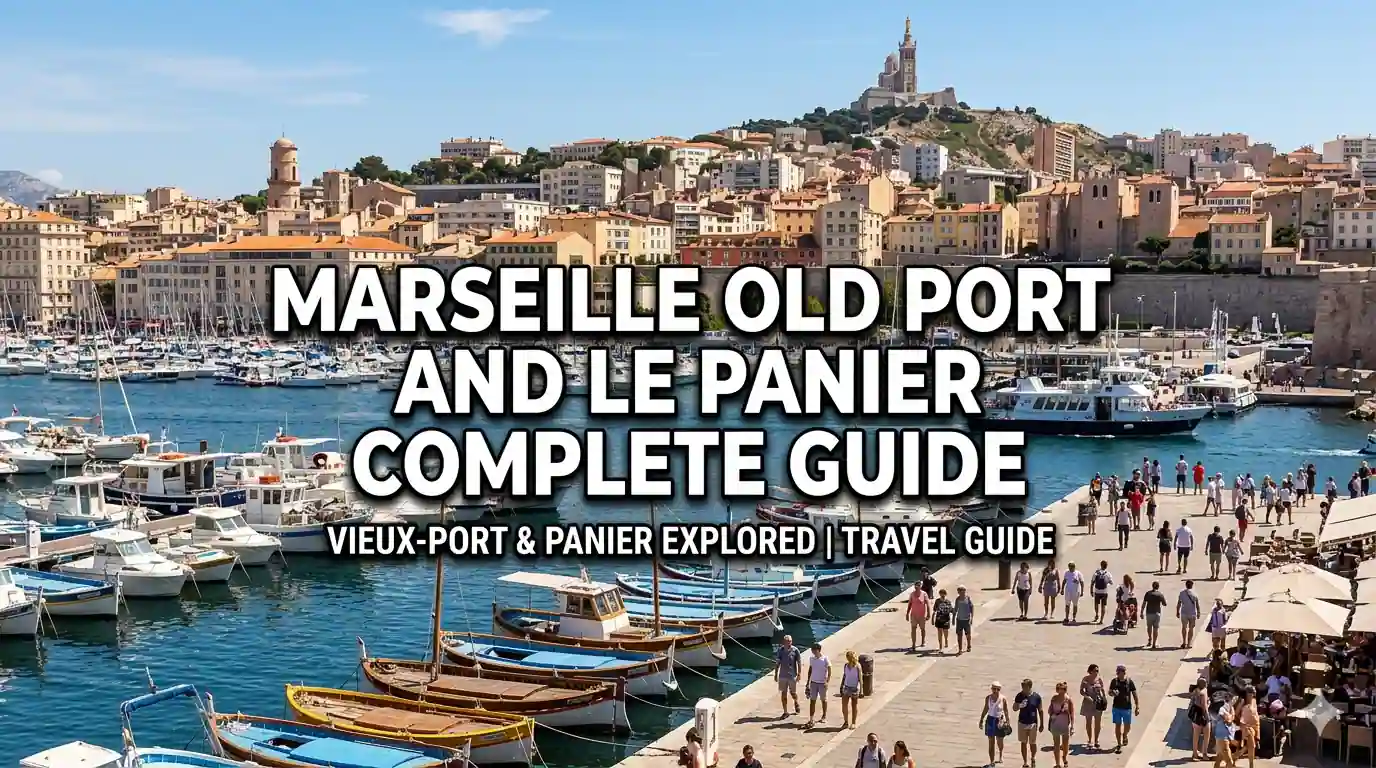
Marseille's Old Port (Vieux-Port) and the adjacent Le Panier district form the historic heart of France's oldest city, offering visitors a captivating blend of Mediterranean maritime culture, narrow winding streets, vibrant markets, and centuries of history dating back to Greek colonization in 600 BC. The Old Port serves as Marseille's bustling waterfront center where fishing boats, luxury yachts, and ferry terminals converge, while Le Panier, the city's oldest neighborhood, climbs the hill north of the port with its characteristic narrow streets, colorful buildings, artisan shops, and hidden squares. Understanding how to navigate between these districts, utilize Marseille's public transportation system, and explore on foot enables visitors to experience the authentic character of this dynamic Mediterranean metropolis while avoiding common tourist pitfalls. This comprehensive guide provides everything needed to move confidently around Marseille's historic center, from metro and tram routes to walking paths, taxi services, bike rentals, and practical tips for exploring safely and efficiently.
The primary user intent centers on understanding the best transportation options between the Old Port and Le Panier, identifying walkable routes and key landmarks, learning about metro, tram, and bus connections, discovering must-see attractions in both districts, planning logistics from Marseille's train stations and airports, and navigating safely in these historic neighborhoods. You need verified 2026 pricing in both EUR and USD, specific route information with distances and walking times, public transport ticket costs and purchasing methods, accommodation recommendations near these districts, and practical tips for avoiding crowds, staying safe, and maximizing your exploration of Marseille's historic heart. This guide delivers detailed, actionable information based on current operations and verified visitor experiences.
Average visitors report that exploring the Old Port and Le Panier on foot proves the most rewarding way to experience these districts, though Marseille's public transportation system efficiently connects these areas to other city attractions and beaches. The Old Port to Le Panier walk takes 10-15 minutes uphill through charming streets, while metro and bus options provide alternatives for those with mobility concerns. Most travelers allocate USD 80 to 200 daily for Marseille exploration covering accommodation, meals, transport, and activities. The combination of historic architecture, Mediterranean atmosphere, excellent seafood, and cultural diversity makes these districts essential for any Marseille visit.
Essential Marseille Old Port and Le Panier Data for 2026
| Distance Old Port to Le Panier | 500 meters, 10-15 minute walk uphill |
| Marseille Metro Single Ticket | EUR 1.80 (USD 2.00) |
| Day Pass (RTM) | EUR 5.50 (USD 6.05) unlimited travel |
| Old Port to Airport Distance | 27 kilometers, 25-30 minutes by shuttle |
| Walking Tour Cost | EUR 12-20 (USD 13-22) per person |
| Best Visiting Season | April to June and September to October |
| Le Panier Elevation Gain | Approximately 50 meters from Old Port |
Understanding Marseille's Historic Center Layout

Marseille's historic center radiates from the Old Port (Vieux-Port), a natural harbor that has served as the city's commercial and cultural heart for over 2,600 years. The Old Port functions as both a working marina with fishing boats and a tourist hub with restaurants, shops, and ferry terminals. Understanding the geography proves essential for efficient navigation: the Old Port sits at sea level, while Le Panier climbs the hill immediately to the north, creating a natural division between the waterfront and the elevated old town.
Le Panier, meaning "the basket" in French, derives its name from the neighborhood's basket-like shape when viewed from above. This district represents Marseille's oldest settlement area, where Greek colonists established Massalia in 600 BC. The neighborhood's narrow, winding streets follow medieval patterns, creating a labyrinthine layout that can confuse first-time visitors but rewards exploration with hidden squares, street art, artisan workshops, and panoramic viewpoints. The area survived near-total destruction during World War II and subsequent urban renewal, preserving its authentic character while avoiding the over-commercialization found in some European old towns.
The connection between Old Port and Le Panier centers around the Hôtel de Ville (City Hall) area and the picturesque Quai du Port, where the hill begins its ascent. Several staircases and steep streets provide access, with the most popular routes being Rue du Panier, Montée des Accoules, and the steps near the Vieille Charité. While the climb proves moderate (50 meters elevation gain), the narrow streets and Mediterranean sun can make it challenging during summer afternoons, making early morning or evening exploration more comfortable.
Beyond these two districts, Marseille's public transportation network efficiently connects the historic center to other attractions including the Calanques National Park, Notre-Dame de la Garde basilica, MuCEM (Museum of European and Mediterranean Civilizations), and the city's beaches. The metro, tram, and bus systems operate under the RTM (Régie des Transports Métropolitains) network, providing affordable and reliable transportation throughout the metropolitan area.
Walking Between Old Port and Le Panier

Walking remains the most rewarding way to explore the connection between Marseille's Old Port and Le Panier district, enabling you to discover hidden corners, street art, local shops, and atmospheric streets at your own pace. The walk takes 10-15 minutes depending on your starting point and pace, though allowing 30-45 minutes for exploration and photography proves more realistic for first-time visitors.
Recommended Walking Routes
The most scenic route begins at the Old Port's Quai du Port, near the Hôtel de Ville. From here, walk north along Rue du Panier, one of Le Panier's main arteries. This street gradually ascends through the neighborhood, passing colorful buildings, small galleries, and cafés. After 200 meters, you'll reach Place des Moulins, a charming square featuring windmill remnants and panoramic views over the port. Continue to the Vieille Charité, a stunning 17th-century almshouse that now houses museums and a chapel designed by Pierre Puget.
An alternative route follows Montée des Accoules, a steeper but more direct path featuring the Église des Accoules and excellent photo opportunities of the port below. This route proves more challenging but rewards with authentic neighborhood atmosphere and fewer tourists. Both routes converge near the Vieille Charité, from which you can explore Le Panier's network of streets including Rue de la Loge, Rue du Petit Puits, and the picturesque Place de Lenche.
For the return journey, consider descending via different streets to maximize exploration. The neighborhood's grid-like but irregular layout makes getting lost part of the charm, though the port remains visible from most elevated points, providing natural orientation. Wear comfortable shoes with good grip, as cobblestones and steep sections can prove slippery, especially when wet.
Key Landmarks and Viewpoints
Several landmarks help orient yourself while exploring. The Vieille Charité serves as Le Panier's cultural center and proves visible from multiple points. The Cathédrale de la Major (La Major), Marseille's cathedral, sits at Le Panier's western edge overlooking the port and provides a distinctive landmark with its striped Byzantine-Romanesque architecture. Place de Lenche, considered the neighborhood's heart, features a small square with cafés and the historic Hôtel de Ville annex.
For panoramic views, climb to the Jardin des Vestiges near the Old Port's eastern end or the terraces near the Cathédrale de la Major. These viewpoints provide excellent photo opportunities of the port, Le Panier's terracotta roofs, and the Mediterranean beyond. Early morning and late afternoon light proves best for photography, with fewer crowds and softer illumination on the buildings.
Public Transportation Options

While walking proves ideal for exploring the Old Port and Le Panier, Marseille's public transportation system provides efficient connections to these districts from other parts of the city, airports, and train stations. The RTM network operates metro, tram, and bus services with integrated ticketing, making transfers seamless and affordable.
Metro System
Marseille's metro consists of two lines (M1 and M2) that intersect at major hubs. For accessing the Old Port and Le Panier area, the most relevant stations include:
Vieux-Port/Hôtel de Ville Station: Served by Metro M1 (blue line), this station sits directly beneath the Old Port, providing the most convenient metro access to both the waterfront and Le Panier. Exit the station and you're immediately in the heart of the action. The station features elevators for accessibility, though some exits involve stairs.
Joliette Station: Also on Metro M2 (red line), this station serves the area between the Old Port and Le Panier's western edge, near the MuCEM and La Major cathedral. This proves useful for visitors wanting to explore the waterfront museums before ascending to Le Panier.
Noailles Station: On Metro M1 and M2, this station sits at the eastern end of the Old Port, providing access to the famous Noailles market and the eastern waterfront. From here, it's a 10-minute walk along the port to reach Le Panier's entrance.
Metro tickets cost EUR 1.80 (USD 2.00) for a single journey, valid for one hour with unlimited transfers. Day passes cost EUR 5.50 (USD 6.05), while 3-day passes cost EUR 12.50 (USD 13.75). Tickets can be purchased at station machines (accepting cards and cash) or at RTM boutiques. Validate tickets upon entering the metro system.
Tram Services
Marseille operates three tram lines (T1, T2, T3) that complement the metro network. For Old Port and Le Panier access:
Tram T2 and T3: Both lines stop at Joliette and Euromed stations, providing connections to the western Old Port area and Le Panier's western edge. These trams prove particularly useful for reaching the area from Saint-Charles train station (T2) or the northern districts.
Tram tickets use the same RTM ticketing system as the metro, with identical pricing and validity. Trams run frequently (every 5-10 minutes during peak hours) and provide scenic above-ground travel with views of the city.
Bus Routes
Several bus routes serve the Old Port and Le Panier area, though metro and tram generally prove faster and more reliable. Key routes include:
Bus 49 and 55: Connect the Old Port to northern neighborhoods and prove useful for reaching Le Panier from specific locations. Bus stops cluster around Quai du Port and Quai de Rive Neuve.
Bus 82: Connects the Old Port to Notre-Dame de la Garde basilica, proving essential for visitors wanting to combine historic center exploration with the basilica visit.
Bus tickets use the same RTM system, with identical pricing. Buses run less frequently than metro/tram (every 15-20 minutes typically) and can experience delays due to Marseille's traffic.
Airport and Train Station Connections
From Marseille Provence Airport: The Navette Marseille Provence shuttle bus provides direct service to the Old Port area (Saint-Charles train station and other stops). The journey takes 25-30 minutes and costs EUR 8.50 (USD 9.35) one-way or EUR 15 (USD 16.50) round-trip. Shuttles run every 20 minutes during peak hours. Alternatively, taxi service costs EUR 50-60 (USD 55-66) and takes 25 minutes.
From Saint-Charles Train Station: Marseille's main train station sits 1.5 kilometers north of the Old Port. Metro M2 provides direct connection to Vieux-Port/Hôtel de Ville in 10 minutes. Walking takes 20-25 minutes downhill through the city center. Taxis cost EUR 15-20 (USD 16.50-22) for the short journey.
Taxi and Ride-Share Services

While public transportation proves efficient and affordable, taxis and ride-share services provide convenient alternatives, particularly for visitors with luggage, mobility concerns, or those traveling late at night when public transport frequency decreases.
Traditional Taxis
Marseille's official taxis display illuminated "TAXI" signs and operate on regulated fares. Key information:
Fares: Base fare starts at EUR 2.80 (USD 3.08) with additional charges of EUR 1.10-1.60 (USD 1.21-1.76) per kilometer depending on time of day and day of week. Night rates (7 PM to 7 AM) and Sunday/holiday rates prove 30-50 percent higher than weekday daytime rates.
Old Port to Le Panier: The short distance makes taxi service relatively affordable at EUR 8-12 (USD 8.80-13.20), though the walk proves equally quick and more scenic.
Airport Transfers: Fixed rates apply for airport transfers: EUR 50-60 (USD 55-66) from Old Port area to Marseille Provence Airport. Always confirm the fare before departure.
Taxi Stands: Official taxi stands operate at the Old Port (Quai du Port), Saint-Charles train station, and major squares. You can also hail taxis on the street when the roof light is illuminated.
Ride-Share Services
Uber and other ride-share apps operate in Marseille, often proving 20-30 percent cheaper than traditional taxis for similar journeys. The apps provide fare estimates upfront, cashless payment, and GPS tracking. Download the Uber app before arrival and link your payment method for seamless service. Uber operates throughout Marseille with typical wait times of 5-10 minutes in the Old Port area.
Bike and Scooter Rentals

Marseille has embraced bike and scooter sharing as sustainable transportation options, though the city's hilly terrain and sometimes chaotic traffic require caution, particularly for inexperienced cyclists.
Le Vélo Bike Share
Marseille's public bike share system, Le Vélo, operates stations throughout the city including several near the Old Port and Le Panier. Pricing structure:
Daily Pass: EUR 2 (USD 2.20) plus usage fees. First 30 minutes free, then EUR 1 (USD 1.10) per additional 30 minutes.
Weekly Pass: EUR 10 (USD 11) plus usage fees with same free period structure.
Stations: Key stations near the Old Port include Quai du Port, Hôtel de Ville, and Quai de Rive Neuve. Le Panier's steep, narrow streets make biking challenging, so this system proves better for exploring the waterfront and flatter areas.
Bikes can be reserved via the Le Vélo app or at station terminals. Helmets are not provided but recommended. The system operates 24/7, though station availability can prove limited during peak tourist season.
Electric Scooters
Electric scooter services like Lime, Bird, and Dott operate in Marseille, providing convenient short-distance transportation. Pricing typically includes:
Unlock Fee: EUR 1 (USD 1.10)
Per Minute: EUR 0.25-0.30 (USD 0.28-0.33)
Average Cost: EUR 8-12 (USD 8.80-13.20) for 30-minute ride
Scooters prove popular for Old Port exploration but face restrictions in Le Panier's narrow pedestrian streets. Always park in designated areas and follow traffic rules. Helmets are recommended though not legally required for adults.
Exploring the Old Port Area

The Old Port (Vieux-Port) serves as Marseille's vibrant waterfront center, combining working harbor functions with tourist attractions, dining, and cultural sites. Understanding the area's layout and key attractions enables efficient exploration.
Quai du Port and Quai de Rive Neuve
These two quays form the Old Port's northern and southern edges respectively. Quai du Port (north side) features:
Fishing Boats and Fish Market: Early morning visits (7-9 AM) reveal the traditional fish market where local fishermen sell their daily catch. This proves one of Marseille's most authentic experiences, though it has become increasingly tourist-oriented.
Restaurants and Cafés: The quay features numerous waterfront restaurants, though prices prove 30-50 percent higher than establishments a block or two inland. For better value, explore side streets.
Ferry Terminal: Boats depart from Quai du Port for the Frioul Islands and Château d'If (EUR 20-25 round-trip, 30-minute journey).
Quai de Rive Neuve (south side) features:
Vallon des Auffes: A picturesque fishing port within the port, accessible via a short walk west along the quay. This hidden gem features a small harbor protected by a bridge, traditional boats, and excellent seafood restaurants.
Canebière: Marseille's famous boulevard begins at the Old Port's eastern end, providing a grand thoroughfare leading inland.
Key Attractions Around the Old Port
MuCEM (Museum of European and Mediterranean Civilizations): Located at the port's western entrance, this striking modern museum connects to Fort Saint-Jean via a dramatic footbridge. Admission EUR 11 (USD 12.10). Allow 2-3 hours.
Fort Saint-Jean: This historic fortress provides panoramic port views and houses part of MuCEM's collection. Free access to the fort and bridge; museum entry requires MuCEM ticket.
Cathédrale de la Major: Marseille's cathedral sits at the port's western edge, featuring distinctive Byzantine-Romanesque architecture with striped stone. Free entry; allow 30-45 minutes.
Palais du Pharo: Napoleon III's former palace sits on a promontory overlooking the port entrance. Now a conference center with beautiful gardens. Free garden access.
Navigating Le Panier District

Le Panier's labyrinthine streets reward patient exploration with hidden squares, street art, artisan workshops, and authentic Marseille atmosphere. Understanding the neighborhood's layout and key sites enhances the experience.
Main Streets and Squares
Rue du Panier: The neighborhood's main artery ascends from the Old Port, lined with shops, cafés, and galleries. This proves the most touristy street but provides easy orientation.
Place des Moulins: This square marks the neighborhood's highest point, featuring windmill remnants and panoramic views. A natural resting point during exploration.
Place de Lenche: Considered Le Panier's heart, this square features cafés, the Hôtel de Ville annex, and the Église de Saint-Laurent. A popular gathering spot.
Rue de la Loge: This charming street features colorful buildings, artisan shops, and proves popular for photography.
Montée des Accoules: A steep staircase providing direct access from the Old Port area, featuring the Église des Accoules and excellent photo opportunities.
Key Attractions in Le Panier
Vieille Charité: This stunning 17th-century almshouse features a baroque chapel by Pierre Puget and houses several museums including the Museum of Mediterranean Archaeology and the Museum of African, Oceanian, and Amerindian Arts. Admission EUR 6-8 (USD 6.60-8.80) for museums; chapel free. Allow 1.5-2 hours.
Musée d'Histoire de Marseille: Located near the Old Port's eastern end, this museum presents Marseille's 2,600-year history. Admission EUR 6 (USD 6.60). Allow 1.5 hours.
Street Art and Murals: Le Panier features extensive street art, particularly around Place de Lenche and side streets. Self-guided exploration reveals numerous works.
Artisan Workshops: The neighborhood maintains traditional crafts including soap makers (savon de Marseille), potters, and artists. Many offer demonstrations and sales.
Practical Tips for Safe and Enjoyable Exploration

Marseille's historic center proves generally safe for tourists, but like any major city, certain precautions enhance safety and enjoyment. Understanding local dynamics prevents common issues.
Safety Considerations
Pickpocketing: The Old Port and crowded areas attract pickpockets, particularly during peak tourist season. Keep valuables secure, use crossbody bags worn in front, and maintain awareness in crowds. Avoid displaying expensive cameras or phones unnecessarily.
Le Panier at Night: While generally safe, some Le Panier streets prove poorly lit and quiet after dark. Stick to main streets after 9 PM and avoid isolated areas. The area around Cours Julien (east of Old Port) proves more vibrant for evening activities.
Scams: Be wary of petition scammers (often working in pairs) who distract you while accomplices attempt theft. Politely decline and keep walking. Avoid three-card monte games and other street gambling.
Emergency Numbers: Police: 17, Medical emergency: 15, European emergency: 112. Tourist police operate near the Old Port during peak season.
Best Times to Visit
Old Port: Early morning (7-9 AM) reveals the fish market and peaceful atmosphere before crowds arrive. Evening (6-9 PM) proves lively with diners and street performers. Midday proves busiest and hottest in summer.
Le Panier: Morning (9 AM-12 PM) offers best light for photography and fewer crowds. Late afternoon (4-7 PM) provides warm light and atmospheric shadows. Midday heat can prove intense in narrow streets with limited shade.
Seasonal Considerations: April-June and September-October provide pleasant weather with manageable crowds. July-August proves hottest and most crowded, with temperatures reaching 30-35°C (86-95°F). Winter (November-March) proves quieter with cooler temperatures (8-15°C/46-59°F) but many attractions remain open.
Cultural Etiquette
Greetings: Always greet shopkeepers and restaurant staff with "Bonjour" (good day) or "Bonsoir" (good evening). This simple courtesy proves essential in French culture and elicits warmer service.
Photography: Respect residents' privacy when photographing in Le Panier. Avoid photographing people without permission, particularly in residential areas. Street art and architecture prove fair game.
Dining: Lunch typically runs 12-2 PM, dinner from 7:30 PM onward. Many restaurants close between lunch and dinner service. Reservations recommended for dinner, particularly in summer.
Suggested Itineraries for Old Port and Le Panier

Strategic itinerary planning maximizes your Marseille historic center experience while preventing fatigue from excessive walking or backtracking. These frameworks accommodate different time allocations and interests.
Half-Day Introduction (3-4 Hours)
Start at Vieux-Port/Hôtel de Ville metro station. Morning exploration of the Old Port's Quai du Port, visiting the fish market if timing aligns (7-9 AM). Walk to Vallon des Auffes for photos and coffee. Ascend to Le Panier via Rue du Panier, exploring Place des Moulins and Place de Lenche. Visit the Vieille Charité (1 hour). Descend via Montée des Accoules, ending at the Old Port for lunch at a side-street restaurant (avoid waterfront tourist traps).
This itinerary costs approximately EUR 30-50 (USD 33-55) per person including metro, one attraction entry, and lunch, proving ideal for first-time visitors wanting essential highlights.
Full-Day Comprehensive Exploration (6-8 Hours)
Begin with Old Port exploration including fish market and Vallon des Auffes. Visit MuCEM and Fort Saint-Jean (2-3 hours). Lunch at a local restaurant near the port. Afternoon dedicated to Le Panier exploration including Vieille Charité museums, street art hunting, and artisan workshops. Evening aperitif at Place de Lenche followed by dinner in Le Panier or the Old Port area.
This comprehensive approach costs EUR 60-100 (USD 66-110) per person including transport, attractions, meals, and refreshments, proving ideal for travelers wanting thorough exploration without rushing.
Multi-Day Marseille Historic Center
For extended stays, dedicate day one to Old Port and Le Panier as above. Day two explores Notre-Dame de la Garde basilica (morning), MuCEM if not visited previously, and the Canebière boulevard. Day three combines historic center with beach time at Plage des Catalans or day trip to Calanques. This approach prevents fatigue and reveals different facets of Marseille.
0 Comments