.webp)
.webp)
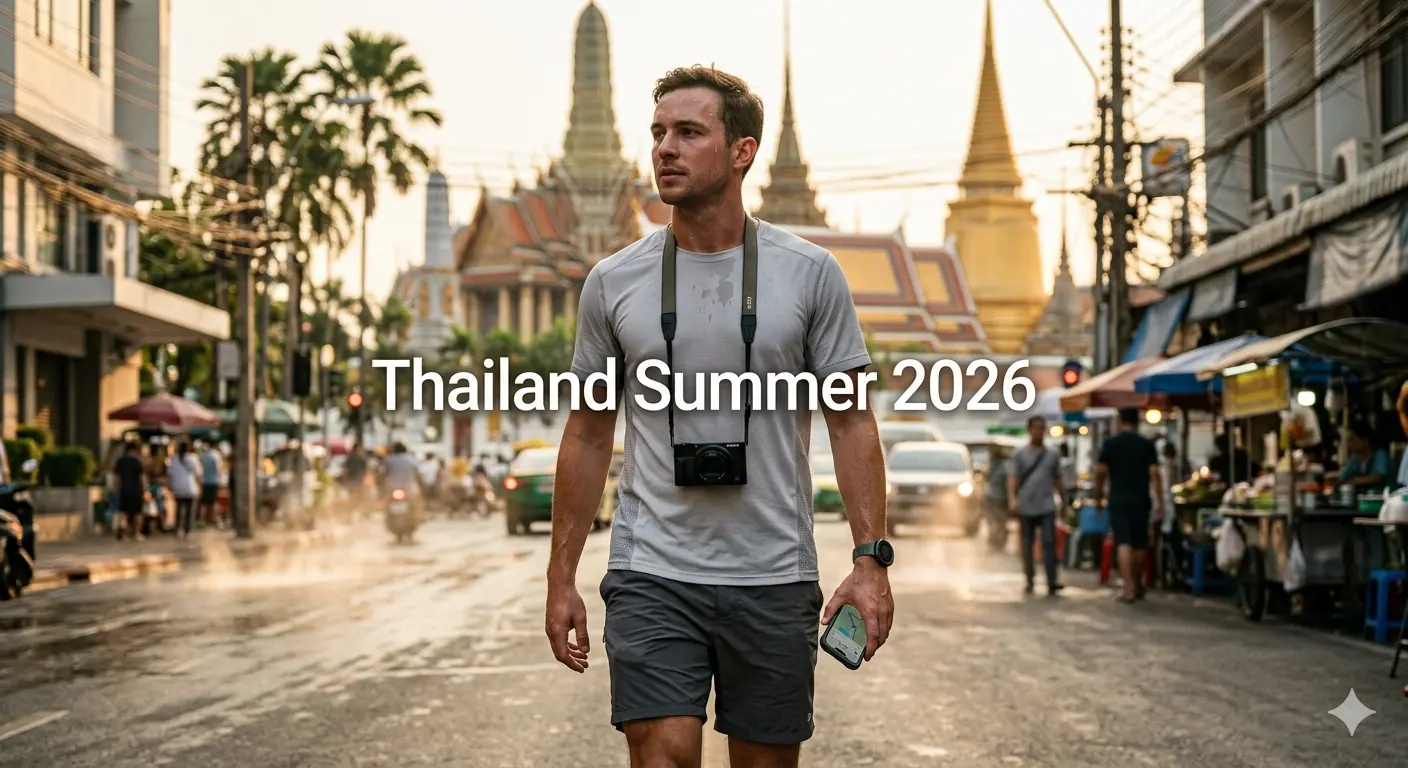
Understanding Thailand Extreme Summer Conditions in 2026
Thailand's 2026 summer season presents unprecedented challenges for travelers, with the Thai Meteorological Department forecasting temperatures exceeding 42°C (107.6°F) in northern regions and heat indices reaching a dangerous 54°C (129.2°F) in Bangkok and surrounding areas. The summer season officially runs from February 22 through mid-May 2026, with the most extreme heat occurring between mid-March and April.
What makes Thailand's summer particularly challenging is not just the scorching temperatures but the oppressive humidity levels that regularly exceed 80-90%, creating a suffocating environment that can quickly lead to heat exhaustion, dehydration, and heat stroke if you're unprepared. The combination of extreme heat and humidity creates what locals call "sticky heat" - a condition where sweat cannot evaporate effectively from your skin, preventing your body's natural cooling mechanism from working properly.
Key Climate Data for Thailand Summer 2026:
- Average Maximum Temperature: 36-37°C (97-99°F) in northern Thailand, slightly higher than the usual 35.4°C average
- Peak Heat Period: Mid-March to late April 2026
- Humidity Levels: 75-90% throughout the day
- Heat Index: Can reach 49-54°C (120-129°F) in Bangkok
- Rainfall: Minimal in March-April (5-60mm), increasing in May
The weather pattern is expected to alternate between scorching heat and sudden thunderstorms, particularly during April to May 2026, creating additional challenges for travelers who must prepare for both extreme dry heat and sudden downpours. Understanding these conditions is crucial for planning your trip and selecting the right gear to stay comfortable and safe. For comprehensive weather planning, consult The Best Time to Visit Thailand: A Month-by-Month Weather Guide for 2026.
Essential Tech Gear for Surviving Thai Humidity

The travel technology landscape in 2026 has evolved significantly to address the specific challenges of tropical climates. Modern moisture-wicking fabrics, waterproof electronics, and cooling technology have become essential tools for surviving Thailand's brutal summer conditions. The moisture-wicking fabrics market alone has reached USD 3.16 billion in 2026, reflecting the growing demand for advanced climate-control textiles.
Advanced Moisture-Wicking Clothing Technology
Modern moisture-wicking technology in 2026 goes far beyond simple synthetic fabrics. Today's advanced textiles use dual-layer systems that actively pull sweat away from your skin to the fabric's outer surface where it can evaporate rapidly, keeping you dry and comfortable even in 90% humidity.
Top Moisture-Wicking Fabric Technologies for 2026:
| Technology Type | How It Works | Best For | Price Range (USD) |
| Dual-Layer Wicking | Inner layer pulls moisture, outer layer disperses it | All-day wear, temple visits | $30-$150 |
| Tencel Blends | Natural fibers with enhanced breathability | Casual exploration, dining | $40-$120 |
| Nylon Cooling Tech | Quick-dry with UV protection | Beach activities, hiking | $35-$100 |
| Recycled Performance Fabric | Eco-friendly with moisture management | Sustainable travelers | $45-$130 |
When shopping for moisture-wicking clothing for your Thailand trip, look for fabrics that combine quick-drying properties with antibacterial treatment and UV protection - the holy trinity of tropical travel gear. For comprehensive packing guidance, check out Packing for Thailand: Essential Gear for Jungles, Beaches, and Cities which covers region-specific packing strategies.
Waterproof and Humidity-Resistant Electronics
Thailand's combination of extreme humidity and sudden tropical downpours makes electronics protection absolutely critical in 2026. Moisture ingress can permanently damage your devices, and the humid climate greatly affects the lifetime of electronics. Modern waterproofing technology has advanced significantly, with IPX ratings becoming the standard for tropical travel gear.
Essential Electronics Protection for Thailand 2026:
- IPX7 Waterproof Rating: Devices can withstand immersion in 1 meter of water for 30 minutes - essential for sudden monsoon downpours
- Humidity-Resistant Coatings: Nano-coating technology protects circuit boards from moisture damage in 90%+ humidity environments
- Waterproof Dry Bags: Roll-top designs with IPX6 rating protect phones, cameras, and wallets during boat trips and rainstorms
- Silica Gel Packs: Essential for storing electronics in humid hotel rooms - replace every 3-4 days
For 2026, well-protected electronics can operate reliably in humidity levels exceeding 90%, but you must take proactive measures including waterproof sprays for non-waterproof devices and specialized protective cases. A well-protected PCB in a water treatment sensor can operate reliably in humidity levels exceeding 90% or even during accidental submersion, and the same principles apply to your travel electronics.
Cooling Technology and Portable Climate Control
The latest innovation in tropical travel gear for 2026 includes portable cooling devices that can lower your body temperature by 5-10°C instantly. These range from wearable neck coolers using thermoelectric technology to evaporative cooling towels that activate with water.
Must-Have Cooling Tech for Thailand Summer:
- Thermoelectric Neck Coolers: Battery-powered devices that use Peltier effect to cool your neck arteries - provides 4-6 hours of cooling for $50-$150
- Evaporative Cooling Towels: Activate with water, reduce skin temperature by 20°F for 2-3 hours - $10-$25
- Portable Misting Fans: USB-rechargeable with 200ml water tank, 6-hour battery life - $20-$40
- Cooling Vests: Phase-change material vests that maintain 18°C for 3-4 hours - $80-$200
These cooling technologies are particularly crucial when exploring outdoor temples, markets, and historical sites where shade is limited and temperatures regularly exceed 40°C (104°F).
Strategic Packing List for Thailand Summer 2026

Packing for Thailand's extreme summer requires a strategic approach that balances protection from heat and humidity with practicality and luggage space constraints. Based on the latest 2026 travel gear innovations and Thailand-specific climate data, here's your comprehensive packing guide.
Clothing Essentials
Your clothing choices can make or break your Thailand summer experience. The key is selecting items that combine moisture-wicking technology, UV protection, breathability, and cultural appropriateness for temple visits.
Clothing Checklist (7-10 Day Trip):
- Moisture-Wicking T-Shirts: 5-7 shirts with UPF 50+ protection and antibacterial treatment ($25-$60 each)
- Lightweight Long-Sleeve Shirts: 2-3 shirts for temple visits and sun protection - choose linen or Tencel blends ($35-$80)
- Quick-Dry Shorts: 3-4 pairs with 7-9 inch inseam, moisture-wicking fabric ($30-$70)
- Lightweight Pants: 2 pairs of breathable, quick-dry trousers for temples and evening wear ($40-$100)
- Moisture-Wicking Underwear: 7-10 pairs, antimicrobial fabric ($15-$30 per 3-pack)
- Merino Wool Socks: 5-7 pairs, naturally antimicrobial and moisture-wicking ($15-$25 per pair)
- Wide-Brim Hat: UPF 50+ protection, ventilated crown ($25-$60)
- Polarized Sunglasses: UV400 protection, polarized lenses ($50-$200)
Technology and Electronics
Modern travel requires careful selection of tech gear that can withstand Thailand's harsh summer conditions while keeping you connected, informed, and entertained.
Tech Gear Essentials:
| Item | Specification | Purpose | Budget (USD) |
| Smartphone | IP68 waterproof rating minimum | Navigation, photos, translation | $400-$1200 |
| Portable Power Bank | 20,000mAh, fast charging | All-day device charging | $30-$80 |
| Universal Travel Adapter | USB-C PD, Type A/B/C outlets | Charging all devices | $25-$60 |
| Waterproof Phone Pouch | IPX8 rating, touchscreen compatible | Beach and boat protection | $10-$25 |
| Noise-Canceling Headphones | Over-ear, 30+ hour battery | Flights, buses, focus time | $150-$400 |
| E-Reader | Waterproof, 8GB storage | Reading without screen glare | $140-$280 |
| Portable WiFi Hotspot | 4G/5G, 10-device capacity | Reliable internet anywhere | $50-$150 + data plan |
| Waterproof Camera | IPX8 or underwater housing | Beach and water activities | $300-$800 |
These must-have travel gadgets for 2026 include power banks, noise-canceling headphones, universal adapters, and Bluetooth adapters that have been tested extensively in tropical conditions. A universal travel adapter is one of the few true essentials, while a compact cable kit beats carrying random loose cables.
Health and Safety Gear
Thailand's extreme heat and humidity demand specific health and safety preparations to prevent heat-related illnesses and stay comfortable throughout your trip.
Health and Safety Checklist:
- Electrolyte Tablets: 30-50 tablets for hydration (Nuun, Liquid IV) - $10-$20
- High-SPF Sunscreen: SPF 50+, water-resistant, reef-safe - $15-$30
- Insect Repellent: DEET 20-30% or Picaridin 20% - $8-$15
- Rehydration Salts: WHO-formulated oral rehydration salts - $5-$10
- Heat Rash Powder: Talc-free, antifungal formula - $6-$12
- Cooling Towels: 2-3 microfiber towels - $10-$25 each
- First Aid Kit: Including heat exhaustion treatment supplies - $20-$40
- Portable Water Filter: Grayl or LifeStraw for emergency water purification - $30-$90
For solo female travelers, understanding safety protocols is crucial. Our comprehensive Solo Female Travel in Thailand: 2026 Safety and Empowerment Guide provides detailed safety strategies specific to Thailand's summer conditions.
Daily Survival Strategies for Extreme Heat and Humidity

Surviving Thailand's summer requires more than just the right gear - you need smart daily strategies that work with the climate rather than against it. Understanding temperature patterns, humidity cycles, and your body's limitations is crucial for maintaining comfort and safety.
Optimal Daily Schedule for Heat Avoidance
The key to thriving in Thailand's summer is strategic timing. Plan your activities around the natural temperature and humidity cycles to minimize exposure to the most dangerous conditions.
Recommended Daily Schedule:
| Time | Temperature | Activity Type | Precautions |
| 5:00 AM - 8:00 AM | 25-28°C (77-82°F) | Outdoor activities, temple visits, hiking | Light breakfast, full water bottle |
| 8:00 AM - 11:00 AM | 28-33°C (82-91°F) | Indoor attractions, markets with shade | Take breaks every 30 min, hydrate |
| 11:00 AM - 3:00 PM | 33-42°C (91-108°F) | REST PERIOD - indoor only | Air-conditioned spaces, siesta, pool |
| 3:00 PM - 5:00 PM | 35-38°C (95-100°F) | Light activities, cafes, shopping malls | Stay in AC, minimal outdoor exposure |
| 5:00 PM - 8:00 PM | 30-33°C (86-91°F) | Outdoor dining, street markets, walking | Still warm but manageable with breeze |
| 8:00 PM - 11:00 PM | 27-30°C (81-86°F) | Night markets, rooftop bars, evening tours | Most comfortable outdoor time |
This schedule aligns with Thailand's natural climate patterns where the hottest period occurs between mid-March and April, with temperatures peaking around 2-4 PM. By respecting these patterns and planning indoor activities during peak heat hours, you can significantly reduce your risk of heat exhaustion and heat stroke.
Hydration Protocol for 90% Humidity
In Thailand's extreme humidity, your body's natural cooling mechanism (sweating) becomes less effective, making proper hydration absolutely critical. The standard "8 glasses a day" recommendation is completely inadequate for Thai summer conditions.
Advanced Hydration Strategy:
- Baseline Intake: Minimum 3-4 liters (100-135 oz) of water daily
- Active Hours: Add 500ml (17 oz) per hour of outdoor activity
- Electrolyte Balance: 1-2 electrolyte tablets per 2 liters of water
- Pre-Hydration: Drink 500ml upon waking before any activity
- Urine Color Check: Should be pale yellow - dark yellow means you're dehydrated
- Weight Monitoring: Weigh yourself daily; loss of more than 2% body weight indicates dehydration
Electrolyte balance is crucial because excessive sweating depletes sodium, potassium, and magnesium. Symptoms of electrolyte imbalance include muscle cramps, headache, nausea, and confusion - all of which can be mistaken for heat exhaustion.
Temperature Regulation Techniques
Beyond hydration, you need active cooling strategies to maintain a safe core body temperature when external conditions exceed your body's natural cooling capacity.
Immediate Cooling Techniques:
- Pulse Point Cooling: Apply cold water or ice packs to wrists, neck, temples, and behind knees for 2-3 minutes every hour
- Misting and Fanning: Spray face and neck with water, then fan vigorously - evaporative cooling can reduce skin temperature by 5-10°C
- Cool Shower Strategy: Take 5-minute cool (not cold) showers every 3-4 hours to reset body temperature
- Foot Soaking: Immerse feet in cool water for 10 minutes - highly effective for rapid cooling
- Damp Clothing: Wear a damp bandana or cooling towel around your neck
These techniques are particularly important when exploring areas like Bangkok's Grand Palace or outdoor markets where shade is limited and temperatures can feel 10-15°C hotter than actual readings due to humidity and direct sun exposure.
Budget Breakdown and Cost Analysis

Preparing for Thailand's summer 2026 requires financial planning for both gear acquisition and daily expenses. Understanding the costs upfront helps you budget appropriately and avoid overspending on unnecessary items.
Gear Investment Costs
The initial investment in proper summer gear can seem substantial, but quality items last multiple trips and significantly improve your comfort and safety.
Complete Gear Package Cost Breakdown:
| Category | Budget Option | Mid-Range | Premium |
| Clothing (7-day wardrobe) | $200-$300 | $400-$600 | $700-$1,200 |
| Electronics and Accessories | $300-$500 | $600-$900 | $1,000-$1,800 |
| Cooling Technology | $50-$100 | $150-$250 | $300-$500 |
| Health and Safety | $50-$80 | $100-$150 | $200-$300 |
| Waterproof Protection | $40-$80 | $100-$180 | $250-$400 |
| TOTAL | $640-$1,060 | $1,350-$2,080 | $2,450-$4,200 |
For budget-conscious travelers, our comprehensive Master Guide to Thailand Budget Travel provides strategies for exploring Thailand on just $30 per day, which can help offset gear costs.
Daily Operating Costs in Summer 2026
Beyond gear, Thailand's summer conditions create specific daily expenses that differ from cooler seasons.
Summer-Specific Daily Expenses:
- Bottled Water: 4-6 liters daily times $0.50-$1 = $2-$6/day
- Electrolyte Supplements: 2-3 tablets times $0.50 = $1-$1.50/day
- Air-Conditioned Transport: Grab/taxi vs. walking = $10-$20/day extra
- Cooling Beverages: Fresh coconut water, smoothies = $5-$10/day
- Indoor Activities: Museums, malls, cafes (avoiding midday heat) = $15-$30/day
- Laundry: Daily clothing changes = $2-$5/day
Total Summer Premium: Expect to spend $35-$72 more per day during summer compared to cool season travel, primarily due to increased hydration needs, air-conditioned transport, and indoor activity costs.
Cost-Saving Strategies
Despite the challenges, you can minimize expenses while staying safe and comfortable:
- Buy Locally: Purchase moisture-wicking clothing at Bangkok's Chatuchak Market or MBK Center for 40-60% less than international brands
- 7-Eleven Hydration: Thailand's ubiquitous 7-Elevens sell electrolyte drinks for $1-$2 vs. $3-$5 at tourist areas
- Free AC Spaces: Utilize shopping malls, libraries, and temples with AC during peak heat hours
- Refillable Water Bottles: Use water refill stations ($0.25 per liter) instead of buying bottled water
- Off-Peak Accommodation: Summer is low season - negotiate 20-30% discounts on hotels
Understanding "Value Over Volume": How Thailand's 2026 Tourism Shift Impacts Your Budget can help you make smarter spending decisions during your visit.
Regional Variations and Destination-Specific Tips

Thailand's geography creates significant regional variations in heat and humidity levels. Understanding these differences helps you plan your itinerary strategically and pack appropriately for each destination.
Bangkok and Central Thailand
Bangkok experiences the most extreme urban heat island effect, with temperatures regularly reaching 38-42°C (100-108°F) and heat indices exceeding 50°C (122°F). The city's concrete landscape, traffic congestion, and limited green spaces trap heat, making it feel significantly hotter than surrounding areas.
Bangkok-Specific Survival Tips:
- Use BTS/MRT: Bangkok's elevated train system is fully air-conditioned - plan routes to minimize outdoor walking
- Skywalks: Utilize covered pedestrian walkways connecting major malls and BTS stations
- River Transport: Chao Phraya Express boats provide breezy, affordable transport with minimal heat exposure
- Timing: Visit outdoor temples like Wat Arun and Grand Palace before 8 AM or after 4 PM
- Indoor Alternatives: Bangkok has world-class malls (Siam Paragon, Central World) perfect for midday refuge
For detailed guidance on navigating Bangkok's major attractions, see our guide on Visit Wat Phra Kaew and Grand Palace Bangkok Without Crowds.
Northern Thailand (Chiang Mai, Chiang Rai, Pai)
Northern Thailand experiences the highest absolute temperatures in 2026, with forecasts predicting peaks of 42-43°C (108-109°F) in some areas. However, the region's mountainous terrain provides some relief through elevation and evening breezes.
Northern Thailand Strategies:
- Elevation Advantage: Stay in mountain towns like Chiang Mai (310m elevation) or Pai (700m) rather than lowland areas
- Early Morning Trekking: Start hikes at 5-6 AM to finish before 10 AM heat
- Waterfall Visits: Plan midday visits to waterfalls (Bua Tong, Huay Mae Khamin) for natural cooling
- Night Markets: Northern cities have excellent night markets (Chiang Mai Sunday Walking Street) that operate in cooler evening temperatures
- Cave Temples: Explore cool cave temples (Tham Luang, Chiang Dao Caves) during peak heat hours
Southern Thailand (Phuket, Krabi, Koh Samui)
Southern Thailand's coastal location provides some temperature moderation (32-35°C / 90-95°F) but humidity levels are consistently 85-95%, making it feel equally oppressive. The advantage is access to water activities and sea breezes.
Southern Thailand Advantages:
- Water Activities: Swimming, snorkeling, and diving provide natural cooling - plan 2-3 hours in water daily
- Island Hopping: Boat trips create cooling breezes; visit less crowded islands like Koh Kood for fewer crowds
- Beach Timing: Beaches are tolerable before 10 AM and after 4 PM; avoid 11 AM - 3 PM direct sun
- Luxury Accommodation: Consider luxury pool villas in Phuket and Krabi where private pools provide instant cooling
- Railay Beach: For rock climbing and hidden lagoons, visit Railay Beach early morning or late afternoon
Health Risks and Emergency Protocols

Thailand's extreme summer conditions create serious health risks that require proactive prevention and emergency preparedness. Understanding these risks and having clear action plans can prevent life-threatening situations.
Heat-Related Illnesses
The combination of 40°C+ temperatures and 90% humidity creates conditions where heat-related illnesses can develop rapidly, sometimes within 30-60 minutes of outdoor exposure.
Heat Illness Spectrum:
- Heat Cramps (Mild):
- Symptoms: Muscle pain, spasms, heavy sweating
- Treatment: Rest in AC, electrolyte drinks, gentle stretching
- Recovery: 30 minutes - 2 hours
- Heat Exhaustion (Moderate):
- Symptoms: Heavy sweating, rapid pulse, dizziness, fatigue, cool moist skin, headache, nausea
- Treatment: Move to AC immediately, cool shower, electrolyte solution, elevate legs
- Recovery: 2-6 hours; seek medical attention if no improvement
- Heat Stroke (SEVERE - MEDICAL EMERGENCY):
- Symptoms: Body temperature 40°C+ (104°F+), confusion, loss of consciousness, hot dry skin (sweating may stop), rapid breathing, seizure
- Immediate Action: Call 1669 (Thailand emergency medical), cool person rapidly with ice bath or wet sheets plus fan, do NOT give fluids if unconscious
- Outcome: Can be fatal within 30 minutes without treatment; requires hospitalization
Heat exhaustion and heat cramps are highly anticipated when the heat index reaches 49°C (120.2°F), as commonly occurs in Bangkok during March-April. Be wary and take immediate action at first symptoms.
Dehydration and Electrolyte Imbalance
In 90% humidity, you can lose 1-2 liters of fluid per hour through sweating without realizing it because sweat doesn't evaporate visibly.
Dehydration Warning Signs:
- Dark yellow or amber urine (should be pale yellow)
- Decreased urine output (less than 4 times daily)
- Dry mouth, lips, and skin
- Rapid heartbeat and breathing
- Confusion or irritability
- Dizziness when standing
Prevention Protocol:
- Drink 500ml water immediately upon waking
- Consume 250-500ml every hour during daylight hours
- Add 1 electrolyte tablet per liter of water
- Weigh yourself daily; replace each 0.5kg loss with 750ml fluid
- Avoid alcohol and caffeine (both are diuretics)
Emergency Contact Information
Keep these numbers saved in your phone and written on a card in your wallet:
| Service | Number | Language |
| Medical Emergency | 1669 | Thai, limited English |
| Tourist Police | 1155 | English speaking |
| General Emergency | 191 | Thai |
| Bangkok Hospital (24/7) | +66 2 310 3000 | English, multiple languages |
| Bumrungrad Hospital | +66 2 667 1000 | English, international staff |
For comprehensive safety information, especially for solo female travelers, refer to our Solo Female Travel in Thailand: 2026 Safety and Empowerment Guide.
Technology and Apps for Heat Management

Modern technology provides powerful tools for managing Thailand's extreme summer conditions. The right apps and devices can help you monitor conditions, plan activities, and stay safe.
Essential Mobile Apps
Weather and Heat Monitoring:
- Thai Weather (by TMD): Official Thai Meteorological Department app with real-time temperature, humidity, heat index, and severe weather warnings
- AccuWeather: Provides "RealFeel" temperature accounting for humidity, wind, and sun angle
- UV Index Monitor: Alerts when UV levels exceed safe thresholds (critical when UV regularly hits 11+ in Thai summer)
Navigation and Transport:
- Grab: Southeast Asia's Uber alternative; book air-conditioned cars to minimize heat exposure
- Bangkok Metro (MRT/BTS): Official apps for navigating air-conditioned train systems
- Google Maps: Use "Indoor Maps" feature to navigate malls and airports without going outside
Health and Hydration:
- WaterMinder: Tracks water intake and sends reminders to hydrate
- MyThirst: Calculates personalized hydration needs based on activity, temperature, and humidity
- First Aid by Red Cross: Offline access to heat illness treatment protocols
Wearable Technology
Smart wearables in 2026 offer advanced heat and hydration monitoring:
- Smart Watches with Body Temperature: Apple Watch Ultra 2, Garmin Fenix 7 monitor skin temperature and alert to dangerous increases
- Hydration Trackers: LVL Band, BioStrap track sweat loss and recommend fluid intake
- UV Sensors: Shade clip-on sensors alert when UV exposure becomes dangerous
These devices sync with smartphone apps to provide real-time feedback and long-term data on your heat exposure patterns.
Cultural Considerations and Temple Etiquette

Thailand's summer heat intersects with cultural norms and temple visitation requirements in ways that require careful planning and respect.
Temple Visit Strategies
Thai temples (wats) are major attractions but present unique challenges in summer:
Dress Code Requirements (Non-Negotiable):
- Shoulders must be covered (no tank tops, spaghetti straps)
- Knees must be covered (no shorts, short skirts)
- Clothing must not be tight or revealing
- Shoes must be removed before entering temple buildings
Heat Management Within Dress Code:
- Choose Lightweight Long Clothing: Linen or moisture-wicking long-sleeve shirts and pants that meet dress code while maximizing breathability
- Carry a Sarong: Lightweight sarong can convert shorts to skirt-length when needed
- Early Morning Visits: Arrive at 7-8 AM when temples open - temperatures are 5-8°C cooler and crowds are minimal
- Temple Selection: Prioritize temples with shade trees, indoor areas, or riverside locations (Wat Arun, Wat Pho)
For detailed temple visiting strategies, see our guide on Visit Wat Phra Kaew and Grand Palace Bangkok Without Crowds.
Cultural Sensitivity in Extreme Heat
Thais have adapted to extreme heat over generations and may view foreign complaints about heat as culturally insensitive. Maintain respect by:
- Avoiding public complaints about heat or humidity
- Dressing modestly even when hot (shows respect)
- Removing shoes when required (even if ground is scorching)
- Speaking quietly and moving slowly (agitation is considered rude)
- Accepting that service may be slower in extreme heat (staff are also suffering)
Conclusion and Final Recommendations

Thailand's summer 2026 presents unprecedented challenges with temperatures forecast to exceed 42°C and heat indices reaching 54°C, but with proper preparation, technology, and strategies, you can not only survive but thrive during your visit.
Your Action Plan:
- Invest in Quality Gear: Prioritize moisture-wicking clothing, waterproof electronics protection, and cooling technology
- Respect the Heat: Follow the daily schedule avoiding outdoor activities 11 AM - 3 PM
- Hydrate Aggressively: 3-4 liters minimum daily plus electrolytes
- Use Technology: Leverage apps for weather monitoring, navigation, and health tracking
- Know Emergency Protocols: Recognize heat illness symptoms and have emergency contacts ready
- Plan Regionally: Consider coastal or northern mountain destinations for slightly better conditions
- Budget Appropriately: Expect $35-$72/day additional costs for summer-specific needs
For comprehensive trip planning, our Ultimate Thailand Travel Guide 2026 and 50 Essential Tips for First-Time Travelers to Thailand provide complete coverage of all aspects of Thai travel.
Remember that summer is also low season, meaning fewer crowds, better hotel rates, and more authentic experiences with locals. The key is respecting the climate, preparing thoroughly, and adapting your expectations and activities to work with Thailand's natural rhythms rather than against them.
Stay cool, stay hydrated, and enjoy the Kingdom of Smiles!
0 Comments