.webp)
.webp)
Why Wat Chaloem Phrakiat Deserves Your Early Morning Attention
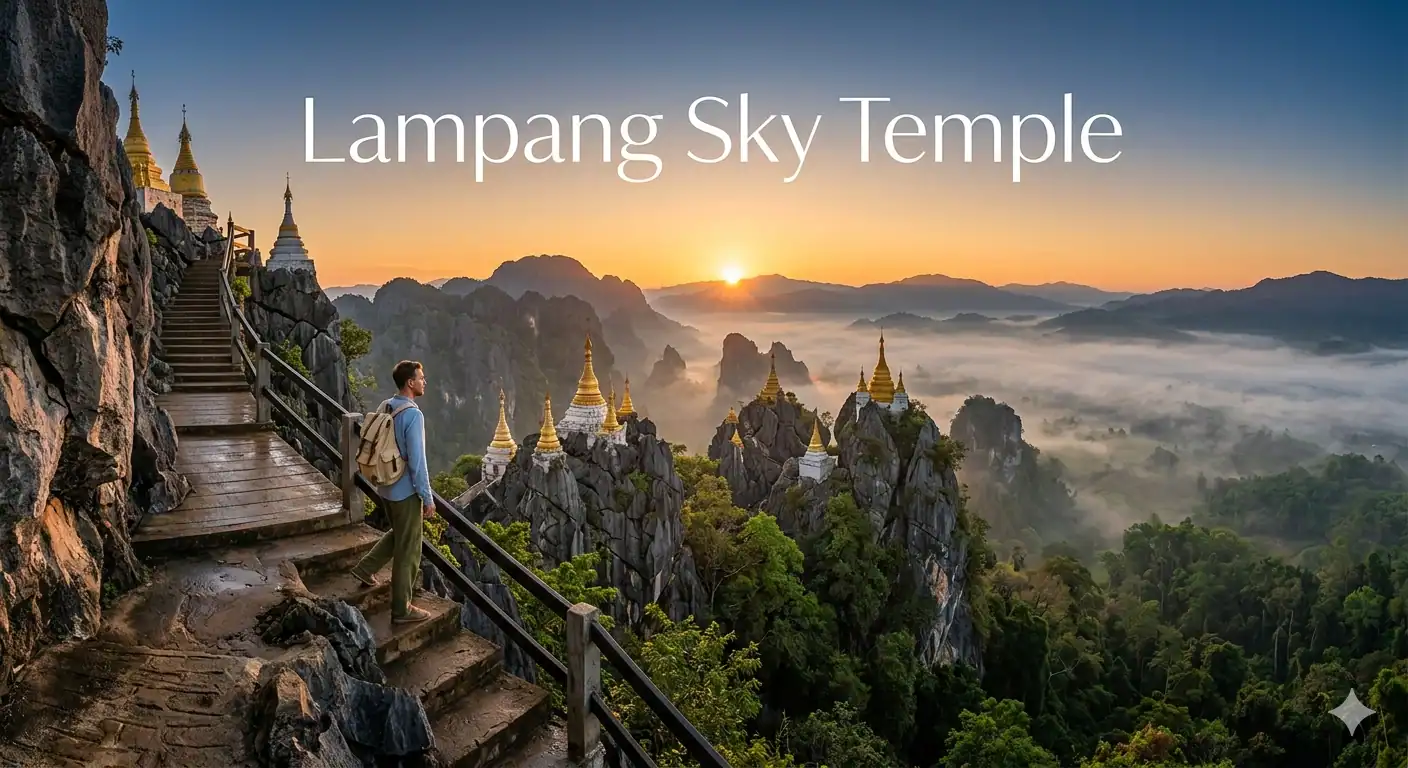
Wat Chaloem Phrakiat, also known as Wat Phraphutthabat Sutthawart or the Sky Pagodas, stands as one of Thailand's most visually arresting and spiritually serene temple complexes. Perched dramatically atop jagged limestone peaks in Lampang Province's Chae Hom District, this relatively young temple completed in 2004 commemorates the 200th anniversary of King Rama IV's reign [[20]]. Unlike ancient temples drawing massive tour groups, Wat Chaloem Phrakiat offers a rare opportunity to experience Thailand's sacred architecture with minimal crowds—if you know when and how to visit.
The temple's unique location creates a dreamlike atmosphere: golden and white stupas appear to float above emerald forest canopies, with morning mist frequently drifting between the peaks. For travelers seeking authentic cultural experiences away from commercialized tourism circuits, this hidden gem delivers profound beauty without the shoulder-to-shoulder crowds common at more famous northern temples.
Quick Answer: Best Strategy to Avoid Crowds
Arrive at Wat Chaloem Phrakiat's entrance gate by 7:00 AM on a weekday during the cool season (November-February) or green season (September-October). Purchase your ticket immediately, take the first songthaew shuttle up the mountain, and begin your climb while the path remains shaded. This timing ensures you reach the summit pagodas before day-trip groups arrive around 9:30-10:00 AM.
Understanding Wat Chaloem Phrakiat's Layout and Visitor Flow

Before planning your crowd-avoidance strategy, understanding the temple complex's three-tiered structure helps optimize your visit timing and energy management.
Three Distinct Areas of the Complex:
| Area | Location | Key Features | Typical Crowd Level |
| Base Temple & Parking | Mountain foot, Highway 1035 | Ticket counter, songthaew station, restrooms, snack shop | Moderate (8:00-10:00 AM) |
| Mid-Mountain Drop-off | ~80% elevation via shuttle road | Trailhead for stairs, Buddha's Footprint shrine, rest area | Low early, builds by 9:30 AM |
| Summit Pagodas (Jedee Loy Fah) | Mountain peaks, 300+ steps up | Floating stupas, prayer hall, panoramic viewpoints, prayer flags | Very low before 9:00 AM |
The mandatory songthaew shuttle from base to mid-mountain creates a natural bottleneck. Most tour groups schedule pickups around 8:30-9:00 AM from Chiang Mai or Lampang City, meaning they typically reach the trailhead between 9:30-10:30 AM. By arriving early and climbing promptly, you can experience the summit pagodas in near-solitude before the main visitor wave arrives.
For comprehensive guidance on navigating Thailand's temple culture respectfully, consult our 50 Essential Tips for First-Time Travelers to Thailand which covers dress codes, photography etiquette, and cultural considerations.
Strategic Timing: When to Visit for Minimal Crowds

Timing your visit strategically is the single most effective way to avoid crowds at Wat Chaloem Phrakiat. Multiple factors influence visitor volume: day of week, season, time of day, and even weather conditions.
Optimal Days and Seasons
Best Days to Visit:
- Weekdays (Monday-Thursday): Lowest visitor volume; Thai domestic tourists typically visit on weekends
- Avoid Thai Public Holidays: Songkran (April), Loy Krathong (November), and royal holidays draw significant local crowds
- School Term Weeks: Avoid Thai school holiday periods (March-April, October) when family travel increases
Best Seasons for Crowd Avoidance:
| Season | Months | Crowd Level | Weather Conditions | Photography Potential |
| Cool/Dry Season | Nov-Feb | Moderate | Clear skies, 15-28°C, low humidity | Excellent visibility, crisp morning light |
| Green/Monsoon Season | Sep-Oct | Low | Lush vegetation, occasional rain, 22-32°C | Dramatic cloud formations, misty peaks |
| Hot/Burning Season | Mar-Apr | Low-Moderate | High heat, haze from agricultural burning | Poor visibility, golden haze effects |
The green season (September-October) offers the best combination of low crowds and stunning atmospheric conditions. Morning mist frequently envelops the limestone peaks, creating the iconic "floating pagoda" effect that makes Wat Chaloem Phrakiat so visually distinctive. Just bring rain protection and non-slip footwear for potentially damp stairs.
For detailed seasonal planning across Thailand, reference our Best Time to Visit Thailand: A Month-by-Month Weather Guide for 2026 which breaks down regional weather patterns and tourism peaks.
Optimal Daily Timing
Wat Chaloem Phrakiat's official opening hours are 7:30 AM to 4:30 PM daily, with weekend ticket counters opening at 7:00 AM. However, the critical factor isn't just opening time—it's when you reach the summit pagodas relative to tour group schedules.
Recommended Arrival Timeline:
- 6:45 AM: Arrive at base temple parking area (allows time for parking, ticket purchase, shuttle wait)
- 7:00-7:15 AM: Take first available songthaew shuttle up mountain (10-15 minute ride)
- 7:15-7:30 AM: Begin stair climb while path is still shaded and cool
- 7:45-8:15 AM: Reach summit pagodas during golden hour lighting with minimal visitors
- 8:15-9:00 AM: Explore summit complex before main visitor wave arrives
- 9:00-9:30 AM: Begin descent as crowds increase at trailhead
This schedule ensures you experience the temple's most photogenic and spiritually significant areas during optimal lighting conditions and before commercial tour groups arrive. Most organized tours from Chiang Mai depart around 7:30-8:00 AM, meaning their groups typically reach the summit between 9:30-10:30 AM.
Transportation Strategies: Getting There Without Joining the Tour Bus Circuit

Wat Chaloem Phrakiat's relative remoteness—approximately 90 minutes north of Lampang City and 2.5 hours from Chiang Mai—is both its greatest asset for crowd avoidance and its primary logistical challenge. Understanding your transportation options helps you maintain schedule control and avoid being locked into tour group timelines.
Self-Drive Option: Maximum Flexibility
Renting a car or motorbike provides the greatest control over your visit timing. This option is ideal for travelers comfortable navigating Thai roads and seeking to combine Wat Chaloem Phrakiat with other northern Thailand destinations.
Driving Directions from Lampang City:
- Take Highway 1035 north from Lampang City toward Chae Hom District
- Continue approximately 60 kilometers; watch for temple signage at mountain fork
- Turn onto smaller mountain road (well-marked for Wat Chaloem Phrakiat)
- Follow winding road to base temple parking area (final 5 km is steep)
- Use Google Maps entry: "Wat Phraphutthabat Sutthawart (Wat Chalermprakiat)" for accurate navigation
Driving Considerations:
- Road Conditions: Final mountain approach is narrow, steep, and winding; drive cautiously, especially in wet conditions
- Parking: Ample free parking available at base temple; arrive early for closest spots
- Fuel: Fill up in Lampang City; limited services in Chae Hom District
- Navigation: Download offline Google Maps area; cellular signal can be spotty on mountain roads
For travelers planning multi-destination northern Thailand itineraries, our Ultimate Thailand Travel Guide 2026 provides comprehensive route planning, driving tips, and regional highlights.
Private Transfer Option: Convenience Without Group Constraints
If you prefer not to drive but want schedule flexibility, hiring a private driver or Grab car offers a middle ground between self-drive and tour groups.
Private Transfer Cost Estimates (USD):
| Route | One-Way Cost | Round-Trip with Wait | Best For |
| Lampang City to Temple | $15-$20 | $35-$45 | Day-trippers staying in Lampang |
| Chiang Mai to Temple | $45-$60 | $90-$120 | Travelers based in Chiang Mai |
| Temple to Chae Son National Park | $12-$18 | N/A | Combining attractions |
Booking Tips for Private Transfers:
- Negotiate round-trip rates with waiting time (typically 3-4 hours total) for better value
- Confirm driver understands temple location and early morning pickup timing
- Request air-conditioned vehicle for comfort during return journey in afternoon heat
- Carry small bills for driver tip (10-15% customary for good service)
Public Transportation Option: Budget-Friendly but Less Flexible
Public transport to Wat Chaloem Phrakiat requires multiple connections and careful timing, making it less ideal for early morning crowd avoidance. However, budget-conscious travelers can make it work with advance planning.
Public Transport Route from Chiang Mai:
- Take morning train or bus from Chiang Mai to Lampang City (departs 6:30 AM, arrives ~8:30 AM)
- From Lampang bus/train station, hire local taxi or songthaew to temple base (~1 hour, $15-20)
- Coordinate return pickup time with driver in advance (limited local transport availability)
Public Transport Challenges:
- Limited early morning departures may delay temple arrival past optimal crowd-avoidance window
- Return transportation from remote temple area requires advance arrangement
- Total travel time significantly longer than private options
For budget travel strategies across Thailand, our Master Guide to Thailand Budget Travel offers detailed cost-saving tips and transportation hacks.
Entrance Fees and What to Expect at the Gate

Understanding the fee structure and payment process at Wat Chaloem Phrakiat helps streamline your arrival and avoid delays that could impact your early morning schedule.
Entrance Fee Breakdown (Updated February 2026):
| Visitor Type | Wildlife Sanctuary Fee | Shuttle Fee | Temple Entrance | Total (USD) |
| Foreign Adult | 200 THB ($5.60) | 60 THB ($1.70) | 30 THB ($0.85) | ~$8.15 |
| Foreign Child | 100 THB ($2.80) | 60 THB ($1.70) | 20 THB ($0.55) | ~$5.05 |
| Thai Adult | 30 THB ($0.85) | 60 THB ($1.70) | 30 THB ($0.85) | ~$3.40 |
| Thai Senior | Free | 60 THB ($1.70) | 30 THB ($0.85) | ~$2.55 |
Payment and Process Notes:
- Cash Only: Ticket counter accepts Thai baht only; no credit cards or foreign currency
- Single Payment Point: All three fees paid together at base temple kiosk before shuttle boarding
- Shuttle Mandatory: Private vehicles cannot use the steep mountain road; shuttle service required
- Receipt Retention: Keep ticket stub; may be requested at summit checkpoints
Carry sufficient small-denomination Thai baht to expedite payment. While ATMs exist in Lampang City, none are available at the temple complex. For currency exchange tips and budget planning, see our "Value Over Volume": How Thailand's 2026 Tourism Shift Impacts Your Budget.
The Climb: Preparing for the 300-Step Ascent

Reaching the summit pagodas requires climbing approximately 300 steel stairs built into the mountainside. While well-maintained with handrails and rest platforms, the ascent demands moderate physical preparation—especially in Thailand's tropical climate.
Climb Preparation Checklist:
- Footwear: Closed-toe shoes with good grip (no flip-flops); stairs can be slippery when damp
- Hydration: Carry at least 500ml water per person; no vendors on summit path
- Pacing: Allow 20-40 minutes for ascent depending on fitness; rest at designated platforms
- Weather Gear: Light rain jacket or umbrella during green season; sun hat for clear days
- Camera Protection: Secure straps for cameras/phones; steep sections require both hands for balance
What to Expect on the Climb:
- Initial Section (0-100 steps): Gentle incline through forested area; shaded and cool in morning
- Mid-Section (100-200 steps): Steeper steel stairs with panoramic valley views; occasional exposure to sun
- Final Section (200-300 steps): Most challenging segment with dramatic limestone outcrops; handrails essential
- Summit Landing: Choice of paths: right to Buddha's Footprint shrine, left to main pagoda complex
The climb's physical demands mean many visitors, particularly older travelers or families with young children, move at a measured pace. By starting early when temperatures are coolest and energy levels highest, you maintain your own rhythm without feeling rushed by others behind you.
Respectful Temple Etiquette: Enhancing Your Experience While Honoring Sacred Space

Wat Chaloem Phrakiat remains an active place of worship for local Buddhist communities. Observing proper temple etiquette not only shows respect but often grants access to quieter, more contemplative areas that tour groups may overlook.
Essential Temple Etiquette Guidelines:
| Guideline | Why It Matters | Practical Application |
| Modest Dress | Shows respect for sacred space | Cover shoulders and knees; carry lightweight sarong if needed |
| Remove Shoes | Required in prayer halls and certain shrines | Watch for signage; use provided shoe racks; carry socks for hot surfaces |
| Quiet Conduct | Preserves meditative atmosphere | Speak softly; silence phone; avoid loud laughter near prayer areas |
| Photography Respect | Protects worshippers' privacy | Ask permission before photographing people; avoid flash in prayer halls |
| Drone Restrictions | Safety and privacy regulations | Check signage; fly only from designated areas if permitted; maintain distance from structures |
Pro Tips for Authentic Engagement:
- Learn Basic Thai Greetings: A simple "Sawasdee kha/khrap" (hello) and "Khop khun kha/khrap" (thank you) creates positive interactions with monks and staff
- Observe Local Practices: Watch how Thai visitors approach shrines; follow their lead for offering incense or making donations
- Ask Permission: If uncertain about accessing a particular area or taking photos, politely ask temple staff
- Support Local Economy: Purchase snacks or drinks from base temple vendors; proceeds support temple maintenance
For deeper insights into Thai cultural norms and respectful travel practices, our Solo Female Travel in Thailand: 2026 Safety and Empowerment Guide includes valuable cultural context applicable to all travelers.
Photography Strategies: Capturing the Sky Pagodas Without the Crowds

Wat Chaloem Phrakiat's dramatic mountain setting and unique architecture make it a photographer's dream. Early morning timing not only avoids crowds but provides optimal lighting conditions for stunning images.
Golden Hour Photography Timeline:
- 6:45-7:30 AM: Soft, directional light ideal for landscape shots from base parking area
- 7:30-8:15 AM: Side-lighting on limestone peaks creates dramatic texture and depth
- 8:15-9:00 AM: Warm, low-angle light perfect for pagoda details and prayer flag compositions
- After 9:00 AM: Harsher overhead light reduces contrast; crowds increase in frames
Recommended Photography Gear:
| Item | Purpose | Budget Option | Premium Option |
| Wide-Angle Lens (16-35mm) | Capture expansive mountain vistas and pagoda complexes | Smartphone wide mode | Full-frame mirrorless with 16-35mm f/2.8 |
| Telephoto Lens (70-200mm) | Isolate pagoda details and compress mountain layers | Smartphone 3x zoom | 70-200mm f/2.8 with image stabilization |
| Tripod or Monopod | Stable shots in low morning light; long exposures for mist effects | Compact travel tripod | Carbon fiber tripod with ball head |
| Polarizing Filter | Reduce haze, enhance sky contrast, manage reflections on pagoda surfaces | Clip-on smartphone filter | High-quality circular polarizer |
| Drone (if permitted) | Aerial perspectives of pagodas on peaks; landscape context shots | Mini drone under 250g | Professional drone with obstacle avoidance |
Composition Tips for Crowd-Free Shots:
- Shoot Upward: Frame pagodas against sky to exclude ground-level visitors
- Use Foreground Elements: Prayer flags, stone railings, or foliage create depth while masking crowds
- Long Exposure for Mist: Slow shutter speeds (1/15-1/4 sec) blur moving visitors while keeping architecture sharp
- Telephoto Compression: Use longer focal lengths to isolate pagodas on distant peaks, minimizing visible crowds
- Vertical Compositions: Emphasize the dramatic verticality of limestone peaks and staircases
For travelers seeking other photogenic, less-crowded Thai destinations, explore our guide to Why Koh Kood Is Thailand's Last Untouched Island Paradise for 2026 which features pristine beaches and authentic local culture.
Combining Wat Chaloem Phrakiat with Nearby Attractions

Maximize your northern Thailand itinerary by pairing Wat Chaloem Phrakiat with complementary nearby destinations. Strategic planning allows you to experience multiple highlights while maintaining your early morning crowd-avoidance advantage.
Recommended Day-Trip Combinations:
| Combination | Travel Time | Best Sequence | Why It Works |
| Wat Chaloem Phrakiat + Chae Son National Park | 30 minutes between sites | Temple sunrise → Hot springs mid-morning → Waterfall afternoon | Contrasting experiences: spiritual mountain temple + geothermal relaxation |
| Wat Chaloem Phrakiat + Lampang City Temples | 90 minutes to Lampang | Temple early AM → Return to Lampang for Wat Phra That Lampang Luang | Combine hidden gem with historically significant temple; avoid peak crowds at both |
| Wat Chaloem Phrakiat + Kiew Fin Pass Drive | Scenic mountain route | Temple sunrise → Drive Kiew Fin Pass → Lunch in Mae Kampong | Dramatic mountain scenery; authentic village experience; flexible timing |
Chae Son National Park Extension Details:
Located approximately 30 minutes from Wat Chaloem Phrakiat's base, Chae Son National Park features natural hot springs where mineral-rich water emerges at temperatures up to 80°C (176°F). Visitors can boil eggs in bamboo baskets (17 minutes for perfect "onsen eggs") or soak feet in cooler overflow pools.
Chae Son Practical Information:
- Entrance Fee: 200 THB ($5.60) adults, 100 THB ($2.80) children; vehicle fee 30 THB ($0.85)
- Facilities: Restrooms, picnic areas, walking paths; limited food vendors
- Best Time: Mid-morning after temple visit; water cooler than peak afternoon heat
- What to Bring: Towel for foot soaking, change of clothes, waterproof bag for electronics
For travelers interested in northern Thailand's natural attractions beyond temples, our Ultimate Guide to Railay Beach demonstrates how to balance cultural and adventure experiences in Thailand.
What to Pack: Essential Gear for a Successful Early Morning Temple Visit

Proper preparation ensures comfort, safety, and respect during your Wat Chaloem Phrakiat visit. A well-considered packing list addresses the unique demands of mountain temple exploration in tropical conditions.
Essential Packing List (Day Trip):
- Modest Clothing: Lightweight long pants or skirt, shirt covering shoulders; breathable fabrics for humidity
- Footwear: Closed-toe shoes with good traction; avoid sandals due to steep, potentially slippery stairs
- Hydration: 1-liter water bottle per person; consider electrolyte tablets for extended exploration
- Sun Protection: Wide-brim hat, UV-blocking sunglasses, reef-safe sunscreen SPF 50+
- Weather Gear: Compact rain jacket or poncho (green season); light fleece for cool-season mornings
- Temple Essentials: Lightweight sarong for impromptu coverage needs; small backpack for shoes during shrine visits
- Photography: Camera with secure strap, extra batteries/memory cards, lens cleaning cloth
- Health & Safety: Basic first aid kit, insect repellent, personal medications, hand sanitizer
- Cash: Sufficient Thai baht for entrance fees, snacks, tips; small denominations preferred
- Navigation: Downloaded offline maps, printed directions as backup, portable power bank for phone
Optional but Recommended:
- Trekking Poles: Reduce knee strain on descent; helpful for less confident hikers
- Binoculars: Enhance wildlife viewing and distant landscape appreciation
- Journal or Sketchbook: Capture reflections or quick drawings of inspiring views
- Small Offering: Incense or flowers for personal prayer (optional; available for purchase at base)
For comprehensive packing guidance tailored to Thailand's diverse environments, consult our Packing for Thailand: Essential Gear for Jungles, Beaches, and Cities which covers region-specific recommendations.
Contingency Planning: What If Your Early Morning Plan Changes?

Even with careful planning, travel realities sometimes disrupt ideal schedules. Having backup strategies ensures you still enjoy Wat Chaloem Phrakiat even if you can't execute the perfect early morning visit.
Alternative Timing Strategies:
- Late Afternoon Visit (3:00-4:00 PM): Most tour groups depart by mid-afternoon; softer light returns; cooler temperatures in green season
- Weekday vs. Weekend Trade-off: If weekend travel is unavoidable, arrive at opening (7:00 AM) to maximize pre-crowd time
- Weather-Dependent Flexibility: Rainy mornings often deter casual visitors; if you have rain gear, overcast conditions can create dramatic photography opportunities with fewer people
What to Do If You Encounter Crowds:
- Seek Quieter Corners: Summit complex has multiple viewpoints; explore less-visited paths to the right of main prayer hall
- Adjust Photography Approach: Use telephoto lens to isolate architectural details; shoot upward to exclude crowds from frames
- Embrace the Energy: Observe local worship practices; crowds can offer cultural learning opportunities if approached with curiosity
- Plan Return Visit: If deeply disappointed by crowds, note conditions for potential return during optimal timing
For travelers seeking other crowd-avoidance strategies across Thailand's popular destinations, our guide to Visit Wat Phra Kaew and Grand Palace Bangkok Without Crowds provides transferable timing and routing techniques.
Conclusion: Making Wat Chaloem Phrakiat Your Personal Sanctuary

Wat Chaloem Phrakiat represents everything many travelers seek in Thailand: profound beauty, spiritual authenticity, and a sense of discovery away from commercialized tourism. By arriving early on a weekday during optimal seasons, respecting temple etiquette, and preparing thoughtfully for the mountain climb, you can experience this extraordinary site with the tranquility it deserves.
Your Action Plan Recap:
- Choose Timing Wisely: Weekday morning arrival (6:45 AM) during cool or green season
- Secure Transportation: Self-drive or private transfer for schedule control; avoid tour group constraints
- Prepare Physically: Appropriate footwear, hydration, and weather gear for the 300-step climb
- Honor Temple Customs: Modest dress, quiet conduct, respectful photography practices
- Embrace Flexibility: Have backup timing strategies if ideal conditions aren't possible
- Combine Thoughtfully: Pair with Chae Son National Park or Lampang City temples for enriched experience
Remember that Wat Chaloem Phrakiat's relative remoteness is its greatest asset. The effort required to reach it filters out casual tourism, preserving an atmosphere of contemplation and wonder. By approaching your visit with intention, preparation, and respect, you join the tradition of travelers who seek not just to see Thailand, but to experience its deeper rhythms and sacred spaces.
For comprehensive northern Thailand itinerary planning, our Ultimate Thailand Travel Guide 2026 provides detailed regional insights, transportation tips, and cultural context to enhance your entire journey through the Kingdom of Smiles.
May your visit to Wat Chaloem Phrakiat bring moments of peace, inspiration, and connection to Thailand's enduring spiritual landscape. Rise early, travel respectfully, and let the mountain pagodas remind you of travel's highest purpose: not just to see new places, but to be transformed by them.
0 Comments