.webp)
.webp)
Greece Climate Resilience Tax: Why you now pay a seasonal fee for environmental protection.
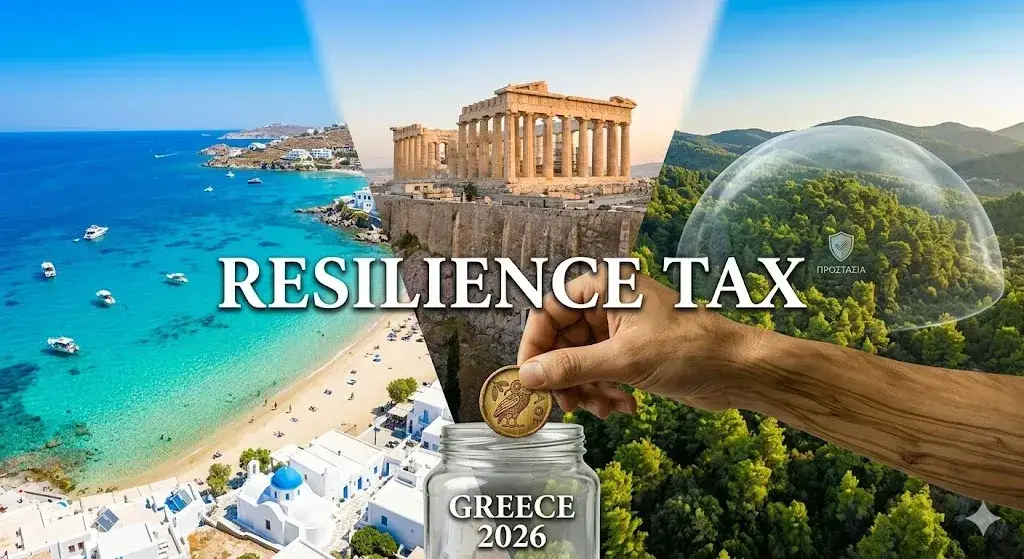
Greece Climate Resilience Tax: Why You Now Pay a Seasonal Fee for Environmental Protection
If you're planning a trip to Greece in 2026, you'll notice a new line item on your hotel or accommodation bill: the Climate Resilience Tax. This mandatory environmental fee, introduced as part of Greece's comprehensive strategy to combat climate change and protect its natural heritage, represents a significant shift in how the country funds environmental protection and climate adaptation measures. Whether you're staying in a luxury resort in Santorini, a boutique hotel in Athens, or a traditional villa in Crete, this seasonal fee now applies to virtually all tourist accommodations across Greece.
Implemented in January 2024 and adjusted for 2026, the Climate Resilience Tax varies by season, accommodation type, and star rating, ranging from €2 to €10 per night. While this additional cost may seem like just another travel expense, it serves a critical purpose: funding Greece's ambitious climate adaptation programs, wildfire prevention initiatives, coastal protection projects, and renewable energy transitions.
This comprehensive guide explains everything you need to know about Greece's Climate Resilience Tax: why it was introduced, how much you'll pay, when it applies, where the money goes, and how it fits into Greece's broader environmental strategy. Whether you're a budget-conscious traveler calculating total trip costs or an eco-conscious tourist wanting to understand your contribution to sustainability, this article provides the complete picture of Greece's pioneering climate tax initiative.
What Is the Climate Resilience Tax?
The Climate Resilience Tax (also known as the Climate Crisis Levy or Environmental Protection Fee) is a mandatory surcharge applied to all overnight stays in Greece, including hotels, vacation rentals, campsites, and other tourist accommodations. Unlike traditional city taxes or tourism fees that fund general municipal services, this tax is specifically earmarked for climate change mitigation and environmental protection projects.
Key Characteristics:
- Mandatory: Applied to all accommodations regardless of type or location
- Seasonal: Rates vary between high season (summer) and low season (winter)
- Per Night: Charged per room/unit per night of stay
- Earmarked: Funds dedicated exclusively to climate and environmental projects
- Progressive: Higher-rated accommodations pay higher rates
- 👉 Karlatornet Gothenburg 2026: A guide to the observation deck and sky-high dining in the Nordic's tallest tower.
- 👉 Keukenhof 2026: Opening March 19 - Early Bird Tulip Tours Guide
- 👉 Paris 2026: A Master Guide to the City of Light, Love, and Timeless Elegance
Legal Framework:
The tax was established under Greek Law 5037/2023 as part of Greece's National Climate Law, which commits the country to achieving carbon neutrality by 2050. The legislation recognizes tourism as both a victim of climate change (through wildfires, rising sea levels, and extreme weather) and a contributor to it (through transportation emissions, resource consumption, and infrastructure development).
Why Greece Introduced the Climate Tax
Greece's decision to implement the Climate Resilience Tax stems from urgent environmental and economic realities:
Climate Change Impacts on Greece:
- Devastating Wildfires: The catastrophic 2021 and 2023 wildfire seasons destroyed hundreds of thousands of hectares of forest, threatened communities, and cost billions in damages. Climate change has extended Greece's fire season and increased fire intensity.
- Rising Temperatures: Greece is warming faster than the global average, with summer temperatures regularly exceeding 40°C (104°F), threatening public health, agriculture, and tourism.
- Coastal Erosion: Rising sea levels and storm surges threaten Greece's extensive coastline, beaches, and coastal infrastructure—critical assets for the tourism industry.
- Water Scarcity: Prolonged droughts and reduced rainfall strain water resources, particularly on islands that depend on limited freshwater supplies.
- Biodiversity Loss: Habitat destruction, invasive species, and changing ecosystems threaten Greece's rich biodiversity and natural heritage.
- 👉 Karlatornet Gothenburg 2026: A guide to the observation deck and sky-high dining in the Nordic's tallest tower.
- 👉 Keukenhof 2026: Opening March 19 - Early Bird Tulip Tours Guide
- 👉 Paris 2026: A Master Guide to the City of Light, Love, and Timeless Elegance
Economic Imperatives:
- Tourism Dependency: Tourism accounts for approximately 20-25% of Greece's GDP. Protecting this vital industry from climate impacts is an economic necessity.
- Infrastructure Costs: Rebuilding after climate disasters (wildfires, floods, storms) costs billions annually. Prevention and adaptation are more cost-effective than disaster response.
- EU Climate Commitments: As an EU member, Greece must meet ambitious climate targets under the European Green Deal and Paris Agreement.
- Sustainable Tourism Demand: Modern travelers increasingly demand sustainable tourism options and are willing to pay premiums for eco-friendly destinations.
- 👉 Karlatornet Gothenburg 2026: A guide to the observation deck and sky-high dining in the Nordic's tallest tower.
- 👉 Keukenhof 2026: Opening March 19 - Early Bird Tulip Tours Guide
- 👉 Paris 2026: A Master Guide to the City of Light, Love, and Timeless Elegance
The "Polluter Pays" Principle:
The Climate Resilience Tax embodies the environmental principle that those who benefit from or contribute to environmental degradation should bear the costs of mitigation and adaptation. Tourism, while economically beneficial, creates environmental pressures through:
- Increased energy and water consumption
- Waste generation
- Transportation emissions (flights, ferries, vehicles)
- Coastal development and habitat disruption
- Strain on local infrastructure and resources
- 👉 Karlatornet Gothenburg 2026: A guide to the observation deck and sky-high dining in the Nordic's tallest tower.
- 👉 Keukenhof 2026: Opening March 19 - Early Bird Tulip Tours Guide
- 👉 Paris 2026: A Master Guide to the City of Light, Love, and Timeless Elegance
By requiring tourists to contribute to climate resilience, Greece ensures that tourism growth doesn't come at the expense of environmental sustainability.
How Much Is the Climate Resilience Tax in 2026?
The Climate Resilience Tax varies based on season, accommodation type, and star rating. Here's the complete breakdown for 2026:
High Season Rates (April 1 - October 31):
| Accommodation Type | Rate Per Night |
|---|---|
| 5-star hotels & luxury resorts | €10 |
| 4-star hotels | €6 |
| 3-star hotels | €4 |
| 2-star hotels & B&Bs | €2 |
| 1-star hotels & hostels | €2 |
| Vacation rentals (entire property) | €4-€10* (based on classification) |
| Campsites & glamping | €2 |
*Vacation rental rates depend on official classification and amenities.
Low Season Rates (November 1 - March 31):
Rates are typically 50% lower during the low season:
- 5-star: €5 per night
- 4-star: €3 per night
- 3-star: €2 per night
- 2-star and below: €1 per night
- 👉 Karlatornet Gothenburg 2026: A guide to the observation deck and sky-high dining in the Nordic's tallest tower.
- 👉 Keukenhof 2026: Opening March 19 - Early Bird Tulip Tours Guide
- 👉 Paris 2026: A Master Guide to the City of Light, Love, and Timeless Elegance
Important Notes:
- Per Room/Unit: The tax is charged per room or rental unit, not per person.
- Maximum Stay: Some accommodations cap the tax at 10-14 nights, though this varies by property.
- Children: Unlike some city taxes, the Climate Resilience Tax applies regardless of guest age.
- Long-Term Stays: Stays exceeding 30 consecutive days may be exempt or reduced—check with your accommodation.
- 👉 Karlatornet Gothenburg 2026: A guide to the observation deck and sky-high dining in the Nordic's tallest tower.
- 👉 Keukenhof 2026: Opening March 19 - Early Bird Tulip Tours Guide
- 👉 Paris 2026: A Master Guide to the City of Light, Love, and Timeless Elegance
Calculation Examples:
- Example 1: 7 nights in a 4-star hotel in Santorini (July): €6 × 7 nights = €42
- Example 2: 10 nights in a 3-star hotel in Athens (January): €2 × 10 nights = €20
- Example 3: 5 nights in a vacation rental in Crete (August): €6 × 5 nights = €30
- Example 4: 14 nights in a 5-star resort in Mykonos (June): €10 × 10 nights (capped) = €100
- 👉 Karlatornet Gothenburg 2026: A guide to the observation deck and sky-high dining in the Nordic's tallest tower.
- 👉 Keukenhof 2026: Opening March 19 - Early Bird Tulip Tours Guide
- 👉 Paris 2026: A Master Guide to the City of Light, Love, and Timeless Elegance
How and When Do You Pay the Tax?
The Climate Resilience Tax is collected at the accommodation level, making the payment process straightforward for travelers.
Payment Methods:
- At Checkout: Most hotels and accommodations add the tax to your final bill, payable upon departure along with your room charges.
- At Booking: Some online booking platforms (Booking.com, Airbnb, Expedia) now include the Climate Tax in the total price shown at booking, collecting it upfront.
- Direct Payment: Smaller properties or vacation rentals may request payment in cash or via separate transfer.
- 👉 Karlatornet Gothenburg 2026: A guide to the observation deck and sky-high dining in the Nordic's tallest tower.
- 👉 Keukenhof 2026: Opening March 19 - Early Bird Tulip Tours Guide
- 👉 Paris 2026: A Master Guide to the City of Light, Love, and Timeless Elegance
When It's Charged:
- Hotels: Typically added to your final invoice at checkout
- Vacation Rentals: May be included in the total booking price or charged separately by the host
- All-Inclusive Resorts: Usually included in the package price but itemized separately
- 👉 Karlatornet Gothenburg 2026: A guide to the observation deck and sky-high dining in the Nordic's tallest tower.
- 👉 Keukenhof 2026: Opening March 19 - Early Bird Tulip Tours Guide
- 👉 Paris 2026: A Master Guide to the City of Light, Love, and Timeless Elegance
Receipt and Documentation:
By law, accommodations must:
- Clearly display Climate Resilience Tax rates at reception or in booking confirmations
- Itemize the tax separately on invoices or receipts
- Provide official receipts showing the tax amount paid
- 👉 Karlatornet Gothenburg 2026: A guide to the observation deck and sky-high dining in the Nordic's tallest tower.
- 👉 Keukenhof 2026: Opening March 19 - Early Bird Tulip Tours Guide
- 👉 Paris 2026: A Master Guide to the City of Light, Love, and Timeless Elegance
What If It's Not Included?
If your booking confirmation doesn't mention the Climate Tax, don't assume you're exempt. Contact your accommodation directly to confirm whether the tax is included in your rate or will be charged separately. Some international booking platforms haven't fully integrated the tax into their systems yet.
Where Does the Money Go? Funding Climate Action
One of the most important aspects of the Climate Resilience Tax is its earmarked purpose. Unlike general tourism taxes that flow into municipal budgets, Climate Tax revenue is legally restricted to specific environmental and climate-related expenditures.
Fund Allocation (as of 2026):
Revenue from the Climate Resilience Tax is distributed across several key areas:
1. Wildfire Prevention and Management (40%):
- Forest fire prevention programs and early warning systems
- Firefighting equipment and infrastructure
- Forest management and fuel reduction programs
- Reforestation of burned areas
- Training and employment of seasonal firefighters
- 👉 Karlatornet Gothenburg 2026: A guide to the observation deck and sky-high dining in the Nordic's tallest tower.
- 👉 Keukenhof 2026: Opening March 19 - Early Bird Tulip Tours Guide
- 👉 Paris 2026: A Master Guide to the City of Light, Love, and Timeless Elegance
2. Coastal Protection and Adaptation (25%):
- Beach restoration and erosion control projects
- Sea wall and coastal infrastructure reinforcement
- Marine ecosystem protection
- Climate-resilient coastal planning
- 👉 Karlatornet Gothenburg 2026: A guide to the observation deck and sky-high dining in the Nordic's tallest tower.
- 👉 Keukenhof 2026: Opening March 19 - Early Bird Tulip Tours Guide
- 👉 Paris 2026: A Master Guide to the City of Light, Love, and Timeless Elegance
3. Renewable Energy Transition (15%):
- Solar panel installations on public buildings
- Wind energy projects, particularly on islands
- Energy storage systems and smart grid infrastructure
- Incentives for hotels and businesses to adopt renewable energy
- 👉 Karlatornet Gothenburg 2026: A guide to the observation deck and sky-high dining in the Nordic's tallest tower.
- 👉 Keukenhof 2026: Opening March 19 - Early Bird Tulip Tours Guide
- 👉 Paris 2026: A Master Guide to the City of Light, Love, and Timeless Elegance
4. Water Resource Management (10%):
- Desalination plants for water-scarce islands
- Water conservation and recycling programs
- Infrastructure upgrades to reduce water loss
- Drought mitigation programs
- 👉 Karlatornet Gothenburg 2026: A guide to the observation deck and sky-high dining in the Nordic's tallest tower.
- 👉 Keukenhof 2026: Opening March 19 - Early Bird Tulip Tours Guide
- 👉 Paris 2026: A Master Guide to the City of Light, Love, and Timeless Elegance
5. Biodiversity Conservation (5%):
- Protection of endangered species and habitats
- National park management and conservation
- Marine protected areas
- Invasive species control
- 👉 Karlatornet Gothenburg 2026: A guide to the observation deck and sky-high dining in the Nordic's tallest tower.
- 👉 Keukenhof 2026: Opening March 19 - Early Bird Tulip Tours Guide
- 👉 Paris 2026: A Master Guide to the City of Light, Love, and Timeless Elegance
6. Climate Education and Research (5%):
- Climate change awareness campaigns
- Research on climate impacts and adaptation strategies
- Sustainable tourism training programs
- Community resilience initiatives
- 👉 Karlatornet Gothenburg 2026: A guide to the observation deck and sky-high dining in the Nordic's tallest tower.
- 👉 Keukenhof 2026: Opening March 19 - Early Bird Tulip Tours Guide
- 👉 Paris 2026: A Master Guide to the City of Light, Love, and Timeless Elegance
Transparency and Accountability:
The Greek government publishes annual reports detailing:
- Total Climate Tax revenue collected
- Allocation of funds across categories
- Specific projects funded
- Measurable outcomes and impacts
- 👉 Karlatornet Gothenburg 2026: A guide to the observation deck and sky-high dining in the Nordic's tallest tower.
- 👉 Keukenhof 2026: Opening March 19 - Early Bird Tulip Tours Guide
- 👉 Paris 2026: A Master Guide to the City of Light, Love, and Timeless Elegance
These reports are available on the Ministry of Environment and Energy website, ensuring transparency in how tourist contributions are used.
Climate Tax vs. Other Greek Tourism Fees
Greece has multiple tourism-related fees, which can be confusing. Here's how the Climate Resilience Tax differs from other charges:
Climate Resilience Tax:
- Purpose: Environmental protection and climate adaptation
- Rate: €2-€10 per night (varies by season and accommodation type)
- Applies to: All accommodations nationwide
- Collection: Per night, per room/unit
- Earmarked: Yes—dedicated to climate projects
- 👉 Karlatornet Gothenburg 2026: A guide to the observation deck and sky-high dining in the Nordic's tallest tower.
- 👉 Keukenhof 2026: Opening March 19 - Early Bird Tulip Tours Guide
- 👉 Paris 2026: A Master Guide to the City of Light, Love, and Timeless Elegance
Municipal/City Tax (TEA):
- Purpose: Local infrastructure and services
- Rate: €0.50-€4 per night (varies by municipality and hotel category)
- Applies to: Hotels and some vacation rentals
- Collection: Per night, per room
- Earmarked: No—goes to general municipal budget
- 👉 Karlatornet Gothenburg 2026: A guide to the observation deck and sky-high dining in the Nordic's tallest tower.
- 👉 Keukenhof 2026: Opening March 19 - Early Bird Tulip Tours Guide
- 👉 Paris 2026: A Master Guide to the City of Light, Love, and Timeless Elegance
Key Differences:
- You pay both the Climate Tax and Municipal Tax—they are separate charges
- Climate Tax rates are higher and standardized nationally
- Municipal Tax rates vary by location
- Climate Tax is strictly earmarked; Municipal Tax is not
- 👉 Karlatornet Gothenburg 2026: A guide to the observation deck and sky-high dining in the Nordic's tallest tower.
- 👉 Keukenhof 2026: Opening March 19 - Early Bird Tulip Tours Guide
- 👉 Paris 2026: A Master Guide to the City of Light, Love, and Timeless Elegance
Example Total Taxes:
For a 4-star hotel in Athens (high season):
- Climate Resilience Tax: €6/night
- Municipal Tax (Athens): €3/night
- Total taxes: €9/night
- 👉 Karlatornet Gothenburg 2026: A guide to the observation deck and sky-high dining in the Nordic's tallest tower.
- 👉 Keukenhof 2026: Opening March 19 - Early Bird Tulip Tours Guide
- 👉 Paris 2026: A Master Guide to the City of Light, Love, and Timeless Elegance
Exemptions and Special Cases
While the Climate Resilience Tax applies broadly, certain situations qualify for exemptions or reductions:
Full Exemptions:
- Long-term residents: Stays exceeding 30 consecutive days (must provide proof of residency or long-term rental agreement)
- Humanitarian stays: Accommodations provided for refugees, asylum seekers, or disaster victims
- Government/military: Official government or military personnel on duty
- Permanent residents: Greek citizens or legal residents staying in their primary residence
- 👉 Karlatornet Gothenburg 2026: A guide to the observation deck and sky-high dining in the Nordic's tallest tower.
- 👉 Keukenhof 2026: Opening March 19 - Early Bird Tulip Tours Guide
- 👉 Paris 2026: A Master Guide to the City of Light, Love, and Timeless Elegance
Partial Reductions:
- Low season: 50% reduction from November 1 to March 31
- Social tourism programs: Participants in government-subsidized social tourism may receive reduced rates
- Group bookings: Some accommodations offer reduced rates for large groups (10+ rooms), though this is at the property's discretion
- 👉 Karlatornet Gothenburg 2026: A guide to the observation deck and sky-high dining in the Nordic's tallest tower.
- 👉 Keukenhof 2026: Opening March 19 - Early Bird Tulip Tours Guide
- 👉 Paris 2026: A Master Guide to the City of Light, Love, and Timeless Elegance
Special Considerations:
- Cruise passengers: Day visitors not staying overnight are exempt
- Transit passengers: Those staying less than 24 hours in airport hotels may be exempt (check with accommodation)
- Children: No age-based exemptions—tax applies regardless of guest age
- 👉 Karlatornet Gothenburg 2026: A guide to the observation deck and sky-high dining in the Nordic's tallest tower.
- 👉 Keukenhof 2026: Opening March 19 - Early Bird Tulip Tours Guide
- 👉 Paris 2026: A Master Guide to the City of Light, Love, and Timeless Elegance
How to Claim Exemptions:
If you believe you qualify for an exemption:
- Inform your accommodation at booking or check-in
- Provide supporting documentation (residency permit, long-term lease, official orders, etc.)
- Request written confirmation of exemption
- Keep copies of all documentation
Note: Exemptions are at the accommodation's discretion and must comply with Greek tax law. When in doubt, contact the property directly before booking.
Impact on Travel Costs: Budget Planning
The Climate Resilience Tax adds a meaningful but manageable cost to your Greek vacation. Here's how to budget for it:
Sample Trip Cost Calculations:
Budget Traveler (7 days):
- Accommodation: 2-star hotel, €40/night = €280
- Climate Tax: €2 × 7 nights = €14
- Municipal Tax: €1 × 7 nights = €7
- Total taxes: €21 (7.5% of accommodation cost)
- 👉 Karlatornet Gothenburg 2026: A guide to the observation deck and sky-high dining in the Nordic's tallest tower.
- 👉 Keukenhof 2026: Opening March 19 - Early Bird Tulip Tours Guide
- 👉 Paris 2026: A Master Guide to the City of Light, Love, and Timeless Elegance
Mid-Range Traveler (10 days):
- Accommodation: 3-star hotel, €80/night = €800
- Climate Tax: €4 × 10 nights = €40
- Municipal Tax: €2 × 10 nights = €20
- Total taxes: €60 (7.5% of accommodation cost)
- 👉 Karlatornet Gothenburg 2026: A guide to the observation deck and sky-high dining in the Nordic's tallest tower.
- 👉 Keukenhof 2026: Opening March 19 - Early Bird Tulip Tours Guide
- 👉 Paris 2026: A Master Guide to the City of Light, Love, and Timeless Elegance
Luxury Traveler (7 days):
- Accommodation: 5-star resort, €300/night = €2,100
- Climate Tax: €10 × 7 nights = €70
- Municipal Tax: €4 × 7 nights = €28
- Total taxes: €98 (4.7% of accommodation cost)
- 👉 Karlatornet Gothenburg 2026: A guide to the observation deck and sky-high dining in the Nordic's tallest tower.
- 👉 Keukenhof 2026: Opening March 19 - Early Bird Tulip Tours Guide
- 👉 Paris 2026: A Master Guide to the City of Light, Love, and Timeless Elegance
Budget Planning Tips:
- Factor in taxes early: Include Climate Tax and Municipal Tax in your initial budget calculations, not as an afterthought.
- Compare total costs: When comparing accommodations, add taxes to the nightly rate for accurate comparisons.
- Consider seasonality: Traveling in low season (November-March) cuts Climate Tax in half.
- Longer stays: Some properties cap taxes after 10-14 nights—ask about this when booking.
- Vacation rentals: Climate Tax may not always be included in Airbnb/VRBO listings—confirm before booking.
- 👉 Karlatornet Gothenburg 2026: A guide to the observation deck and sky-high dining in the Nordic's tallest tower.
- 👉 Keukenhof 2026: Opening March 19 - Early Bird Tulip Tours Guide
- 👉 Paris 2026: A Master Guide to the City of Light, Love, and Timeless Elegance
Is It Worth It?
While the Climate Tax increases your travel costs, consider:
- The funds directly protect the destinations you're visiting
- Climate adaptation protects Greece's tourism industry long-term
- €2-€10 per night is modest compared to overall trip costs
- You're contributing to wildfire prevention, coastal protection, and renewable energy
- Sustainable tourism ensures Greece remains beautiful for future visitors
- 👉 Karlatornet Gothenburg 2026: A guide to the observation deck and sky-high dining in the Nordic's tallest tower.
- 👉 Keukenhof 2026: Opening March 19 - Early Bird Tulip Tours Guide
- 👉 Paris 2026: A Master Guide to the City of Light, Love, and Timeless Elegance
Criticisms and Controversies
Like any new tax, the Climate Resilience Tax has faced criticism and debate:
Main Criticisms:
- Tourism Competitiveness: Some argue the tax makes Greece less competitive compared to destinations without similar fees (Turkey, Egypt, Croatia).
- Double Taxation: Critics claim tourists already pay VAT (13-24%) and Municipal Taxes, making the Climate Tax feel like double taxation.
- Implementation Challenges: Smaller accommodations and islands have struggled with administrative burdens and collection systems.
- Transparency Concerns: Some question whether funds are truly earmarked or if they're being diverted to general budgets.
- Regressive Impact: Budget travelers pay the same per-room rate as luxury travelers, which some view as unfair.
- 👉 Karlatornet Gothenburg 2026: A guide to the observation deck and sky-high dining in the Nordic's tallest tower.
- 👉 Keukenhof 2026: Opening March 19 - Early Bird Tulip Tours Guide
- 👉 Paris 2026: A Master Guide to the City of Light, Love, and Timeless Elegance
Government Response:
The Greek government has addressed these concerns by:
- Publishing detailed annual reports on fund allocation
- Providing technical support to small accommodations
- Emphasizing that climate action protects tourism's future
- Highlighting that similar taxes exist in other European destinations (France, Italy, Spain)
- Pointing out that the tax represents a small percentage of total trip costs
- 👉 Karlatornet Gothenburg 2026: A guide to the observation deck and sky-high dining in the Nordic's tallest tower.
- 👉 Keukenhof 2026: Opening March 19 - Early Bird Tulip Tours Guide
- 👉 Paris 2026: A Master Guide to the City of Light, Love, and Timeless Elegance
Industry Response:
- Hotel Associations: Generally supportive, recognizing that climate change threatens tourism
- Tour Operators: Mixed reactions; some worry about price sensitivity, others support sustainability
- Travelers: Surveys show most tourists accept the tax if funds are transparently used for environmental protection
- 👉 Karlatornet Gothenburg 2026: A guide to the observation deck and sky-high dining in the Nordic's tallest tower.
- 👉 Keukenhof 2026: Opening March 19 - Early Bird Tulip Tours Guide
- 👉 Paris 2026: A Master Guide to the City of Light, Love, and Timeless Elegance
How Greece Compares to Other Countries
Greece isn't alone in implementing tourism-based environmental taxes. Here's how it compares:
Similar Environmental/Tourism Taxes in Europe:
- France: "Taxe de séjour" (tourist tax) ranges €0.20-€4/night; some regions add environmental surcharges
- Italy: "Tassa di soggiorno" varies by city (€1-€7/night); Venice charges additional day-tripper fees
- Spain: Balearic Islands charge €1-€4/night sustainable tourism tax; Catalonia has similar fees
- Croatia: Tourist tax €1-€2/night plus €1-€2 sojourn tax
- Netherlands: Amsterdam charges €3-€7/night tourist tax
- Germany: Various cities charge "Kulturförderabgabe" (culture tax) €1-€5/night
- 👉 Karlatornet Gothenburg 2026: A guide to the observation deck and sky-high dining in the Nordic's tallest tower.
- 👉 Keukenhof 2026: Opening March 19 - Early Bird Tulip Tours Guide
- 👉 Paris 2026: A Master Guide to the City of Light, Love, and Timeless Elegance
What Makes Greece Different:
- Explicit Climate Focus: Greece's tax is explicitly labeled and earmarked for climate resilience, unlike general tourism taxes
- Higher Rates: At €2-€10, Greece's rates are among the higher end in Europe
- National Standardization: Unlike Italy or Spain where rates vary by municipality, Greece has national standardization
- Transparency: Greece publishes detailed reports on fund usage, which isn't universal
- 👉 Karlatornet Gothenburg 2026: A guide to the observation deck and sky-high dining in the Nordic's tallest tower.
- 👉 Keukenhof 2026: Opening March 19 - Early Bird Tulip Tours Guide
- 👉 Paris 2026: A Master Guide to the City of Light, Love, and Timeless Elegance
Beyond Europe:
- Bhutan: Charges $200/night "Sustainable Development Fee" (highest in the world)
- Palau: Requires $100 environmental fee upon entry
- Bonaire: $10 nature fee for divers
- Maldives: $6/night "Green Tax" plus 12% service charge
- 👉 Karlatornet Gothenburg 2026: A guide to the observation deck and sky-high dining in the Nordic's tallest tower.
- 👉 Keukenhof 2026: Opening March 19 - Early Bird Tulip Tours Guide
- 👉 Paris 2026: A Master Guide to the City of Light, Love, and Timeless Elegance
Global Trend:
Greece's Climate Resilience Tax is part of a growing global trend where destinations use tourism fees to fund environmental protection, recognizing that:
- Tourism contributes to environmental degradation
- Climate change threatens tourism destinations
- Visitors are willing to pay for sustainability
- Proactive adaptation is cheaper than disaster recovery
- 👉 Karlatornet Gothenburg 2026: A guide to the observation deck and sky-high dining in the Nordic's tallest tower.
- 👉 Keukenhof 2026: Opening March 19 - Early Bird Tulip Tours Guide
- 👉 Paris 2026: A Master Guide to the City of Light, Love, and Timeless Elegance
The Future: What's Next for Greece's Climate Tax?
The Climate Resilience Tax is likely to evolve as Greece continues its climate adaptation journey:
Potential Changes (2027 and Beyond):
- Rate Increases: Rates may increase gradually to match inflation and growing climate adaptation needs
- Expanded Scope: May extend to cruise passengers, day-trippers, or short-term rental platforms more comprehensively
- Dynamic Pricing: Potential for rates to vary based on actual climate risk (e.g., higher rates in wildfire-prone areas during fire season)
- Integration with EU Policies: Alignment with EU-wide sustainability taxes and carbon pricing mechanisms
- Technology Integration: Blockchain or digital systems for transparent fund tracking and distribution
- 👉 Karlatornet Gothenburg 2026: A guide to the observation deck and sky-high dining in the Nordic's tallest tower.
- 👉 Keukenhof 2026: Opening March 19 - Early Bird Tulip Tours Guide
- 👉 Paris 2026: A Master Guide to the City of Light, Love, and Timeless Elegance
Long-Term Vision:
Greece's National Climate Law envisions:
- Carbon neutrality by 2050
- 100% renewable energy for islands by 2030
- Climate-resilient tourism infrastructure
- Protection of 30% of land and sea areas
- Sustainable tourism as a national priority
- 👉 Karlatornet Gothenburg 2026: A guide to the observation deck and sky-high dining in the Nordic's tallest tower.
- 👉 Keukenhof 2026: Opening March 19 - Early Bird Tulip Tours Guide
- 👉 Paris 2026: A Master Guide to the City of Light, Love, and Timeless Elegance
The Climate Resilience Tax is a key funding mechanism for achieving these ambitious goals.
Practical Tips for Travelers
Here's how to navigate the Climate Resilience Tax smoothly:
Before Booking:
- Check total cost: Look for "taxes and fees" breakdown, not just nightly rate
- Ask questions: Contact accommodations directly if tax inclusion is unclear
- Compare options: Factor taxes into your accommodation comparison
- Consider timing: Low season travel cuts Climate Tax in half
- Budget accordingly: Add €20-€100+ to your trip budget depending on trip length and accommodation type
- 👉 Karlatornet Gothenburg 2026: A guide to the observation deck and sky-high dining in the Nordic's tallest tower.
- 👉 Keukenhof 2026: Opening March 19 - Early Bird Tulip Tours Guide
- 👉 Paris 2026: A Master Guide to the City of Light, Love, and Timeless Elegance
During Your Stay:
- Request receipts: Ensure you receive itemized receipts showing Climate Tax separately
- Verify charges: Check that the tax amount matches the official rates for your accommodation type
- Ask about initiatives: Many hotels display information about how Climate Tax funds are used—ask to learn more
- Practice sustainability: Complement your tax contribution by conserving water, energy, and reducing waste during your stay
- 👉 Karlatornet Gothenburg 2026: A guide to the observation deck and sky-high dining in the Nordic's tallest tower.
- 👉 Keukenhof 2026: Opening March 19 - Early Bird Tulip Tours Guide
- 👉 Paris 2026: A Master Guide to the City of Light, Love, and Timeless Elegance
After Your Trip:
- Share feedback: Tell accommodations and tourism boards that you support sustainability initiatives
- Stay informed: Follow Greek environmental news to see how Climate Tax funds are being used
- Return responsibly: Consider visiting in low season to reduce overtourism pressure
- 👉 Karlatornet Gothenburg 2026: A guide to the observation deck and sky-high dining in the Nordic's tallest tower.
- 👉 Keukenhof 2026: Opening March 19 - Early Bird Tulip Tours Guide
- 👉 Paris 2026: A Master Guide to the City of Light, Love, and Timeless Elegance
Frequently Asked Questions
Q: Is the Climate Resilience Tax mandatory?
A: Yes, it's a mandatory tax applied to all tourist accommodations in Greece. You cannot opt out.
Q: Do children pay the tax?
A: Yes, the tax is charged per room/unit, not per person, so children don't incur additional charges beyond the room rate.
Q: Is the tax included in my booking price?
A: It depends on the booking platform. Some include it in the total price; others add it at checkout or at the property. Always verify before booking.
Q: Can I get a refund if I leave early?
A: Generally no. The tax is charged per night stayed, similar to your room rate. Early departure doesn't typically result in tax refunds.
Q: What if my accommodation doesn't charge the tax?
A: This is illegal. All accommodations must collect and remit the tax. If you're not charged, the property may be violating Greek law.
Q: Does the tax apply to Airbnb and vacation rentals?
A: Yes, all accommodations including vacation rentals, Airbnb, villas, and campsites must collect the Climate Resilience Tax.
Q: Can I deduct this tax from my taxes?
A: Generally no for leisure travel. Business travelers should consult their tax advisor, as deductibility varies by jurisdiction.
Q: Will the tax increase in future years?
A: Rates are subject to annual review and may increase to match inflation and climate adaptation needs.
Q: Is there a maximum cap on the tax?
A: Some accommodations cap the tax at 10-14 nights, but this varies by property. Ask when booking.
Q: Where can I see how the tax money is used?
A: The Greek Ministry of Environment and Energy publishes annual reports on Climate Tax revenue and expenditures on their website.
Conclusion: Contributing to Greece's Sustainable Future
Greece's Climate Resilience Tax represents more than just another line item on your hotel bill—it's a tangible commitment to protecting the destinations we love for future generations. While the €2-€10 per night fee adds to your travel costs, it plays a crucial role in funding wildfire prevention, coastal protection, renewable energy, and climate adaptation measures that safeguard Greece's natural beauty and tourism industry.
As climate change intensifies, destinations worldwide are grappling with how to balance tourism growth with environmental protection. Greece's approach—transparent, earmarked, and progressive—offers a model that other destinations are watching closely. By paying the Climate Resilience Tax, you're not just complying with Greek law; you're actively participating in climate action and sustainable tourism.
When you visit Greece in 2026 and beyond, remember that your Climate Tax contribution helps:
- Protect forests from devastating wildfires
- Preserve the beaches and coastlines you came to enjoy
- Transition islands to renewable energy
- Ensure water security for communities and visitors
- Conserve biodiversity and natural habitats
- Build climate-resilient infrastructure
- 👉 Karlatornet Gothenburg 2026: A guide to the observation deck and sky-high dining in the Nordic's tallest tower.
- 👉 Keukenhof 2026: Opening March 19 - Early Bird Tulip Tours Guide
- 👉 Paris 2026: A Master Guide to the City of Light, Love, and Timeless Elegance
While no one enjoys paying additional fees, the Climate Resilience Tax represents an investment in Greece's future—and by extension, the future of tourism itself. By understanding the tax, budgeting for it, and recognizing its purpose, you can travel to Greece with the knowledge that your visit contributes to the destination's long-term sustainability.
Greece's natural beauty, cultural heritage, and warm hospitality are worth protecting. The Climate Resilience Tax ensures that future generations of travelers can experience the magic of Greece, just as you do today.
0 Comments