.webp)
.webp)
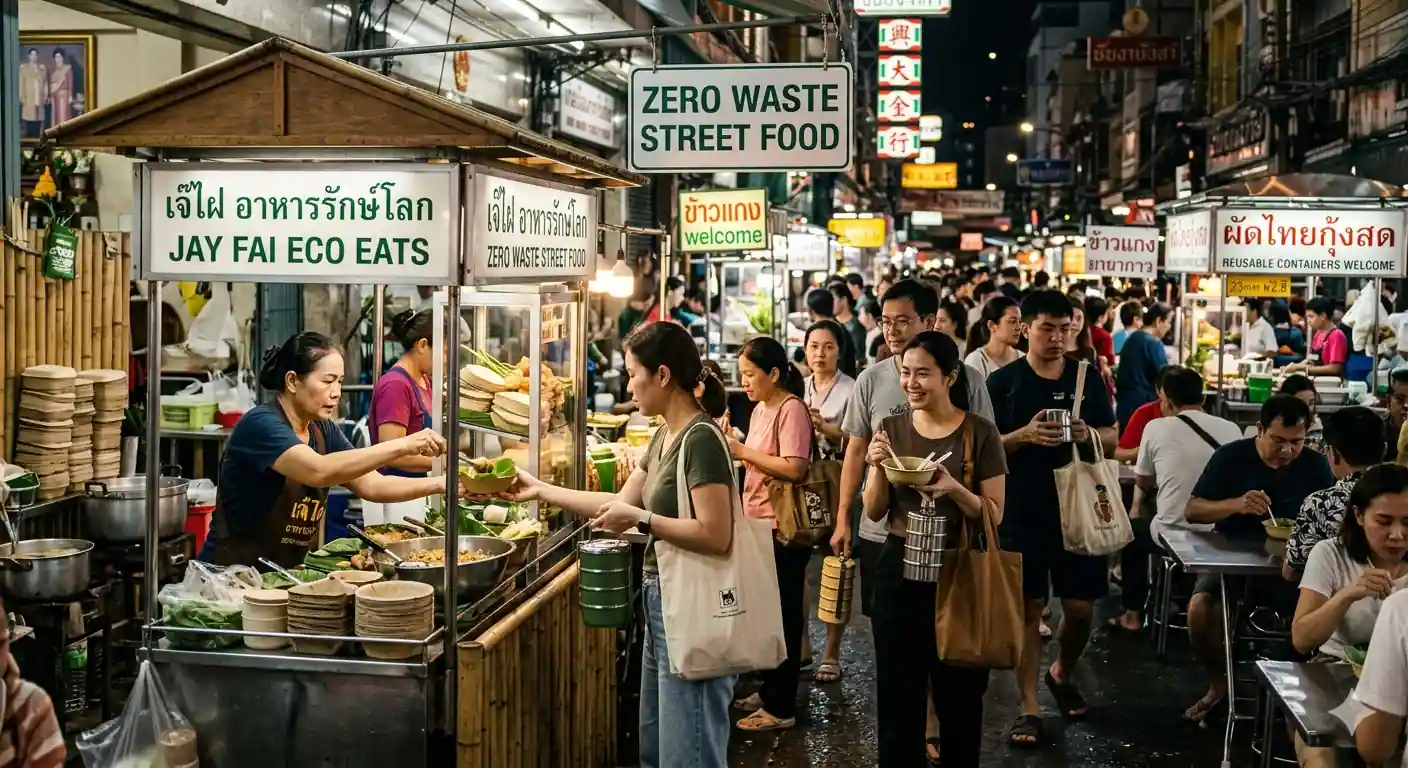
Discovering Zero Waste Street Food in Thailand's Top Destinations
Thailand's legendary street food culture meets the zero waste movement in Bangkok and Phuket, where eco-conscious travelers can savor authentic Thai cuisine while minimizing environmental impact. Finding zero waste street food stalls requires knowing where to look, bringing reusable containers, and supporting vendors who prioritize sustainable practices. This comprehensive guide reveals the best plastic-free street food vendors, markets embracing zero waste initiatives, and practical strategies for enjoying Thailand's incredible culinary scene without generating single-use plastic waste.
From Bangkok's historic Chinatown to Phuket's Old Town markets, a growing number of street food vendors are eliminating plastic bags, foam containers, and disposable utensils in favor of biodegradable packaging and reusable systems. Eco travelers who come prepared with reusable containers, cloth bags, and bamboo utensils can access the same incredible flavors that make Thai street food world-famous while reducing their environmental footprint by up to 80 percent per meal.
Featured Answer: Zero waste street food in Bangkok and Phuket is found at markets like Or Tor Kor Market, Chatuchak Weekend Market, and Phuket Weekend Market, where vendors increasingly offer plastic-free options. Bring reusable containers, cloth bags, and bamboo utensils to access pad thai, mango sticky rice, and grilled meats without single-use plastics. Prices range from $1-5 USD per dish, with zero waste vendors concentrated in markets committed to sustainability initiatives launched in 2024-2026.
Understanding Zero Waste Street Food in Thailand
Zero waste street food refers to vendors who eliminate or minimize single-use plastics, foam containers, and disposable packaging through reusable systems, biodegradable alternatives, or customer-provided containers. In Thailand, where street food traditionally relies heavily on plastic bags, styrofoam boxes, and plastic utensils, the zero waste movement represents a significant cultural and operational shift.
The environmental imperative is clear: Thailand generates approximately 27 million tons of waste annually, with plastic waste comprising roughly 14 percent of total waste. Street food vendors contribute significantly to this problem through single-use packaging, with an estimated 8 billion plastic bags used annually for food service alone. However, a growing movement of vendors, markets, and eco-conscious consumers is changing this reality.
Zero waste street food vendors employ various strategies: accepting customer-provided containers, using biodegradable banana leaves or paper packaging, offering discounts for reusable containers, implementing deposit systems for returnable containers, and eliminating plastic straws and utensils entirely. Some vendors go further by sourcing ingredients locally, composting food scraps, and using renewable energy for cooking.
Why Bangkok and Phuket Lead Thailand's Zero Waste Food Movement
Bangkok and Phuket have emerged as Thailand's zero waste street food pioneers due to concentrated tourist populations, environmental awareness campaigns, and municipal sustainability initiatives. Bangkok's 2024-2026 zero waste market program has certified over 150 vendors across 12 major markets, while Phuket's 2025 sustainable tourism initiative has transformed Old Town markets into plastic-free zones.
These cities benefit from educated consumer bases willing to pay slight premiums for sustainable options, international tourist demand for eco-friendly experiences, and municipal support including waste management infrastructure and vendor training programs. The concentration of zero waste vendors in specific markets creates critical mass, making it practical for eco travelers to find multiple zero waste options in single locations.
For travelers planning comprehensive Thailand itineraries that include zero waste dining, reviewing The Ultimate Thailand Travel Guide 2026 provides essential context for navigating the kingdom's diverse regions while maintaining sustainable practices. Understanding regional differences in zero waste infrastructure helps travelers set realistic expectations and identify the best locations for plastic-free dining.
Best Zero Waste Street Food Markets in Bangkok
Bangkok's zero waste street food scene concentrates in specific markets where vendor participation, municipal support, and consumer demand align. These markets offer the highest concentration of plastic-free vendors and the most reliable zero waste options.
Or Tor Kor Market (ตลาด อ.ต.ก.)
Located adjacent to Chatuchak Weekend Market, Or Tor Kor Market ranks as Bangkok's premier zero waste food destination. This market received Thailand's first zero waste market certification in 2024 and now hosts over 80 certified zero waste vendors. The market mandates that all food vendors accept customer-provided containers and prohibits single-use plastic bags and foam containers.
| Feature | Details |
| Location | Kamphaeng Phet Road, Chatuchak District |
| Zero Waste Vendors | 80+ certified vendors |
| Operating Hours | 8:00 AM - 8:00 PM daily |
| Popular Dishes | Pad Thai, mango sticky rice, grilled seafood, fresh fruit |
| Price Range | $1.50-$6 USD per dish |
| Zero Waste Features | Mandatory container acceptance, biodegradable packaging, composting program |
Or Tor Kor Market's zero waste infrastructure includes container washing stations, composting facilities for food scraps, and vendor training programs. The market provides reusable container rental services for 20 THB ($0.60 USD) deposit, refundable upon return. Vendors receive monthly zero waste performance ratings displayed publicly, creating accountability and competition.
Chatuchak Weekend Market (ตลาดนัดจตุจักร)
While primarily known as a shopping destination, Chatuchak Weekend Market's food section has undergone significant zero waste transformation since 2025. Approximately 60 food vendors now participate in the market's zero waste program, concentrated in Sections 2, 3, and 26.
Chatuchak's zero waste approach emphasizes vendor education and customer incentives. Vendors receive subsidies for purchasing biodegradable packaging, while customers bringing reusable containers receive 5-10 THB ($0.15-$0.30 USD) discounts per purchase. The market operates a comprehensive recycling program and prohibits single-use plastic bags market-wide.
Pak Khlong Talat (ตลาดปากคลองตลาด)
Bangkok's largest fresh flower and produce market has expanded into prepared food with zero waste principles. Operating 24 hours daily, Pak Khlong Talat's food vendors serve traditional Thai breakfast, lunch, and dinner options using banana leaf wrapping and customer-provided containers exclusively.
The market's 24-hour operation makes it ideal for travelers with irregular schedules. Popular zero waste options include khao tom (rice soup) for breakfast, various curry dishes for lunch, and grilled meats with sticky rice for dinner. Prices range from $1-$4 USD per dish, with vendors accustomed to serving international visitors.
Sampeng Market (ตลาดสำเพ็ง)
Located in Bangkok's historic Chinatown, Sampeng Market combines wholesale commerce with authentic street food in a zero waste format. This market's zero waste approach stems from tradition rather than modern environmental movements—vendors have used banana leaves, paper wrapping, and reusable containers for generations.
Sampeng Market operates from 7:00 AM to 5:00 PM, with peak food service between 10:00 AM and 2:00 PM. The market specializes in Chinese-Thai fusion cuisine, including boat noodles, roasted duck, and traditional desserts. Vendors expect customers to bring containers or accept food wrapped in banana leaves or paper.
Phuket's Zero Waste Street Food Scene
Phuket's zero waste street food movement centers on Old Town markets and beach-adjacent vendors serving both tourists and locals. The island's 2025 sustainable tourism initiative has accelerated zero waste adoption, with municipal support including waste management infrastructure and vendor training.
Phuket Weekend Market (ตลาดนัดวันอาทิตย์)
Located in Phuket Old Town, Phuket Weekend Market operates Saturday and Sunday from 4:00 PM to 10:00 PM. This market has achieved 70 percent zero waste vendor participation, making it Phuket's most reliable destination for plastic-free street food.
| Feature | Details |
| Location | Thalang Road, Phuket Old Town |
| Zero Waste Vendors | 45+ participating vendors |
| Operating Hours | Saturday-Sunday, 4:00 PM - 10:00 PM |
| Popular Dishes | Hokkien noodles, moo hong (braised pork), fresh oysters, coconut ice cream |
| Price Range | $1.50-$5 USD per dish |
| Zero Waste Features | Container acceptance mandatory, biodegradable packaging, no plastic bags |
Phuket Weekend Market's zero waste program includes vendor certification, customer education campaigns, and infrastructure support including container washing stations and composting facilities. The market provides reusable container rental for 30 THB ($0.90 USD) deposit and offers 10 THB ($0.30 USD) discounts to customers bringing their own containers.
Banzaan Fresh Market (ตลาดบ้านซ่าน)
Located in Patong, Banzaan Fresh Market operates daily from 6:00 AM to 8:00 PM with a dedicated food court section featuring 25 zero waste vendors. This market caters primarily to tourists while maintaining authentic Thai flavors and zero waste principles.
Banzaan's zero waste approach emphasizes accessibility for international visitors. Multilingual signage explains zero waste procedures, vendors speak basic English, and the market provides reusable container rental with English-language instructions. Popular dishes include pad thai, green curry, grilled seafood, and tropical fruit smoothies served in reusable cups.
Cherng Talat Market (ตลาดเชิงทะเล)
Located in northern Phuket near Laguna, Cherng Talat Market operates Tuesday, Thursday, and Saturday from 3:00 PM to 9:00 PM. This local market has achieved 80 percent zero waste vendor participation and serves primarily Thai residents, offering authentic flavors at local prices.
Cherng Talat Market's zero waste program emphasizes traditional practices: banana leaf wrapping, paper packaging, and customer-provided containers. Vendors rarely use English, making this market ideal for travelers seeking authentic local experiences. Prices range from $1-$3 USD per dish, significantly lower than tourist-oriented markets.
Essential Zero Waste Street Food Strategies
Successfully navigating Bangkok and Phuket's zero waste street food scene requires preparation, cultural awareness, and practical strategies. These evidence-based approaches maximize your ability to access delicious food while minimizing waste.
Bring the Right Equipment
Your zero waste street food success depends on bringing appropriate equipment. Essential items include:
- Reusable Containers: Bring 2-3 lightweight, stackable containers in various sizes (small: 300ml for sauces, medium: 600ml for noodles/rice dishes, large: 1000ml for soups/curries). Stainless steel or BPA-free plastic containers work best. Weight: 200-400g total.
- Cloth Bags: Bring 2-3 reusable cloth bags in different sizes for carrying containers and purchasing fresh fruit or snacks. Weight: 50-100g total.
- Bamboo Utensil Set: Include fork, spoon, chopsticks, and a small knife. Many Thai street food dishes require spoon and fork combination. Weight: 80-120g.
- Reusable Water Bottle: 750ml-1L capacity with wide mouth for easy filling. Many markets have water refill stations. Weight: 200-300g empty.
- Cloth Napkin: Small cloth napkin or handkerchief for wiping hands and surfaces. Weight: 20-30g.
Total equipment weight: 550-970g, fitting easily in a small daypack. For comprehensive packing guidance, review Packing for Thailand: Essential Gear for Jungles, Beaches, and Cities to ensure you're prepared for varying climates and zero waste dining requirements.
Learn Key Thai Phrases
Communicating your zero waste intentions requires basic Thai language skills. Essential phrases include:
- "Chan/Cop maa dai mai?" (Can I bring my own container?) - Essential phrase for zero waste dining
- "Mai ao tung plastik" (No plastic bag, please)
- "Chai tua eng" (I'll use my own [container/utensils])
- "Khop khun krub/ka" (Thank you)
Using Thai phrases demonstrates respect for local culture and increases vendor willingness to accommodate zero waste requests. Most Bangkok and Phuket zero waste vendors understand basic English, but Thai phrases create goodwill and smoother transactions.
Timing Your Visits
Zero waste street food success depends on strategic timing:
- Off-Peak Hours: Visit markets during off-peak hours (10:00 AM - 11:30 AM for lunch, 4:00 PM - 5:30 PM for dinner) when vendors have more time to accommodate container requests and provide personalized service.
- Market Opening Hours: Arrive within 30 minutes of market opening for freshest food, best selection, and vendors most willing to accommodate special requests.
- Avoid Peak Tourist Seasons: Visit during shoulder seasons (May-June, September-October) when markets are less crowded and vendors have more capacity for zero waste service.
For detailed seasonal planning, consult The Best Time to Visit Thailand: Month-by-Month Weather Guide to align your zero waste street food adventures with optimal weather and crowd conditions.
Popular Zero Waste Street Food Dishes
Bangkok and Phuket's zero waste vendors serve the full spectrum of Thai street food classics. Understanding which dishes work best with zero waste packaging helps you make informed choices.
Pad Thai (ผัดไทย)
Thailand's most famous street food dish adapts perfectly to zero waste service. Vendors pack pad thai in reusable containers or banana leaf wrapping. Price: $1.50-$3 USD. Best consumed within 2 hours of purchase for optimal texture.
Mango Sticky Rice (ข้าวเหนียวมะม่วง)
This beloved dessert traditionally uses banana leaf wrapping, making it inherently zero waste. Vendors layer sticky rice, fresh mango slices, and coconut cream in banana leaf packets. Price: $2-$4 USD. Best consumed same-day.
Grilled Meats and Seafood (ปิ้งย่าง)
Grilled chicken (gai yang), pork skewers (moo ping), and grilled fish adapt easily to zero waste service. Vendors wrap items in banana leaves or paper, or place directly in customer containers. Price: $1-$5 USD depending on protein.
Curry Dishes (แกง)
Green curry (gaeng keow wan), red curry (gaeng ped), and massaman curry work well in reusable containers. Vendors pack curry and rice separately to prevent sogginess. Price: $2-$5 USD. Consume within 3-4 hours for food safety.
Fresh Fruit (ผลไม้)
Markets offer sliced tropical fruits (mango, pineapple, papaya, watermelon) packed in reusable containers or banana leaf wrapping. Price: $1-$3 USD per portion. Consume same-day for freshness.
Navigating Cultural Expectations and Vendor Relationships
Successfully accessing zero waste street food requires understanding Thai cultural norms and building positive vendor relationships. These cultural insights enhance your experience while demonstrating respect for local customs.
The Concept of "Kreng Jai" (เกรงใจ)
Kreng jai, roughly translated as "considerate reluctance," represents a fundamental Thai cultural value emphasizing consideration for others' feelings and avoiding imposition. When requesting zero waste service, demonstrate kreng jai by:
- Asking politely rather than demanding: "Chan maa dai mai?" (Can I?) rather than "Mai ao plastik" (No plastic)
- Accepting vendor limitations gracefully if they cannot accommodate zero waste requests
- Expressing genuine gratitude with "khop khun krub/ka" and a slight bow (wai)
- Not holding up lines during peak hours with special requests
Demonstrating kreng jai increases vendor willingness to accommodate zero waste requests and creates positive interactions that benefit future eco travelers.
Building Vendor Relationships
Returning to the same vendors multiple times during your stay creates relationships that enhance zero waste access. Regular customers receive:
- Priority service during busy periods
- Willingness to accommodate special requests
- Insider tips about best dishes and preparation methods
- Occasional complimentary items or discounts
Identify 3-4 vendors at each market whose food you enjoy and zero waste practices you appreciate. Visit them repeatedly during your stay, using consistent Thai greetings and showing genuine interest in their food. This relationship-building approach transforms transactional interactions into meaningful cultural exchanges.
Zero Waste Street Food Budget Planning
Zero waste street food in Bangkok and Phuket offers exceptional value, typically costing 30-50 percent less than restaurant dining while providing authentic flavors and cultural immersion. Understanding realistic costs helps you budget effectively.
| Meal Type | Budget Option | Mid-Range | Premium Zero Waste |
| Breakfast | $1-$2 USD (rice soup, grilled pork) | $2-$4 USD (noodle soup, omelet) | $4-$7 USD (seafood congee, specialty items) |
| Lunch | $1.50-$3 USD (pad thai, curry rice) | $3-$6 USD (grilled seafood, specialty noodles) | $6-$10 USD (premium seafood, organic ingredients) |
| Dinner | $2-$4 USD (grilled meats, stir-fry) | $4-$8 USD (seafood platters, specialty curries) | $8-$15 USD (premium ingredients, organic produce) |
| Snacks/Desserts | $0.50-$1.50 USD (fruit, sticky rice) | $1.50-$3 USD (coconut ice cream, specialty desserts) | $3-$6 USD (artisanal desserts, organic fruit) |
Daily Budget Estimates:
- Budget Traveler: $8-$15 USD per day (3 meals + snacks at budget vendors)
- Mid-Range Traveler: $15-$30 USD per day (mix of budget and mid-range vendors)
- Premium Zero Waste: $30-$50 USD per day (premium vendors, organic ingredients, specialty items)
For comprehensive budget planning across all Thailand travel expenses, review The Master Guide to Thailand Budget Travel to understand how zero waste street food fits into overall travel budgets.
Safety and Food Quality Considerations
Zero waste street food safety requires the same vigilance as conventional street food, with additional considerations for container hygiene and food storage.
Vendor Selection Criteria
Choose zero waste vendors based on observable food safety indicators:
- High Customer Turnover: Vendors with constant customer flow serve fresher food with less time for bacterial growth
- Clean Preparation Areas: Observable cleanliness in food preparation, even in basic market settings
- Proper Food Temperatures: Hot foods steaming hot, cold foods properly iced or refrigerated
- Separate Raw and Cooked Foods: Vendors maintaining separation between raw ingredients and cooked foods
Container Hygiene
Maintaining clean reusable containers prevents foodborne illness:
- Wash containers with hot soapy water after each use
- Dry containers completely before reuse to prevent bacterial growth
- Use separate containers for raw and cooked foods
- Replace containers showing cracks or damage where bacteria can harbor
Food Storage Times
Zero waste street food follows standard food safety timelines:
- Hot Foods: Consume within 2 hours of purchase, or within 1 hour if ambient temperature exceeds 32°C (90°F)
- Cold Foods: Consume within 2 hours, or keep refrigerated/iced until consumption
- Fresh Fruit: Consume same-day for optimal freshness and safety
- Curry/Soup: Refrigerate within 2 hours, consume within 24 hours
Overcoming Common Zero Waste Challenges
Even in Bangkok and Phuket's zero waste-friendly markets, challenges arise. These evidence-based solutions address common obstacles.
Challenge: Vendor Doesn't Understand Zero Waste Request
Solution: Use visual communication by showing your reusable container and making "no plastic" hand gestures. Learn the Thai phrase "Chan maa tua eng" (I bring my own) and practice clear, slow pronunciation. Carry a small card with Thai text explaining your zero waste request.
Challenge: Long Lines During Peak Hours
Solution: Visit markets during off-peak hours (10:00 AM - 11:30 AM, 4:00 PM - 5:30 PM) when vendors have time to accommodate container requests. If visiting during peak hours, prepare containers in advance and have exact change ready to minimize transaction time.
Challenge: Limited Menu Options at Zero Waste Vendors
Solution: Research markets in advance to identify those with high zero waste vendor participation. Or Tor Kor Market and Phuket Weekend Market offer the widest zero waste selections. Be flexible and willing to try new dishes within zero waste vendors' offerings.
Challenge: Container Weight and Bulk
Solution: Invest in lightweight stainless steel or titanium containers (200-300g total for 2-3 containers). Use collapsible silicone containers for soups and curries. Prioritize multi-use items: a 750ml container works for both noodles and curry with rice.
Environmental Impact of Zero Waste Street Food
Choosing zero waste street food generates measurable environmental benefits that extend beyond individual meals.
Plastic Waste Reduction: A typical street food meal with conventional packaging generates 3-5 pieces of single-use plastic (bag, container, utensils, straw, napkin wrapper). Zero waste dining eliminates this entirely. Over a 2-week Thailand trip with 3 meals daily, zero waste dining prevents 126-210 pieces of plastic waste.
Carbon Footprint: Biodegradable packaging (banana leaves, paper) has 60-80 percent lower carbon footprint than plastic production and disposal. Composting food scraps reduces methane emissions from landfills by 95 percent compared to anaerobic decomposition.
Water Conservation: Plastic production requires 13 liters of water per kilogram of plastic. By eliminating 2kg of plastic waste over a 2-week trip, zero waste dining conserves approximately 26 liters of water.
Supporting Circular Economy: Zero waste vendors often source ingredients locally, use renewable energy, and compost food scraps, creating circular economic systems that benefit local communities while reducing environmental impact.
Conclusion: Embracing Zero Waste Street Food Culture
Bangkok and Phuket's zero waste street food scene offers eco travelers an opportunity to experience Thailand's legendary culinary culture while minimizing environmental impact. By bringing reusable containers, learning key Thai phrases, visiting certified zero waste markets, and building relationships with vendors, you can access authentic Thai flavors while preventing plastic waste.
The zero waste street food movement in Thailand represents more than individual environmental action—it signals a cultural shift toward sustainable tourism that respects both local traditions and planetary boundaries. As more vendors adopt zero waste practices and more travelers demand plastic-free options, Thailand's street food culture evolves toward a model that future generations can enjoy without environmental guilt.
Your zero waste street food journey through Bangkok and Phuket contributes to this transformation while providing delicious, affordable, and culturally immersive dining experiences. Come prepared with reusable containers, an open mind, and respect for Thai culture, and discover how zero waste dining enhances rather than diminishes Thailand's extraordinary street food tradition.
For travelers seeking additional sustainable tourism resources, explore why 2026 is the year of quietcations in Thailand to discover low-impact travel approaches, and review Value Over Volume: How Thailand's 2026 Tourism Shift Impacts Your Budget to understand how sustainable choices align with Thailand's evolving tourism economy.
0 Comments