.webp)
.webp)
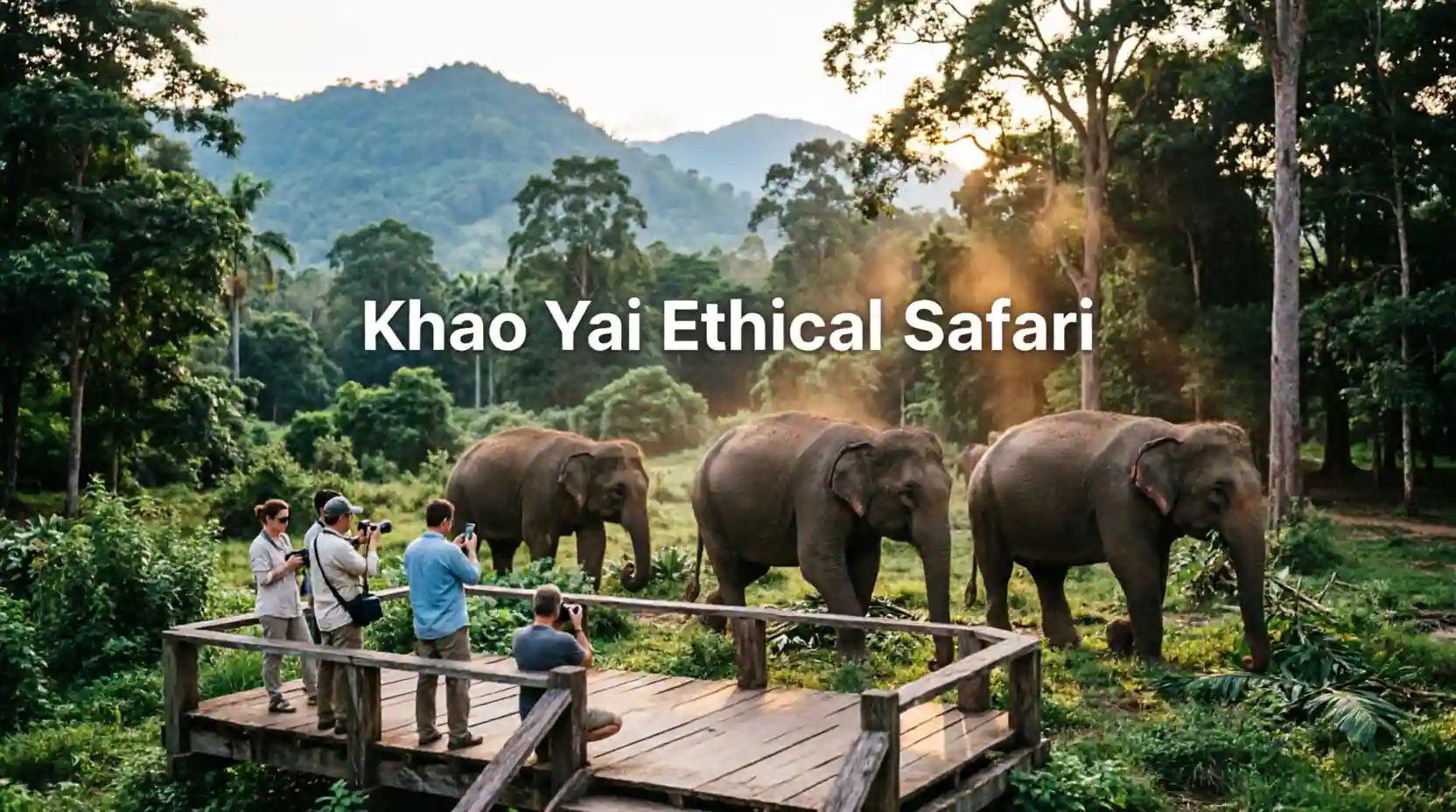
Discovering Ethical Wildlife Encounters in Khao Yai National Park
Khao Yai National Park, Thailand's first national park established in 1962, offers one of Southeast Asia's most remarkable opportunities for ethical wildlife observation. Unlike exploitative elephant camps that prioritize tourist entertainment over animal welfare, responsible night safaris in Khao Yai allow visitors to observe elephants and other wildlife in their natural habitat without interference, riding, or forced performances. This comprehensive guide will help you understand what makes a wildlife tour truly ethical, how to identify responsible operators, and how to book an experience that supports conservation rather than exploitation.
The park, located approximately 200 kilometers northeast of Bangkok, spans over 2,168 square kilometers of pristine rainforest, grasslands, and diverse ecosystems that support over 3,000 plant species and countless animal species including Asian elephants, gibbons, deer, and over 300 bird species. When booked responsibly, a night safari in Khao Yai contributes directly to conservation efforts while providing an unforgettable wildlife encounter that respects animal autonomy and natural behaviors.
Understanding Ethical Wildlife Tourism in Thailand
Ethical wildlife tourism represents a fundamental shift from traditional animal entertainment toward observation-based experiences that prioritize animal welfare, conservation, and education. In Thailand, where elephant tourism has historically included problematic practices like riding, painting, and performances, the movement toward ethical alternatives has gained significant momentum since 2015.
Key Principles of Ethical Wildlife Tourism:
- No Direct Contact: Ethical tours maintain safe distances between tourists and wildlife, allowing animals to behave naturally without human interference
- No Riding or Performances: Animals are never forced to perform tricks, carry tourists, or engage in unnatural behaviors
- Natural Habitat Observation: Wildlife is observed in their natural environment rather than captivity or confined spaces
- Conservation Contribution: Tour fees directly support conservation efforts, anti-poaching initiatives, and habitat protection
- Local Community Benefits: Employment and economic benefits flow to local communities who become stakeholders in conservation
- Educational Focus: Tours emphasize learning about wildlife behavior, ecology, and conservation challenges
For travelers planning their Thailand itinerary, choosing ethical wildlife experiences in Khao Yai over exploitative alternatives represents a commitment to responsible tourism that protects these magnificent creatures for future generations.
Why Khao Yai National Park Leads in Ethical Wildlife Tourism
Khao Yai National Park has established itself as a model for ethical wildlife tourism in Southeast Asia through strict regulations, professional guide training, and conservation-focused management. The park's night safari program, when conducted through authorized operators, offers a unique opportunity to observe nocturnal wildlife activity without disrupting natural behaviors.
Khao Yai's Conservation Achievements:
| Conservation Metric | Achievement | Impact |
| Elephant Population | 250-300 wild elephants | Stable population through anti-poaching efforts |
| Forest Coverage | Over 80% primary forest | Intact ecosystem supporting biodiversity |
| UNESCO Recognition | World Heritage Site (2005) | Part of Dong Phayayen-Khao Yai Forest Complex |
| Annual Visitors | Over 1 million visitors | Revenue supports conservation programs |
| Species Protection | Over 70 mammal species | Comprehensive wildlife monitoring programs |
The park's success in balancing tourism with conservation demonstrates that economic benefits from wildlife observation can coexist with animal welfare when properly managed. Revenue from park entrance fees and authorized tours directly funds ranger salaries, anti-poaching patrols, habitat restoration, and community development programs.
What to Expect on an Ethical Night Safari
An ethical night safari in Khao Yai differs fundamentally from exploitative wildlife tours. Rather than approaching animals closely or attempting to interact with them, responsible tours maintain appropriate distances and use specialized equipment to enhance observation without disturbance.
Typical Ethical Night Safari Experience:
Pre-Safari Preparation (5:00 PM - 6:00 PM)
Your ethical night safari begins with a comprehensive briefing at the park visitor center or authorized tour operator facility. This orientation covers:
- Safety Protocols: Understanding wildlife behavior and maintaining safe distances
- Ethical Guidelines: No flash photography, minimal noise, no feeding wildlife
- Equipment Distribution: Red-light flashlights (which don't disturb nocturnal animals), binoculars, and spotlights
- Conservation Education: Learning about Khao Yai's ecosystems and current conservation challenges
- Wildlife Identification: Introduction to species you might encounter and their behaviors
Night Safari Duration (6:30 PM - 9:30 PM)
The actual safari typically lasts 2.5-3 hours and follows established routes that minimize environmental impact while maximizing wildlife observation opportunities. Authorized vehicles are limited in number to prevent overcrowding and disturbance.
What You'll Experience:
- Elephant Observation: Wild elephants are most active during early evening and night hours. Ethical tours maintain distances of at least 50-100 meters, using spotlights and binoculars for observation
- Nocturnal Wildlife: Spot nocturnal species like slow lorises, flying squirrels, civets, and various deer species
- Bird Watching: Observe nightjars, owls, and other nocturnal birds
- Educational Commentary: Professional guides provide information about animal behavior, ecology, and conservation
- Photography Opportunities: Capture wildlife in natural settings using appropriate techniques that don't disturb animals
Post-Safari Discussion (9:30 PM - 10:00 PM)
Many ethical operators conclude with a discussion session where you can:
- Review wildlife sightings and share photographs
- Ask questions about conservation efforts
- Learn about ongoing research projects
- Understand how your visit contributes to conservation
- Receive recommendations for continued ethical travel
Identifying Truly Ethical Tour Operators
Not all operators claiming to offer "ethical" or "responsible" tours actually meet ethical standards. Greenwashing—making misleading claims about environmental or ethical practices—is common in wildlife tourism. Here's how to identify genuinely ethical operators:
Red Flags to Avoid:
- Promises of Close Encounters: Any operator guaranteeing close-up photos or interactions with wild elephants
- Feeding Opportunities: Tours that include feeding wildlife, which disrupts natural behaviors and diet
- Unlimited Group Sizes: Large groups (over 10-12 people per vehicle) cause excessive disturbance
- No Conservation Credentials: Operators not affiliated with recognized conservation organizations
- Off-Trail Driving: Vehicles leaving established roads to approach wildlife
- Use of Bait or Calls: Artificially attracting wildlife through food or recorded calls
Green Flags of Ethical Operators:
- Official Park Authorization: Licensed by Khao Yai National Park and Department of National Parks
- Conservation Partnerships: Affiliation with organizations like Wildlife Fund Thailand, WWF, or IUCN
- Small Group Sizes: Maximum 6-8 people per vehicle to minimize impact
- Trained Naturalist Guides: Staff with formal training in wildlife biology, ecology, or conservation
- Transparent Pricing: Clear breakdown showing conservation contribution
- Educational Focus: Emphasis on learning rather than just entertainment
- Community Employment: Hiring local guides and staff from surrounding communities
When researching operators for your Thailand adventure, always verify credentials directly with Khao Yai National Park or recognized conservation organizations.
How to Book Your Ethical Night Safari
Booking an ethical night safari in Khao Yai requires advance planning, especially during peak tourist seasons (November-February). Here's a step-by-step guide to securing your responsible wildlife experience:
Step 1: Research Authorized Operators (2-3 Months Before)
Start by identifying operators officially authorized by Khao Yai National Park. The park maintains a list of licensed tour operators who meet ethical and safety standards. You can find this information through:
- Official Park Website: Department of National Parks, Wildlife and Plant Conservation (DNP) website
- Tourism Authority of Thailand: Official tourism information centers
- Conservation Organizations: Wildlife Fund Thailand, WWF Thailand recommendations
- Verified Review Platforms: TripAdvisor (filter for "ethical" and "responsible" keywords)
Step 2: Verify Credentials (1-2 Months Before)
Once you've identified potential operators, verify their ethical credentials:
- Check Licenses: Request copies of park authorization and business licenses
- Read Reviews Carefully: Look for mentions of ethical practices, guide knowledge, and wildlife welfare
- Contact Conservation Groups: Email wildlife organizations to confirm operator partnerships
- Ask Direct Questions: Inquire about group sizes, guide training, and conservation contributions
Step 3: Compare Options and Pricing (1 Month Before)
Ethical tours typically cost more than exploitative alternatives because they:
- Employ fewer tourists per vehicle
- Hire highly trained guides
- Contribute to conservation programs
- Use proper equipment and vehicles
- Provide comprehensive insurance
Typical Ethical Night Safari Pricing:
| Tour Type | Duration | Price Range (USD) | Includes |
| Shared Group Safari | 3-4 hours | $40-$70 per person | Transport, guide, equipment, park fees |
| Private Safari | 3-4 hours | $150-$250 per group | Private vehicle, dedicated guide, equipment |
| Multi-Day Package | 2-3 days | $200-$400 per person | Accommodation, meals, multiple safaris, conservation donation |
| Photography Safari | 4-5 hours | $80-$120 per person | Specialized equipment, photography guide, prime locations |
Budget-conscious travelers can explore budget travel options while still maintaining ethical standards by choosing shared group tours during off-peak seasons.
Step 4: Make Your Reservation (2-4 Weeks Before)
Once you've selected an operator, complete your booking:
- Provide Details: Number of participants, ages, any special requirements
- Confirm Pickup: Arrange transportation from Bangkok or nearby accommodations
- Payment: Use secure payment methods; avoid cash-only operators
- Confirmation: Request written confirmation with itinerary and contact information
- Insurance: Verify tour operator has liability insurance and consider travel insurance
Step 5: Prepare for Your Safari (1 Week Before)
Proper preparation enhances your experience and minimizes environmental impact:
- Pack Appropriately: Dark-colored clothing (doesn't startle wildlife), light jacket, closed-toe shoes
- Bring Essentials: Camera with zoom lens, binoculars, insect repellent, water bottle
- Avoid: Perfumes, bright colors, noisy accessories, single-use plastics
- Review Guidelines: Re-read ethical wildlife observation principles
- Check Weather: Prepare for tropical conditions; rain gear may be necessary
Best Times to Visit Khao Yai for Wildlife Observation
Timing your visit significantly impacts wildlife sighting opportunities and overall experience quality. Khao Yai's tropical climate creates distinct seasons that affect animal behavior and visibility.
Seasonal Wildlife Viewing Guide:
Cool Dry Season (November - February) - HIGHLY RECOMMENDED
- Weather: 15-28°C (59-82°F), low humidity, minimal rain
- Wildlife Activity: Excellent; animals more active during comfortable temperatures
- Elephant Sightings: Very good; elephants gather at water sources
- Tourist Crowds: High; book well in advance
- Pricing: Peak season rates apply
- Best For: First-time visitors, photography, comfortable conditions
Hot Dry Season (March - May) - GOOD
- Weather: 25-35°C (77-95°F), high humidity, very hot afternoons
- Wildlife Activity: Good; animals concentrate near water sources
- Elephant Sightings: Excellent; predictable water hole visits
- Tourist Crowds: Moderate; fewer international tourists
- Pricing: Shoulder season discounts available
- Best For: Elephant observation, budget travelers, avoiding crowds
Rainy Season (June - October) - MODERATE
- Weather: 22-30°C (72-86°F), frequent afternoon showers, high humidity
- Wildlife Activity: Moderate; some species less visible
- Elephant Sightings: Good; abundant water reduces concentration at specific sites
- Tourist Crowds: Low; best for solitude
- Pricing: Low season discounts (20-40% off)
- Best For: Budget travelers, lush scenery, bird watching, avoiding crowds
- Considerations: Some roads may be difficult; bring rain gear
For detailed seasonal planning, consult Thailand's seasonal guide to align your Khao Yai visit with optimal conditions.
What to Pack for Your Ethical Night Safari
Proper packing ensures comfort, safety, and minimal environmental impact during your night safari. Here's a comprehensive packing guide:
Essential Clothing:
- Dark-Colored Clothing: Navy, black, or dark green (doesn't startle wildlife)
- Long Sleeves and Pants: Protection from insects and vegetation
- Light Jacket or Fleece: Evenings can be cool, especially November-February
- Closed-Toe Shoes: Sturdy sneakers or hiking boots (no sandals)
- Rain Jacket: Compact, waterproof layer (essential June-October)
Equipment and Gear:
| Item | Priority | Purpose | Notes |
| Camera with zoom lens | High | Wildlife photography from distance | 200mm+ lens recommended |
| Binoculars | High | Enhanced wildlife observation | 8x42 or 10x42 ideal |
| Red-light flashlight | Medium | Navigation without disturbing wildlife | Often provided by operator |
| Insect repellent | High | Mosquito and bug protection | DEET-based most effective |
| Water bottle | High | Hydration during safari | Reusable, not single-use plastic |
| Small backpack | Medium | Carrying essentials | Quiet material (no rustling) |
| Extra batteries | Medium | Camera and flashlight power | Cold drains batteries faster |
| Silent snacks | Low | Energy during long safari | No noisy wrappers |
Items to Avoid:
- Bright or White Clothing: Startles wildlife and makes you more visible
- Perfume or Cologne: Strong scents disturb animals and attract insects
- Noisy Accessories: Jangly jewelry, crinkly bags
- Flash Photography: Disorients nocturnal animals
- Single-Use Plastics: Contribute to environmental pollution
- Food with Strong Odors: Attracts wildlife unnaturally
For comprehensive packing advice, review Thailand packing essentials to ensure you're prepared for jungle conditions.
Conservation Impact of Your Visit
Understanding how your ethical night safari contributes to conservation helps justify the premium pricing and reinforces the importance of choosing responsible operators.
Where Your Money Goes:
- Park Entrance Fees (20-30%): Directly funds park management, ranger salaries, and infrastructure maintenance
- Guide Training (15-20%): Supports ongoing education for naturalist guides in wildlife biology and conservation
- Anti-Poaching Programs (20-25%): Funds ranger patrols, camera trap networks, and intelligence gathering
- Community Development (10-15%): Provides alternative livelihoods for communities surrounding the park, reducing pressure on natural resources
- Research Projects (10-15%): Supports wildlife monitoring, population studies, and habitat assessment
- Operator Costs (15-20%): Vehicle maintenance, insurance, equipment, and fair wages
Measurable Conservation Outcomes:
Khao Yai's ethical tourism model has produced tangible conservation results:
- Elephant Population Stability: Wild elephant numbers have remained stable at 250-300 individuals despite increasing tourism
- Reduced Poaching: Increased ranger presence funded by tourism has reduced poaching incidents by over 60% since 2010
- Habitat Protection: Tourism revenue has enabled expansion of protected areas and corridor restoration
- Community Support: Over 500 local residents employed in ethical tourism, reducing illegal resource extraction
- Research Advancement: Tourism funding has supported GPS collar studies, camera trap networks, and behavioral research
When you choose ethical operators for your Thailand journey, you become an active participant in conservation rather than a passive observer.
Common Misconceptions About Ethical Wildlife Tourism
Several misconceptions prevent travelers from choosing ethical wildlife experiences. Addressing these myths helps clarify why ethical tourism is both feasible and rewarding.
Myth 1: "Ethical Tours Don't Guarantee Wildlife Sightings"
Reality: While no tour can guarantee specific wildlife encounters (animals are wild and free-roaming), ethical operators in Khao Yai have excellent sighting rates. Professional guides know animal behavior patterns, seasonal movements, and preferred habitats. Ethical tours maintain 70-85% elephant sighting rates during peak seasons, comparable to less ethical alternatives.
Myth 2: "Ethical Tours Are Too Expensive"
Reality: While ethical tours cost more upfront, they provide better value through:
- Smaller group sizes (more personalized experience)
- Better-trained guides (deeper knowledge)
- Superior equipment (better observation and photography)
- Conservation contribution (meaningful impact)
- Longer duration (more comprehensive experience)
When compared to exploitative tours that prioritize profit over welfare, ethical tours often provide better overall value. Budget travelers can find affordable ethical options through shared group tours and off-season discounts.
Myth 3: "You Can't Get Close Enough to See Animals Well"
Reality: Modern optical equipment makes close observation possible without close proximity. Quality binoculars (8x42 or 10x42) and camera zoom lenses (200mm+) allow detailed observation from ethical distances. Many visitors report that observing animals behaving naturally from a distance provides more meaningful encounters than forced close interactions.
Myth 4: "Ethical Tours Are Boring Without Interaction"
Reality: Ethical tours emphasize education, photography, and natural behavior observation, creating engaging, intellectually stimulating experiences. Professional guides share fascinating insights about animal behavior, ecology, and conservation that transform simple sightings into profound learning opportunities.
Photography Ethics on Night Safaris
Wildlife photography on ethical night safaris requires specific techniques that respect animal welfare while capturing memorable images.
Ethical Photography Guidelines:
- No Flash Photography: Flash disorients nocturnal animals and can cause temporary blindness. Use high ISO settings and fast lenses instead
- Maintain Distance: Use zoom lenses (200mm minimum, 400mm+ ideal) rather than approaching closer
- No Baiting or Calling: Never use food or recorded calls to attract wildlife for photos
- Respect Behavior: Don't interrupt natural behaviors (feeding, mating, resting) for better angles
- Limit Shooting Time: Extended photography sessions can stress animals; observe then move on
- Red Light Only: Use red-light flashlights for camera settings; white light disturbs wildlife
Recommended Camera Settings for Night Safari:
| Setting | Recommendation | Reason |
| ISO | 1600-6400 | Captures more light in low-light conditions |
| Aperture | f/2.8 - f/4 | Wide aperture allows more light |
| Shutter Speed | 1/125 - 1/500 | Freezes animal movement |
| Focus Mode | Continuous AF | Tracks moving animals |
| Drive Mode | Continuous burst | Captures action sequences |
| White Balance | Auto or Tungsten | Compensates for artificial lighting |
Alternative Ethical Wildlife Experiences in Thailand
If your Thailand itinerary doesn't include Khao Yai or you want additional ethical wildlife encounters, several other responsible options exist:
Other Ethical Wildlife Destinations:
- Kui Buri National Park: Similar to Khao Yai with excellent elephant observation; less crowded
- Huay Kha Khaeng Wildlife Sanctuary: UNESCO site with exceptional biodiversity; requires advance permits
- Khao Sok National Park: Ancient rainforest with ethical elephant observation and diverse wildlife
- Doi Inthanon National Park: Northern Thailand's highest peak with excellent bird watching
- Kaeng Krachan National Park: Thailand's largest park with exceptional biodiversity
Ethical Elephant Sanctuaries (Observation-Only):
While wild observation is ideal, some rescued elephants live in sanctuaries. Look for facilities that:
- Allow observation only (no riding, bathing with, or feeding)
- Provide natural, spacious habitats
- Don't use chains or restraints
- Rescue elephants from exploitative situations
- Prioritize elephant welfare over tourist entertainment
Recommended sanctuaries include Elephant Nature Park (Chiang Mai), Boon Lott's Elephant Sanctuary (Sukhothai), and Phuket Elephant Sanctuary.
Making Your Visit Count: Post-Safari Actions
Your ethical night safari doesn't end when you leave Khao Yai. Continue supporting conservation through these actions:
Share Responsibly:
- Post photos and experiences on social media emphasizing ethical practices
- Tag and recommend ethical operators to help them thrive
- Educate followers about the difference between ethical and exploitative tourism
- Avoid posting photos that reveal exact wildlife locations (can attract poachers)
Continue Learning:
- Follow conservation organizations working in Khao Yai
- Read about Asian elephant conservation challenges
- Stay informed about threats to Thai national parks
- Share conservation news with your network
Support Financially:
- Make donations to wildlife conservation organizations
- Purchase products from companies supporting Thai conservation
- Consider "adopting" an elephant through symbolic adoption programs
- Contribute to community development projects around Khao Yai
Advocate:
- Write reviews emphasizing ethical practices
- Contact tour operators who don't meet ethical standards
- Support legislation protecting wildlife tourism
- Educate fellow travelers about ethical choices
Conclusion: Your Role in Thailand's Conservation Future
Booking an ethical elephant night safari in Khao Yai represents more than just a memorable travel experience—it's an active choice to support wildlife conservation, animal welfare, and sustainable tourism. By choosing responsible operators, you contribute directly to protecting Thailand's wild elephant population, supporting local communities, and preserving pristine ecosystems for future generations.
The principles of ethical wildlife tourism extend beyond Khao Yai. As you continue your Thailand adventure, apply these same ethical standards to all wildlife encounters. Whether observing elephants, visiting marine environments, or exploring other natural areas, your choices as a traveler have real impact.
Remember that ethical tourism isn't about perfection—it's about making better choices whenever possible. By prioritizing animal welfare, supporting conservation, and educating yourself and others, you become part of the solution to wildlife conservation challenges facing Thailand and the world.
Your ethical night safari in Khao Yai will provide unforgettable memories of wild elephants roaming freely in their natural habitat, knowledge that your visit contributed to their protection, and the satisfaction of traveling responsibly. That's an experience far more valuable than any exploitative alternative.
Ready to book your ethical Khao Yai night safari? Research authorized operators today, verify their conservation credentials, and prepare for an unforgettable wildlife encounter that makes a difference.
0 Comments