.webp)
.webp)
Quick Summary and Core Citadel Guide
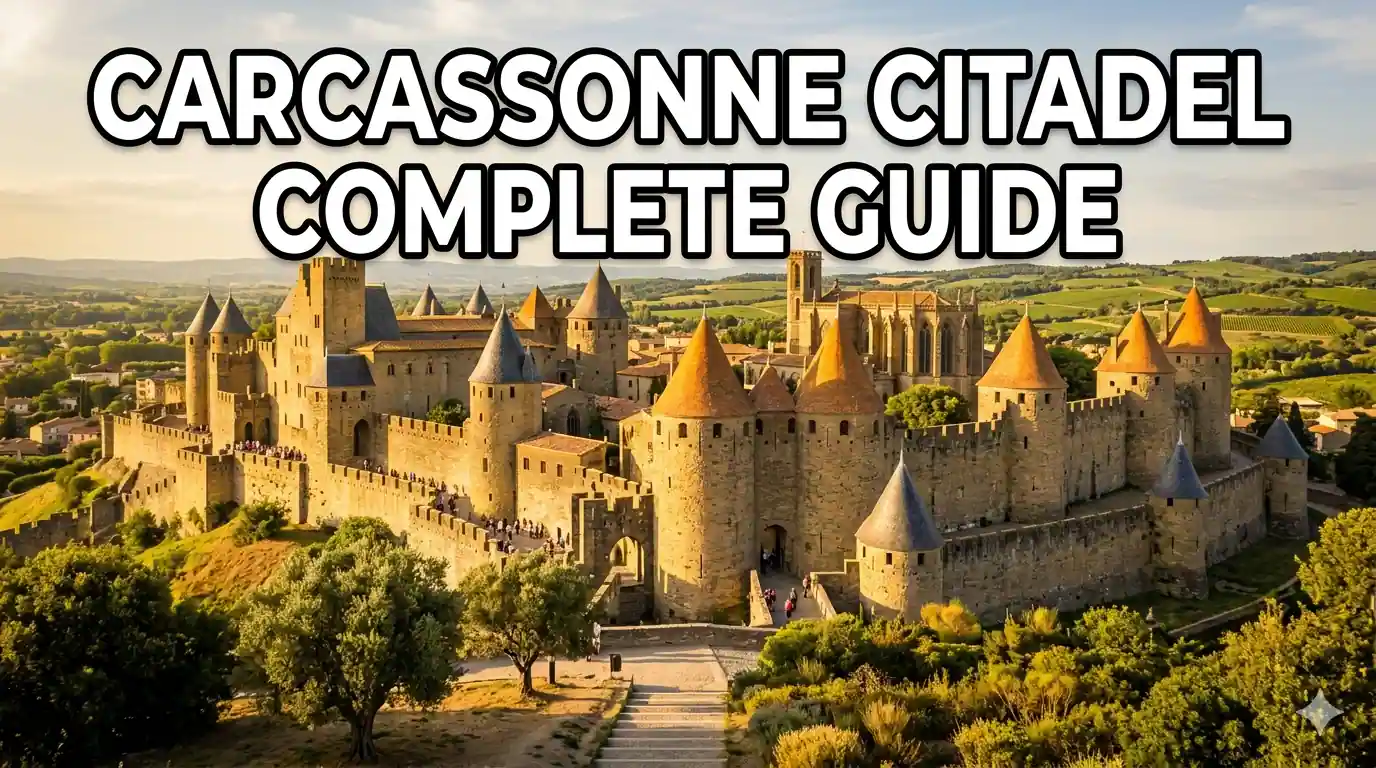
Carcassonne, the magnificent medieval citadel perched above the Aude River in southern France, stands as Europe's largest and best-preserved fortified city, offering visitors an extraordinary journey through over 2,500 years of history within its double-walled enclosure. This UNESCO World Heritage Site, featuring 52 towers, 3 kilometers of ramparts, and a perfectly preserved medieval village, represents one of France's most iconic landmarks and a must-visit destination for history enthusiasts, architecture lovers, and travelers seeking authentic medieval atmosphere. From walking the ancient ramparts with panoramic views of the Languedoc countryside to exploring the Château Comtal's defensive architecture, from discovering the Basilique Saint-Nazaire's stunning stained glass to wandering cobblestone streets lined with half-timbered houses, Carcassonne delivers immersive historical experiences that transport visitors to another era while providing modern comforts and accessibility.
The primary user intent centers on understanding how to efficiently explore the citadel, identifying must-see attractions within the walls, planning logistics from Toulouse and other cities, budgeting for tickets and tours, timing visits to avoid crowds, and deciding whether to stay inside or outside the fortified city. You need verified 2026 pricing in USD, exact opening hours and ticket information, transportation options with costs and travel times, accommodation recommendations across budget tiers, and practical tips for navigating steep cobblestone streets, managing crowds during peak season, and maximizing your time in this remarkable medieval setting. This guide delivers detailed, actionable information based on current operations and verified visitor experiences.
Average visitors report that Carcassonne exceeds expectations for scale, preservation, and atmospheric immersion compared to other European fortified cities. You can explore the citadel independently for USD 12 to 15 for castle admission, join guided tours for USD 25 to 45 for deeper historical context, and enjoy meals in medieval-themed restaurants for USD 25 to 50 per person. Most travelers allocate USD 100 to 250 daily for accommodation, meals, tickets, and local transport. The combination of exceptional preservation, manageable size, and proximity to Toulouse makes Carcassonne ideal for day trips or extended stays focused on medieval history and southern French culture.
Essential Carcassonne Citadel Travel Data
| Carcassonne Citadel Construction Period | Original Gallo-Roman foundations 1st century BC major expansions 13th century |
| Total Rampart Length | 3 kilometers with 52 towers and double walls |
| Château Comtal Admission | USD 12 adults USD 8 ages 18-25 free under 18 |
| Guided Tour Cost | USD 25 to 45 per person for 1-2 hour experiences |
| Distance from Toulouse | 95 kilometers 1 hour by car or train |
| Best Visiting Season | April to June and September to October |
| Recommended Visit Duration | Half day to full day for comprehensive exploration |
Why Carcassonne Ranks as Europes Most Impressive Walled City

Carcassonne earns its distinction through an unparalleled combination of scale, preservation, historical depth, and atmospheric authenticity that few fortified cities in the world can match. The citadel's double-walled enclosure, stretching 3 kilometers and featuring 52 strategically positioned towers, represents one of the most complete examples of medieval military architecture in Europe. Unlike many historic sites that exist as ruins or reconstructed fragments, Carcassonne functions as a living medieval village where residents live, work, and welcome visitors within the same ancient walls that defended the city during the Albigensian Crusade and Hundred Years' War.
Historical significance extends far beyond architectural grandeur. Carcassonne's strategic position on the border between France and the former Kingdom of Aragon made it a crucial military stronghold for centuries. The citadel witnessed pivotal moments in European history, including the Cathar heresy suppression, royal consolidation under Louis IX, and frontier defense during medieval conflicts. Understanding this historical context transforms a simple sightseeing visit into a meaningful journey through the political, religious, and military forces that shaped medieval Europe.
Restoration heritage adds another layer of cultural value. The citadel's remarkable preservation owes much to architect Eugène Viollet-le-Duc, whose 19th-century restoration work, while controversial among purists, saved Carcassonne from ruin and established principles of historic preservation that influence conservation practices today. Walking the ramparts, you encounter both authentic medieval stonework and thoughtful 19th-century reconstructions, creating a palimpsest of historical interpretation that invites reflection on how societies preserve and present their heritage.
Accessibility distinguishes Carcassonne from more remote fortified sites. The citadel sits just 1 kilometer from Carcassonne's modern train station and city center, enabling easy access without extensive travel through rural areas. Unlike mountain castles requiring strenuous hikes or island fortresses dependent on boat schedules, Carcassonne welcomes visitors with straightforward logistics while maintaining its medieval character. This accessibility, combined with exceptional preservation, makes it ideal for first-time visitors to medieval Europe and experienced history enthusiasts alike.
Atmospheric immersion proves uniquely compelling. The citadel's cobblestone streets, half-timbered houses, artisan shops, and medieval-themed restaurants create an environment where modern life coexists with historical authenticity. You can purchase handcrafted souvenirs in workshops using traditional techniques, dine on regional specialties in settings that evoke medieval banquets, and photograph dramatic architecture without modern intrusions. This balance of authenticity and accessibility creates memorable experiences that extend beyond simple sightseeing.
How to Reach Carcassonne from Major Cities

Carcassonne's location in the Occitanie region of southern France provides excellent connectivity from European and French hubs, though strategic planning optimizes convenience and cost for history-focused itineraries. Understanding arrival logistics enables smooth trip initiation and efficient time allocation for your citadel exploration.
Train Travel and Regional Connectivity
Direct regional trains (TER Occitanie) connect Toulouse Matabiau station to Carcassonne station in approximately 1 hour, with departures every 30 to 60 minutes throughout the day. Fares range from USD 10 to 20 one-way depending on booking timing and flexibility. This proves the most economical and stress-free option for travelers without cars, eliminating parking concerns in the historic city and allowing you to enjoy regional wines without driving responsibilities.
From Carcassonne train station, the citadel sits just 1.2 kilometers away, reachable via a pleasant 15-minute walk uphill through the lower town (Ville Basse) or a 5-minute taxi ride costing USD 8 to 12. The walking route passes through charming streets with cafés and shops, providing a gentle introduction to the region before reaching the fortified city. Taxis wait at the station, and ride-hailing apps operate reliably in the area.
International travelers can reach Toulouse via direct flights from major European cities and select North American hubs, with round-trip economy fares ranging from USD 400 to 1,200 depending on origin and season. From Toulouse Airport, shuttle buses connect to Toulouse city center in 20 minutes (USD 8), followed by train to Carcassonne. Alternatively, rental cars at the airport enable direct driving to Carcassonne in 1 hour 15 minutes via A61 autoroute.
Car Rental and Flexible Exploration
Car rental provides maximum flexibility for exploring Carcassonne and combining citadel visits with nearby attractions like Cathar castles, Canal du Midi, and Languedoc wine regions. Major rental companies operate at Toulouse Airport and Carcassonne city center, with weekly rates ranging from USD 280 to 500 for compact vehicles. Manual transmission cars cost 20 to 30 percent less than automatics.
Driving from Toulouse to Carcassonne takes approximately 1 hour via A61 autoroute (toll: USD 4 each way) or 1 hour 15 minutes via scenic N113 route (free). The autoroute proves faster and more direct, while the national route offers glimpses of Languedoc countryside and smaller villages. Parking near the citadel requires strategic planning: free parking exists at Place du Grand Puits (10-minute walk uphill), while paid lots closer to the entrance cost USD 2 to 4 per hour or USD 15 to 20 daily.
Car rental proves particularly valuable for visitors planning multi-day itineraries that include Cathar castle circuits, wine region exploration, or coastal visits. However, for travelers focusing solely on Carcassonne citadel, train travel often proves simpler and more economical, particularly when factoring in parking costs and navigation challenges in historic streets.
Organized Tours and Day Trip Options
Organized tours from Toulouse offer convenient day-trip solutions for visitors preferring structured itineraries and expert commentary. Full-day tours typically cost USD 85 to 130 per person and include round-trip transportation, guided citadel tour, and sometimes lunch or wine tasting. These tours handle all logistics, enabling relaxed exploration without navigation concerns.
Advantages include guaranteed entry during peak season, historical context from knowledgeable guides, and time-efficient itineraries that maximize sightseeing. Disadvantages involve less flexibility for independent exploration and higher per-person costs compared to independent travel. Tours depart from central Toulouse locations, typically with morning departures around 8:30 AM and returns by early evening.
Visa Rules and Entry Requirements for France

France maintains Schengen Area visa policies applicable to Carcassonne visitors. Citizens from the United States, Canada, United Kingdom, Australia, and most European nations enjoy visa-free tourism access for up to 90 days within any 180-day period. You must present a passport valid for at least three months beyond your planned departure date from the Schengen Area. Border officials may request proof of onward travel, sufficient funds (approximately USD 70 per day), and accommodation reservations.
Starting in 2025, visa-exempt travelers must obtain ETIAS (European Travel Information and Authorization System) approval before departure. This online authorization costs USD 8, remains valid for three years, and requires basic biographical information and travel details. Processing typically completes within minutes, though some applications require up to 96 hours. You should apply at least one week before travel to accommodate potential delays.
Travel insurance proves highly recommended for historic site visits. Medical emergencies in France can generate substantial costs for uninsured travelers. Comprehensive policies covering medical treatment, evacuation, and trip interruption typically cost USD 45 to 110 for week-long trips depending on coverage limits and age. You should verify coverage includes walking tours and outdoor activities if planning extensive citadel exploration.
Non-Schengen citizens requiring visas must apply at French consulates or visa centers in their home countries. Tourist visa applications require proof of accommodation, financial means, travel insurance, and round-trip flight reservations. Processing times range from 15 to 30 days, requiring advance planning. Visa fees total approximately USD 85 for short-stay tourist visas.
Best Time to Visit Carcassonne Citadel

Seasonal timing significantly impacts your Carcassonne experience, affecting crowd levels, weather conditions, opening hours, and overall atmosphere. Understanding these variations enables strategic planning that aligns with your priorities, whether seeking photographic lighting, comfortable temperatures, or peaceful exploration.
Peak Season (July-August)
July and August deliver the most reliable weather with temperatures averaging 22 to 30 degrees Celsius (72-86°F) and long daylight hours extending until 9 PM. The citadel operates at full capacity with all attractions, shops, and restaurants open. However, these months bring maximum tourist traffic, with guided tour groups, cruise ship excursions, and independent visitors creating significant crowds, particularly between 10 AM and 4 PM.
Peak season crowds affect the experience in tangible ways: ramparts walks become congested, photo opportunities require patience, restaurant waits extend, and accommodation prices peak at 40 to 60 percent above shoulder season rates. Advance booking of 2 to 3 months proves essential for guided tours and quality accommodation. Despite challenges, summer's vibrant atmosphere, extended hours, and guaranteed accessibility appeal to many visitors.
Strategic timing mitigates summer challenges. Arriving at the citadel before 9 AM or after 5 PM avoids peak crowds and provides optimal lighting for photography. Midweek visits prove less crowded than weekends. Early morning ramparts walks offer peaceful exploration and golden light for photographs. Despite crowds, summer rewards visitors with full services, lively atmosphere, and reliable weather.
Shoulder Season (April-June and September-October)
Shoulder seasons represent optimal visiting periods for most travelers, combining pleasant weather, manageable crowds, and reasonable pricing. Temperatures range from 15 to 24 degrees Celsius (59-75°F), creating comfortable conditions for walking steep cobblestone streets and climbing tower stairs. Spring features blooming flowers and fresh green landscapes, while autumn offers golden light and harvest atmosphere in surrounding vineyards.
Crowd levels diminish 30 to 50 percent compared to peak summer, enabling more relaxed exploration, shorter waits at attractions, and easier photography without crowds in frames. Accommodation prices drop 25 to 40 percent, and guided tours often have same-day availability. Restaurants prove less crowded, enabling spontaneous dining without reservations.
Shoulder season weather proves generally reliable, though occasional rain requires flexible planning. Spring may bring variable conditions with occasional showers, while autumn typically offers stable weather with crisp air. Both seasons provide excellent lighting for photography, with lower sun angles creating dramatic shadows on medieval stonework.
Winter Season (November-March)
Winter presents quietest conditions with minimal tourist traffic and lowest accommodation prices, though some services reduce hours or close temporarily. Temperatures average 5 to 14 degrees Celsius (41-57°F), requiring warm clothing for extended outdoor exploration. Occasional rain and wind prove common, though clear winter days offer crisp air and excellent visibility.
Crowd levels reach annual lows, enabling peaceful exploration of ramparts and towers without jostling crowds. Photography proves exceptional with dramatic winter light and atmospheric conditions. Accommodation prices drop 50 to 70 percent, and restaurants offer intimate atmospheres without waits. However, some shops, cafes, and attractions operate reduced hours or close entirely in January and February.
Winter suits budget travelers, photographers seeking atmospheric conditions, and visitors prioritizing peaceful exploration over vibrant atmosphere. Those seeking full services and guaranteed opening hours should verify specific attraction schedules before travel during winter months.
Complete Cost Breakdown and Budget Planning

Carcassonne citadel visits accommodate various budget levels through strategic choices in tickets, tours, dining, and accommodation. Understanding all cost components enables realistic planning and prevents unexpected expenses during your medieval adventure.
Budget travelers spending USD 70 to 120 daily utilize public transportation, focus on free citadel exploration, and dine at casual establishments. Citadel entry to the fortified city remains free; only Château Comtal admission costs USD 12. Casual meals at cafés cost USD 15 to 25, while picnics from local markets cost USD 10 to 15. Budget accommodation in Carcassonne's lower town costs USD 60 to 90 nightly. This approach delivers authentic experiences without premium pricing.
Mid-range budgets of USD 140 to 260 per person per day enable guided tours, restaurant dining featuring regional specialties, quality accommodation, and flexible transportation. Guided citadel tours cost USD 25 to 45, restaurant meals with wine USD 35 to 60, and comfortable hotels or guesthouses USD 90 to 160 nightly. This tier represents the sweet spot for most travelers seeking quality experiences without extravagance.
Premium experiences costing USD 320 to 600 per person per day include private guided tours, luxury accommodation with citadel views, gourmet dining at Michelin-recognized restaurants, and exclusive after-hours access. Private tours cost USD 80 to 150 per person, luxury hotels USD 200 to 400 nightly, and fine dining USD 80 to 150 per person. This tier suits special occasions or travelers prioritizing exceptional access and service.
| Expense Category | Budget Option | Mid Range | Premium |
| Citadel Access | Free city walls USD 12 castle | USD 25 guided tour | USD 80 private tour |
| Accommodation Per Night | USD 60 to 90 | USD 90 to 160 | USD 200 to 400 |
| Daily Food and Drinks | USD 20 to 35 | USD 40 to 70 | USD 100 to 180 |
| Transportation Daily | USD 10 to 20 train | USD 40 to 75 car rental | USD 120 to 250 private |
| Special Experiences | N/A | USD 30 night tour | USD 100 exclusive access |
| Travel Insurance | USD 45 to 75 | USD 75 to 120 | USD 120 to 200 |
Must-See Attractions Within the Citadel

Carcassonne's fortified city contains numerous attractions that reward exploration, from defensive architecture and religious heritage to museums and panoramic viewpoints. This curated selection highlights essential sites for first-time visitors, balancing historical significance, photographic opportunities, and manageable pacing.
Château Comtal and Ramparts Walk
The Château Comtal, a 12th-century castle within the citadel's inner wall, serves as the centerpiece of Carcassonne's defensive architecture and the primary paid attraction. Admission (USD 12 adults, USD 8 ages 18-25, free under 18) includes access to the castle's interior exhibits, archaeological displays, and the famous ramparts walk that circles the inner wall with panoramic views of the outer fortifications and Languedoc countryside.
The ramparts walk, covering approximately 1 kilometer along the inner wall's protected walkway, provides unparalleled perspectives of medieval military engineering. You observe arrow slits, machicolations, and defensive towers while learning about siege warfare tactics through interpretive panels. The walk requires moderate fitness due to uneven surfaces and stairs, but rewards with photographic opportunities unmatched elsewhere in the citadel. Allow 1.5 to 2 hours for comprehensive castle and ramparts exploration.
Practical considerations include timed entry tickets that help manage crowds, particularly during peak season. Audio guides in multiple languages (USD 4) enhance understanding of historical context and architectural features. The castle opens daily with seasonal hours: 9:30 AM to 7 PM in summer, 10 AM to 5 PM in winter. Last entry occurs 45 minutes before closing.
Basilique Saint-Nazaire
The Basilique Saint-Nazaire, a stunning Romanesque-Gothic church within the citadel, showcases exceptional medieval architecture and artistic heritage. Construction began in the 11th century on a Visigothic foundation, with Gothic additions in the 13th century creating a harmonious blend of styles. The basilica's interior features remarkable stained glass windows from the 14th century, depicting biblical scenes with vibrant colors that illuminate the stone architecture.
Admission to the basilica remains free, though donations support ongoing preservation efforts. Allow 30 to 45 minutes for exploration, including time to appreciate the stained glass, sculpted capitals, and peaceful atmosphere. The basilica remains an active place of worship, requiring respectful behavior during services. Photography is permitted without flash.
The basilica's elevated position within the citadel provides additional panoramic views from its exterior terraces. Combine your visit with nearby ramparts walks for comprehensive perspectives of the fortified city's layout and defensive strategy.
Porte Narbonnaise and Main Entrance
The Porte Narbonnaise, the citadel's main eastern entrance, represents one of medieval military architecture's most impressive gateways. This fortified gate, flanked by two massive towers and protected by a barbican, demonstrates the sophisticated defensive thinking that made Carcassonne nearly impregnable. Walking through the gate, you experience the psychological impact designed to intimidate potential attackers while welcoming legitimate visitors.
Access to the Porte Narbonnaise and the citadel's exterior remains free, enabling photography and exploration without admission fees. The area proves particularly photogenic in early morning or late afternoon light, when shadows emphasize architectural details. Allow 20 to 30 minutes for exterior exploration and photography.
Guided tours often begin at the Porte Narbonnaise, using the gateway as an introduction to the citadel's defensive strategy. Independent visitors can follow similar routes using maps and interpretive panels available at the entrance.
Medieval Village Streets and Artisan Shops
Beyond major monuments, Carcassonne's medieval village rewards leisurely exploration of its cobblestone streets, half-timbered houses, and artisan workshops. Rue Saint-Jean and Rue de la Peyrolerie, the main thoroughfares, feature shops selling handcrafted souvenirs, regional products, and medieval-themed items created using traditional techniques.
Exploring these streets costs nothing beyond purchases, making it ideal for budget-conscious travelers. Allow 1 to 2 hours for leisurely wandering, browsing shops, and photographing architectural details. Early morning or evening visits avoid peak crowds and provide optimal lighting for photography.
Artisan demonstrations, particularly in glassblowing, pottery, and medieval crafts, provide engaging interludes during street exploration. Many workshops welcome visitors to observe techniques and ask questions, creating authentic cultural exchanges beyond commercial transactions.
Practical Tips for Visiting Carcassonne Citadel

Successful Carcassonne exploration requires attention to practical details that enhance comfort, convenience, and enjoyment. Understanding these factors and following recommended precautions ensures your visit remains memorable for positive reasons.
Navigation and Mobility Considerations
Carcassonne's medieval layout features steep cobblestone streets, uneven surfaces, and numerous stairs that challenge visitors with mobility limitations. The citadel's elevation requires uphill walking from the lower town, and ramparts walks involve stairs and narrow passages. Visitors with mobility concerns should plan routes carefully, utilize taxis for citadel access, and focus on accessible areas like the basilica exterior and main streets.
Comfortable, sturdy footwear proves essential for navigating cobblestones and stairs. Avoid heels, flip-flops, or smooth-soled shoes that prove slippery on worn stone surfaces. Layered clothing enables adaptation to changing conditions, as temperatures vary between sunlit ramparts and shaded streets.
Crowd Management Strategies
Carcassonne's popularity creates significant crowds during peak season, particularly between 10 AM and 4 PM when tour groups and day-trippers concentrate. Strategic timing mitigates congestion: arrive before 9 AM for peaceful ramparts walks and optimal photography light, or visit after 5 PM when crowds thin and golden hour lighting enhances medieval architecture.
Weekday visits prove less crowded than weekends, particularly Tuesday through Thursday. Advance ticket booking for Château Comtal (available online) enables skip-the-line entry, saving 30 to 60 minutes during busy periods. Guided tours with timed entry also bypass general admission queues.
Photography and Lighting Tips
Carcassonne's medieval architecture proves exceptionally photogenic, with dramatic stone textures, conical slate roofs, and panoramic viewpoints creating compelling compositions. Optimal lighting occurs during golden hours: early morning (7-9 AM) and late afternoon (5-7 PM in summer, 3-5 PM in winter), when low sun angles create dramatic shadows and warm tones.
Ramparts walks provide elevated perspectives for capturing the citadel's scale and defensive layout. The Basilique Saint-Nazaire's stained glass proves most vibrant when backlit by afternoon sun. Wide-angle lenses capture expansive ramparts views, while telephoto lenses isolate architectural details and distant landscapes.
Respect photography etiquette: avoid blocking pathways for extended shots, be mindful of other visitors' experiences, and never climb on historic structures for better angles. Drone photography requires advance authorization from French authorities and citadel management.
Dining and Refreshment Strategies
Dining within the citadel ranges from casual cafés to upscale restaurants featuring regional specialties. Prices prove higher than in the lower town due to the tourist location, but quality generally matches costs. Lunch menus (formules) typically cost USD 20 to 35 and provide better value than à la carte dinner options.
Reservations recommended for dinner service during peak season, particularly for popular restaurants. Many establishments close between lunch and dinner service (2:30-7 PM), requiring planning for meal timing. Picnic options from lower town markets provide budget-friendly alternatives with scenic citadel viewpoints for al fresco dining.
Regional specialties worth seeking include cassoulet (slow-cooked bean and meat stew), confit de canard (duck confit), and local wines from Limoux and Corbières. Many restaurants offer tasting menus featuring these specialties, enabling efficient sampling of regional cuisine.
Suggested Itineraries for Carcassonne Exploration

Strategic itinerary planning maximizes your Carcassonne experience while preventing fatigue from excessive walking or crowded conditions. This flexible framework accommodates different time allocations, interests, and pacing preferences while ensuring comprehensive exposure to the citadel's highlights.
Half-Day Citadel Focus
For travelers with limited time, a focused half-day itinerary concentrates on essential attractions without rushing. Morning arrival (9 AM opening) enables early access to Château Comtal before peak crowds. Spend 1.5 hours exploring castle exhibits and ramparts walk, followed by 45 minutes at Basilique Saint-Nazaire. Afternoon exploration of medieval streets and artisan shops completes the experience, with time for lunch at a citadel café.
This efficient schedule fits within a morning or afternoon half-day, ideal for day-trippers from Toulouse or travelers with tight schedules. Requires advance ticket booking during peak season to guarantee entry and skip queues. Total cost approximately USD 40 to 70 per person including admission, lunch, and local transport.
Full-Day Comprehensive Exploration
A full-day itinerary enables deeper exploration, relaxed pacing, and combination with lower town attractions. Morning focuses on Château Comtal and ramparts walk (2 hours), followed by Basilique Saint-Nazaire and medieval street exploration (1.5 hours). Lunch at a citadel restaurant featuring regional specialties. Afternoon explores lower town attractions including Musée des Beaux-Arts, Canal du Midi, or relaxed café time. Evening dinner in the citadel or lower town, with optional night illumination viewing.
This comprehensive approach costs USD 100 to 200 per person including admission, meals, and transport, proving ideal for travelers wanting thorough citadel exploration combined with broader Carcassonne experiences. The extended timeframe prevents rushing, allows spontaneous discoveries, and creates space for relaxed enjoyment of medieval atmosphere.
Multi-Day Languedoc Immersion
Extended stays of 2 to 3 days enable comprehensive exploration of Carcassonne and surrounding Languedoc attractions. Day one focuses on citadel highlights as outlined above. Day two explores lower town Carcassonne, Canal du Midi boat tours, and regional museums. Day three dedicates to Cathar castle day trips (Quéribus, Peyrepertuse) or Languedoc wine region visits, combining medieval history with natural beauty and culinary experiences.
This immersive approach costs USD 250 to 500 per person including accommodation, meals, and activities, proving ideal for travelers prioritizing slow travel and cultural depth. Accommodation within the citadel enhances the medieval experience, though lower town options provide better value and easier access. The extended timeframe reveals layers of history, culture, and landscape impossible to appreciate on brief visits.
0 Comments