.webp)
.webp)
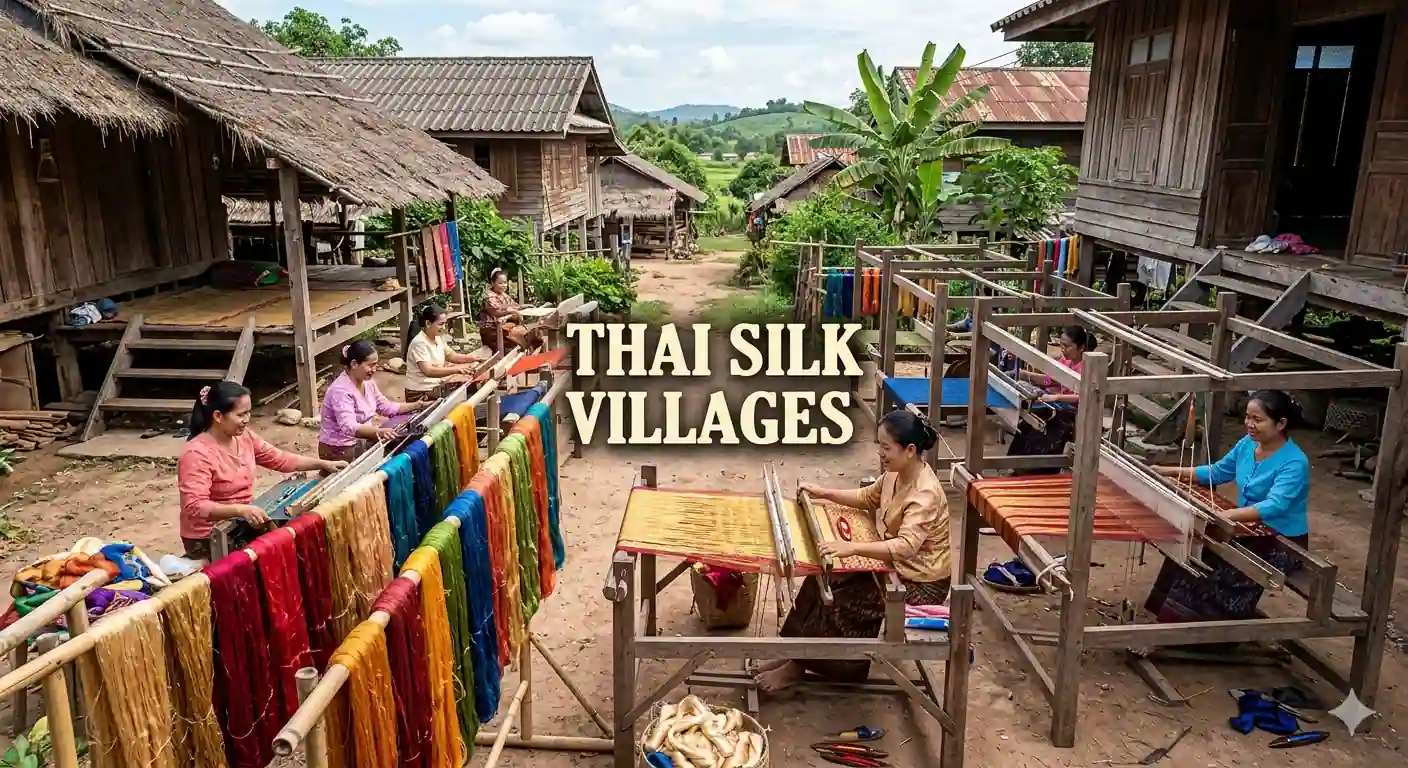
Discovering Authentic Thai Silk in Northeast Thailand's Heartland
Thailand's silk industry has thrived for centuries, with the northeastern provinces of Nakhon Ratchasima (Khorat) and Surin standing as the country's most prestigious silk-producing regions. These villages preserve ancient weaving techniques passed down through generations, creating some of the world's most luxurious handwoven textiles. In 2026, finding authentic Thai silk directly from weaving villages offers travelers not just superior quality but also fair prices and meaningful cultural connections.
Unlike mass-produced imitations flooding tourist markets, silk from Khorat and Surin villages maintains traditional mud silk dyeing techniques, natural color processes, and intricate patterns unique to each community. This comprehensive guide reveals the best villages, markets, and weaving centers where you can purchase genuine Thai silk, meet the artisans, and understand the craftsmanship behind these extraordinary textiles.
Why Khorat and Surin Dominate Thai Silk Production
The northeastern region of Thailand, known as Isaan, provides ideal conditions for silk production. Mulberry trees flourish in the climate, silkworms thrive, and generations of skilled weavers have perfected their craft. Khorat's Pak Thong Chai district and Surin's rural villages have earned international recognition for producing the finest quality Thai silk.
Key Advantages of Buying from These Regions:
- Authenticity Guaranteed: Direct from weaving communities with centuries of expertise
- Better Prices: Eliminate middlemen by purchasing directly from producers
- Quality Assurance: Traditional techniques ensure superior durability and luster
- Cultural Experience: Witness the entire silk-making process firsthand
- Unique Designs: Access patterns unavailable in commercial markets
Pak Thong Chai: Thailand's Silk Capital
Located approximately 40 kilometers from Nakhon Ratchasima city, Pak Thong Chai district represents the epicenter of Thai silk production. This area alone accounts for over 60% of Thailand's premium silk output, making it the essential destination for serious silk shoppers.
Top Silk Villages in Pak Thong Chai
1. Ban Tha Sawang Silk Village
Ban Tha Sawang stands as Thailand's most famous silk weaving village, home to over 300 weaving families. This community has perfected the art of mud silk (silk dyed with iron-rich mud), creating the distinctive deep blacks and rich browns that characterize premium Thai silk.
| Feature | Details |
| Location | 15 km from Pak Thong Chai town center |
| Number of Weavers | Approximately 300 families |
| Specialty | Mud silk, traditional patterns, custom orders |
| Price Range | 800-5,000 THB per meter ($24-150 USD) |
| Best Time to Visit | November-February (cool season) |
What to Expect: Village cooperatives welcome visitors to observe the entire silk production process, from silkworm rearing to final weaving. Most families operate small showrooms where you can purchase directly. The village hosts demonstrations daily from 9 AM to 4 PM.
Shopping Tips: Look for the OTOP (One Tambon One Product) certification mark, indicating government-verified quality. Bargaining is acceptable but modest—typically 10-15% below asking price for direct purchases.
2. Ban Khwao Silk Weaving Center
This government-supported center combines traditional craftsmanship with modern quality control, making it ideal for first-time Thai silk buyers seeking guaranteed authenticity.
The center features:
- Educational museum explaining silk history and production
- Live weaving demonstrations with master artisans
- Fixed-price showroom with quality guarantees
- English-speaking staff for international visitors
- Shipping services for international delivery
Price Points: Slightly higher than village prices (15-20% premium) but includes authentication certificates and quality guarantees. Scarves range from 1,200-3,500 THB ($36-105 USD), while fabric starts at 1,500 THB per meter ($45 USD).
3. Chokchai Silk Farm
For a comprehensive silk experience, Chokchai Silk Farm offers complete transparency from cocoon to cloth. This working farm allows visitors to participate in silk-making activities and purchase fresh, undyed silk directly.
Unique offerings include:
- Silkworm feeding experiences (seasonal)
- Cocoon harvesting demonstrations
- Natural dyeing workshops using local plants
- Custom weaving orders with 2-4 week completion
- Bulk discounts for orders over 10 meters
Pak Thong Chai Silk Market
Held every Saturday and Sunday from 8 AM to 3 PM, the Pak Thong Chai Silk Market brings together weavers from across the district. This is the best opportunity to compare prices, styles, and quality from multiple producers in one location.
Market Highlights:
- 50+ vendor booths representing different villages
- Competitive pricing with direct producer sales
- Rare vintage silk pieces from private collections
- Silk accessories (bags, ties, home decor)
- Food stalls serving Isaan specialties
Bargaining Strategy: Vendors expect negotiation. Start at 60-70% of asking price and meet around 80-85%. Cash purchases receive better deals than card payments.
Surin Province: Home of the Legendary Khmer Silk
Surin's silk tradition dates back over 1,000 years to the Khmer Empire, creating distinctive patterns and techniques different from Khorat's style. Surin silk features more intricate geometric designs and often incorporates gold and silver threads.
Premier Silk Destinations in Surin
1. Ban Tha Sawang (Surin)
Not to be confused with the Khorat village, Surin's Ban Tha Sawang specializes in traditional Khmer silk patterns. This village produces the famous "Surin Silk" characterized by complex supplementary weft patterns.
| Characteristic | Surin Style |
| Pattern Complexity | High—intricate geometric and floral motifs |
| Common Colors | Deep reds, golds, greens, royal blues |
| Thread Type | Often includes metallic threads |
| Typical Use | Ceremonial garments, high-end fashion |
| Price Premium | 20-30% above standard Thai silk |
Visitor Experience: The village cooperative offers guided tours in English (advance booking recommended). Tours include silk production demonstration, pattern explanation, and shopping time. Tour cost: 300 THB per person ($9 USD), redeemable against purchases.
2. Phanom Dong Rak Silk Village
Located near the Cambodian border, this village maintains ancient Khmer weaving techniques rarely found elsewhere. Phanom Dong Rak specializes in ceremonial silk used in traditional ceremonies and temple offerings.
Special features:
- Ancient loom designs unchanged for centuries
- Natural dyes from local forest plants
- Religious and ceremonial pattern expertise
- Apprenticeship programs for serious students
- Very limited production (high exclusivity)
Purchasing Notes: Due to limited output, advance orders are common. Standard items available immediately; custom pieces require 4-8 weeks. Prices reflect the artisanal nature: 2,000-8,000 THB per meter ($60-240 USD).
3. Surin City Silk Shops
For convenience, Surin city offers several reputable silk shops that source directly from provincial weavers while providing English service and quality guarantees.
Recommended Establishments:
- Surin Silk Handicraft Center: Government-operated, fixed prices, authentication provided
- Jim Thompson Surin Outlet: Famous brand with premium pricing but guaranteed quality
- Local Cooperative Shops: Better prices, support weavers directly
Understanding Thai Silk Quality and Pricing
Navigating Thai silk purchases requires understanding quality indicators and fair pricing. This knowledge prevents overpaying and ensures authentic purchases.
Silk Quality Grades
Grade A (Premium):
- 100% pure Thai silk, hand-reeled
- Perfect weave with no flaws
- Natural dyes or high-quality synthetic dyes
- Consistent color throughout
- Price: 3,000-8,000 THB per meter ($90-240 USD)
Grade B (Standard):
- 100% pure Thai silk
- Minor weave variations (normal for handwoven)
- Quality synthetic dyes
- Suitable for garments and accessories
- Price: 1,500-3,000 THB per meter ($45-90 USD)
Grade C (Economy):
- Silk blend or lower-grade silk
- Visible weave irregularities
- Basic dyeing
- Good for crafts and decorative items
- Price: 500-1,500 THB per meter ($15-45 USD)
How to Identify Authentic Thai Silk
The Burn Test: Request a thread sample. Real silk burns slowly, smells like burning hair, and leaves brittle ash. Synthetic fibers melt and smell like plastic.
The Touch Test: Authentic silk feels smooth but slightly textured, cool to touch, and has natural luster (not shiny). It should feel substantial, not flimsy.
The Sound Test: Crush silk in your hand. Real silk makes a distinctive "crunch" sound (scroop). Synthetic fabrics remain silent.
Visual Inspection: Hold fabric to light. Handwoven silk shows slight irregularities—perfectly uniform fabric suggests machine production.
Planning Your Silk Shopping Journey
Best Time to Visit
November-February (Cool Season):
- Ideal weather for village touring
- Post-harvest silk production peak
- Best selection of fresh silk
- Comfortable temperatures (20-28°C / 68-82°F)
Avoid:
- March-May (hot season): Uncomfortable for village visits
- April: Songkran festival—many villages closed
- Rainy season (June-October): Some rural roads difficult
Transportation Options
Getting to Khorat (Nakhon Ratchasima):
- From Bangkok: 3-hour drive via Highway 2 (Mittraphap Road)
- Bus: Mo Chit Terminal to Nakhon Ratchasima (4 hours, 200-400 THB)
- Train: Hua Lamphong to Nakhon Ratchasima (4-5 hours, 100-300 THB)
Local Transportation:
- Rental car: 800-1,500 THB/day ($24-45 USD)—recommended for village hopping
- Songthaew: Shared pickup trucks, 50-100 THB per trip
- Tuk-tuk: Negotiate day rates around 800-1,200 THB ($24-36 USD)
Getting to Surin:
- From Bangkok: 5-6 hour drive or bus (400-600 THB)
- From Khorat: 2-hour drive (150 km)
- Train: Limited service, 6-7 hours from Bangkok
Suggested Itinerary: 3-Day Silk Trail
Day 1: Khorat Exploration
- Morning: Arrive Nakhon Ratchasima city
- Afternoon: Visit Ban Tha Sawang village (3 hours)
- Evening: Overnight in Pak Thong Chai
Day 2: Deep Dive
- Morning: Chokchai Silk Farm tour (2 hours)
- Afternoon: Ban Khwao Weaving Center (2 hours)
- Evening: Return to Khorat city
Day 3: Surin Day Trip or Extension
- Option A: Day trip to Surin silk villages (4-hour round trip)
- Option B: Overnight in Surin for deeper exploration
Practical Shopping Tips
Budget Planning
Sample Shopping Budget (per person):
| Item | Budget Option | Mid-Range | Premium |
| Silk Scarf | 500-800 THB ($15-24) | 1,200-2,000 THB ($36-60) | 3,000-5,000 THB ($90-150) |
| Fabric (1 meter) | 800-1,500 THB ($24-45) | 2,000-3,500 THB ($60-105) | 5,000-8,000 THB ($150-240) |
| Ready-made Shirt | 1,200-1,800 THB ($36-54) | 2,500-4,000 THB ($75-120) | 6,000-10,000 THB ($180-300) |
| Thai Silk Suit | 3,500-5,000 THB ($105-150) | 8,000-15,000 THB ($240-450) | 20,000-35,000 THB ($600-1,050) |
Payment Methods
- Cash: Preferred in villages (better prices, 5-10% discount typical)
- Credit Cards: Accepted at larger centers (3% surcharge common)
- ATMs: Available in Pak Thong Chai and Surin cities (200 THB fee for foreign cards)
- Currency: Thai Baht only—exchange before village visits
Shipping and Customs
International Shipping:
- Most shops offer DHL/FedEx services
- Cost: 800-2,000 THB ($24-60 USD) depending on weight
- Delivery time: 5-10 business days
- Request tracking numbers
Customs Considerations:
- Personal use quantities typically duty-free
- Commercial quantities may incur import duties
- Keep receipts for customs declarations
- Check your country's textile import regulations
Cultural Etiquette and Responsible Tourism
Respecting Weaving Communities
Visiting silk villages is a privilege. Follow these guidelines to ensure positive interactions:
Do:
- Ask permission before photographing weavers
- Remove shoes when entering homes/showrooms
- Speak softly—weaving requires concentration
- Show genuine interest in the craft
- Purchase fairly—extreme bargaining harms livelihoods
- Learn basic Thai greetings (Sawasdee krub/ka)
Don't:
- Touch looms or silk without permission
- Interrupt weavers during complex pattern work
- Critique prices aggressively
- Promises to buy then walk away
- Wear strong perfumes (attracts silkworms)
Supporting Sustainable Practices
Choose vendors who:
- Use natural dyes when possible
- Practice organic mulberry cultivation
- Provide fair wages to weavers
- Invest in community development
- Maintain traditional techniques
Common Scams and How to Avoid Them
While most silk sellers are honest, tourists should remain vigilant:
Scam #1: "Factory Direct" Lies
- Tactic: Tuk-tuk drivers claim "special factory sale" today only
- Reality: Commission shops with inflated prices
- Prevention: Go directly to known villages, ignore unsolicited offers
Scam #2: Silk Blends Sold as Pure Silk
- Tactic: Polyester/rayon blends marketed as 100% silk
- Reality: Inferior quality at silk prices
- Prevention: Request burn test, check for OTOP certification
Scam #3: Bait and Switch
- Tactic: Show high-quality sample, deliver inferior product
- Reality: Especially common with shipped orders
- Prevention: Pay deposit only, inspect before final payment, use reputable sellers
Alternative Silk Shopping Locations
If village visits aren't feasible, these alternatives offer authentic silk:
Bangkok Options:
- Jim Thompson Flagship Store: Premium prices, guaranteed quality, English service
- Chatuchak Weekend Market: Sections 7 and 25 have silk vendors (bargain aggressively)
- Pratunam Market: Wholesale prices, bulk purchases only
Chiang Mai:
- Night Bazaar: Multiple silk vendors, moderate prices
- San Kamphaeng Road: "Silk Road" with numerous shops
However, for the best combination of price, authenticity, and experience, nothing beats visiting Khorat and Surin villages directly.
Making the Most of Your Purchase
Care Instructions for Thai Silk
Proper care extends silk life significantly:
- Washing: Hand wash in cool water with mild detergent, or dry clean
- Drying: Never wring; roll in towel to remove excess water, air dry in shade
- Ironing: Low heat, iron inside-out while slightly damp
- Storage: Fold with acid-free tissue, avoid plastic bags, keep away from sunlight
- Moth Prevention: Use cedar blocks, not mothballs (damage silk)
Creative Uses for Thai Silk
Beyond traditional garments, Thai silk works beautifully for:
- Home decor (pillow covers, table runners, wall hangings)
- Accessories (bags, scarves, ties, hair accessories)
- Gift items (framed fabric art, jewelry)
- Wedding and special occasion attire
- Upcycling vintage pieces into modern designs
Conclusion: Your Thai Silk Adventure Awaits
Shopping for authentic Thai silk in Khorat and Surin villages offers far more than a transaction—it provides cultural immersion, supports traditional artisans, and connects you with Thailand's rich textile heritage. The villages of Pak Thong Chai and Surin's weaving communities welcome respectful visitors eager to learn about their craft.
By following this guide, you'll navigate the silk trail confidently, identify genuine quality, negotiate fairly, and return home with treasures that tell stories of ancient traditions and skilled hands. Whether purchasing a simple scarf or commissioning custom garments, your visit contributes to preserving this extraordinary craft for future generations.
The journey from Bangkok to these northeastern villages takes just hours, but the memories and relationships you create will last a lifetime. Plan your silk adventure for the cool season, bring cash and an open mind, and prepare to discover why Thai silk remains one of the world's most coveted textiles.
For more comprehensive Thailand travel planning, explore The Ultimate Thailand Travel Guide 2026 and discover 50 Essential Tips for First-Time Travelers to maximize your Thai adventure.
0 Comments